

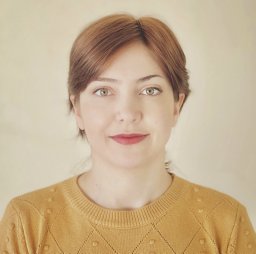
 Sayna Ebrahimi
· 6 previous affiliations
- Google DeepMind (United Kingdom)Since 2024
- Senior Research Scientist · Since 2024
- Google (United States)2021–2024
- Research Scientist · 2021–2024
- PhD student · 2020–2021
- Postdoctoral Researcher · 2020–2021
- University of California, Berkeley2013–2020
- Master of Science - MS, Computer Science · 2018–2020
- Graduate Student Researcher · 2013–2020
- Research Intern · 2019
Research Overview
Sayna Ebrahimi focuses on large-scale multimodal generation, efficient learning, and domain adaptation in computer vision. Her early work explored active learning and continual learning methodologies to adapt models under distribution shifts without catastrophic forgetting. More recently, her research addresses the optimization and alignment of multimodal large language models, including techniques for hallucination mitigation and multilingual scaling laws.
Research Trajectory
Ebrahimi's early research addressed optimization and representation learning in autonomous systems and computer vision. Her initial work included participation in developing Gradient-free Policy Architecture Search and Adaptation, which explored neural architecture search to enable autonomous driving policies to learn safely and efficiently. She subsequently investigated cross-modal embeddings, contributing to Generalized Zero-Shot Learning via Aligned Variational Autoencoders. This work demonstrated that aligning the latent spaces of modality-specific autoencoders can effectively generate artificial latent features to train classifiers for unseen classes. In the domain of data efficiency, she introduced Variational Adversarial Active Learning, a task-agnostic framework that frames active learning as an adversarial game. By pitting a variational autoencoder against a discriminator, the method learns a shared latent space for labeled and unlabeled data to computationally efficiently select the most informative samples for annotation.
A major theme in her trajectory is mitigating catastrophic forgetting, enabling models to learn sequential tasks without losing prior knowledge. She developed Uncertainty-guided Continual Learning with Bayesian Neural Networks, an approach that adapts the learning rate based on the uncertainty defined in the probability distribution of network weights. This method naturally identifies which parameters to preserve and which to update, advancing the broader direction of Scaling Learning Rates with Parameter Uncertainty. Expanding on this, she proposed Adversarial Continual Learning, a hybrid framework that learns disjoint representations for task-invariant and task-specific features. By combining architecture growth with experience replay, the model protects shared skills while accommodating new task requirements. She further explored the role of interpretability in memory retention with Remembering for the Right Reasons: Explanations Reduce Catastrophic Forgetting. Returning to data efficiency challenges, she guided research on Region-level Active Learning for Cluttered Scenes, shifting the focus from conventional image-level selection to object-level criteria to better handle visual clutter and severe data imbalance in real-world object detection.
Ebrahimi's focus subsequently expanded to adapting pre-trained models to distribution shifts without requiring access to original source data. She directed the development of Contrastive Test-Time Adaptation, which combines online pseudo-label refinement via nearest-neighbor soft voting with self-supervised contrastive learning. This work significantly advanced the research area of Calibrated Test Time Adaptation for Distribution Shift. In parallel, she contributed to rehearsal-free continual learning via DualPrompt: Complementary Prompting for Rehearsal-Free Continual Learning. This method attaches a small set of learnable general and expert prompts to a frozen vision transformer, achieving high performance without storing previous examples. She also extended adaptation techniques to new modalities, introducing Test-Time Adaptation for Visual Document Understanding to handle distribution shifts in visually rich documents using masked visual language modeling and pseudo-labeling. To address the integration of diverse data types, she proposed LANISTR: Multimodal Learning from Structured and Unstructured Data, an attention-based framework utilizing a novel similarity-based multimodal masking loss to learn cross-modal relations across language, image, tabular, and time-series data.
In recent years, her research has centered on the efficiency, alignment, and scaling of large language and multimodal models. She introduced CROME: Cross-Modal Adapters for Efficient Multimodal LLM, which utilizes a lightweight, gated cross-modal adapter to combine visual and textual representations before inputting them into a frozen LLM, bypassing the need for expensive language model retraining. Addressing model reliability, she collaborated on Mitigating Object Hallucination in MLLMs via Data-augmented Phrase-level Alignment, a fine-tuning approach that surgically penalizes specific hallucinated phrases rather than entire sequences, thereby reducing fabricated objects while preserving general reasoning capabilities. She also participated in the development of Model Swarms: Collaborative Search to Adapt LLM Experts via Swarm Intelligence, a tuning-free algorithm that treats LLMs as particles collaboratively searching through weight space to optimize utility functions without backpropagation. Most recently, she directed a large-scale empirical study on cross-lingual transfer, resulting in ATLAS: Adaptive Transfer Scaling Laws for Multilingual Pretraining, Finetuning, and Decoding the Curse of Multilinguality. Based on hundreds of training experiments, this work provides mathematical formulations to model data repetition and cross-lingual transfer, helping practitioners navigate the trade-offs between pretraining from scratch and fine-tuning.
Current Directions
The most recent papers in the evidence address the optimization, alignment, and scaling of multimodal large language models (MLLMs). Current work investigates parameter-efficient tuning strategies, such as cross-modal adapters that integrate visual and textual representations without requiring full model retraining. Another major focus is improving the reliability of generative models by mitigating object hallucinations through targeted, phrase-level alignment techniques. Additionally, recent research explores the fundamental scaling laws of multilingual pretraining, seeking to mathematically model cross-lingual transfer and data repetition to optimize the balance between pretraining and fine-tuning in large-scale models. Finally, her work touches on tuning-free adaptation methods, leveraging swarm intelligence to discover hidden capabilities in LLMs through collaborative weight-space search.
Profile updated
Loading new papers…
Other researchers whose papers cluster into the same research directions — a proxy for overlapping technical interests and shared intellectual neighborhoods.
See something wrong? Report a mistake