

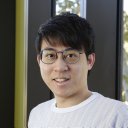
 Hsin-Yuan Huang
· 2 previous affiliations
- California Institute of TechnologySince 2018
- PhD student · Since 2018
- National Taiwan University2014–2018
- Undergrad student · 2014–2018
Research Overview
Hsin-Yuan Huang focuses on quantum information theory, quantum many-body physics, and learning theory to understand how machines can discover new physical phenomena. His trajectory spans the development of efficient quantum state characterization techniques, such as classical shadows, to rigorous proofs of quantum advantage in learning from experiments. Currently, his work investigates the structural boundaries of quantum computational power, quantum error correction, and generative quantum advantage.
Research Trajectory
Huang’s early published work explored classical machine learning architectures, including participation in the design of multi-level attention mechanisms for machine comprehension in FusionNet: Fusing via Fully-aware Attention with Application to Machine Comprehension. His focus soon shifted to the intersection of quantum physics and learning theory. A major contribution emerged with Predicting Many Properties of a Quantum System from Very Few Measurements, which introduced the framework of classical shadows. By constructing succinct classical sketches of quantum states, this method allows for the prediction of numerous local properties using a number of measurements that scales independently of system size. This work anchored his ongoing contributions to the research direction of Efficient Quantum State Characterization via Classical Shadows and the broader area of Overcoming the Exponential Complexity of Quantum State Tomography. Concurrently, he investigated the comparative power of classical and quantum models when provided with data. In Power of data in quantum machine learning, he and his collaborators demonstrated that classical machine learning can sometimes rival quantum models, proposing projected quantum kernels to establish rigorous benchmarks for quantum advantage.
Continuing to explore the boundaries of quantum and classical learning, Huang investigated how quantum memory influences data requirements. He contributed to Exponential Separations Between Learning With and Without Quantum Memory, which established tight bounds showing that algorithms lacking quantum memory require vastly more data for tasks like state tomography. Building on these theoretical foundations, he led research demonstrating that quantum memory and processing enable learning from exponentially fewer experimental trials in Quantum advantage in learning from experiments. He further formalized the capabilities of classical algorithms in quantum contexts with Provably efficient machine learning for quantum many-body problems, proving that classical models can efficiently predict ground state properties of gapped Hamiltonians after learning from data within the same quantum phase. Together, these findings significantly advanced the research area of Sample-Efficient Learning of Quantum Systems.
Expanding from static properties to quantum dynamics, Huang developed computationally efficient algorithms to forecast complex quantum processes. Learning to predict arbitrary quantum processes introduced methods leveraging quantum norm inequalities to predict local properties of unknown quantum processes faster than direct simulation. His work also delineated the boundary between sample efficiency and computational tractability. In Learning quantum states and unitaries of bounded gate complexity, his team proved that while states produced by bounded-gate circuits can be learned with linearly scaling samples, extracting that information becomes computationally intractable beyond a logarithmic complexity threshold, a key insight in the area of The Information-Computation Gap in Quantum Learning. He also explored the physical grounding of quantum optimization in Local minima in quantum systems, showing that finding local energy minima via thermal gradient descent is easy for quantum computers but hard classically. Conversely, he identified areas where classical methods remain highly effective, such as using low-weight Pauli propagation to estimate observables for random quantum circuits in Classically estimating observables of noiseless quantum circuits.
In 2025, Huang’s research spanned theoretical complexity, Hamiltonian learning, and experimental quantum simulation. He addressed the challenge of characterizing many-body systems with restricted access in Quantum Probe Tomography. On the theoretical front, he examined the trade-offs of variational quantum algorithms in Does provable absence of barren plateaus imply classical simulability?, arguing that structures designed to ensure trainability often restrict models to classically simulable subspaces. He also demonstrated that measurement contextuality serves as a computational resource for bounded-resource tasks in Quantum-Classical Separation in Bounded-Resource Tasks Arising from Measurement Contextuality. Bridging theory and hardware, he contributed to large-scale experimental milestones on superconducting processors, including the implementation of logical operations in Scaling and logic in the colour code on a superconducting quantum processor and the exploration of thermal equilibrium in Thermalization and criticality on an analogue–digital quantum simulator.
Current Directions
The most recent papers in the evidence address the practical scaling of quantum error correction and the rigorous definition of quantum advantage. Recent work investigates the performance of surface codes, demonstrating in Quantum error correction below the surface code threshold that increasing the number of physical qubits can successfully reduce logical error rates, a critical milestone for fault-tolerant architectures. Concurrently, theoretical efforts focus on establishing sustainable frameworks for quantum speedups. This includes introducing divide-and-conquer techniques to bypass barren plateaus in Generative quantum advantage for classical and quantum problems, proving that quantum models can efficiently learn classically intractable distributions. More broadly, work such as The vast world of quantum advantage seeks to move beyond heuristic claims, defining the structural and computational boundaries necessary for meaningful, long-term quantum utility.
Profile updated
Loading new papers…
Other researchers whose papers cluster into the same research directions — a proxy for overlapping technical interests and shared intellectual neighborhoods.
See something wrong? Report a mistake