

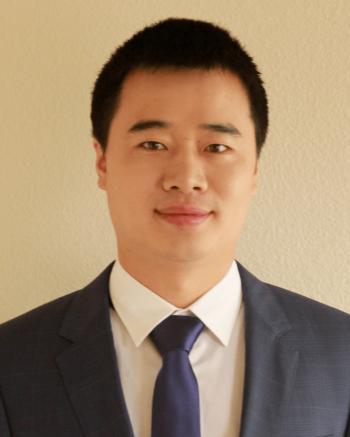
 Hongyang Gao
· 5 previous affiliations
- Iowa State UniversitySince 2020
- Assistant Professor · 2020–2035
- Current
- Texas A&M University2018–2020
- PhD student · 2018–2020
- Weber State University2016–2018
- PhD student · 2016–2018
- Tsinghua University2009–2012
- MS student · 2009–2012
- Peking University2004–2009
- Undergrad student · 2004–2009
Research Overview
Hongyang Gao focuses on machine learning, deep learning theory, and computational biology. His trajectory spans the theoretical foundations of infinite-depth neural networks to the practical application of graph learning in software engineering and chemistry. His most recent work investigates advanced generative models and motif-driven representations for molecular design and property prediction.
Research Trajectory
Gao's early work in the provided corpus establishes theoretical foundations for complex neural network architectures, particularly focusing on infinite-depth and implicit models. In 2022, he investigated the training stability of implicit deep learning, which generalizes recursive prediction rules through equilibrium equations. This research resulted in A global convergence theory for deep ReLU implicit networks via over-parameterization, providing a theoretical framework for understanding how stochastic gradient descent can successfully train nonlinear implicit networks. This work contributed significantly to the research direction of Deep Equilibrium Models and Implicit Differentiation as well as the broader area of Lazy Training Dynamics in Overparameterized Neural Networks.
Continuing this theoretical trajectory into 2023, Gao explored the behavior of infinite-depth networks at extreme scales. In Wide Neural Networks as Gaussian Processes: Lessons from Deep Equilibrium Models, he demonstrated that Deep Equilibrium Models (DEQs) mathematically stabilize and behave like Gaussian Processes as their layers widen. This finding ensures that such models remain expressive and well-behaved regardless of whether the infinite-width or infinite-depth limit is taken first.
Alongside his theoretical contributions to deep learning, Gao has applied graph learning techniques to domain-specific challenges. In the realm of software security, he developed DeepDFA: Dataflow Analysis-Guided Efficient Graph Learning for Vulnerability Detection (2023). This framework bridges classical program analysis and modern deep learning by using program semantic features and dataflow analysis to guide graph embeddings, improving upon token-based transformer models for bug detection.
Simultaneously, Gao began a sustained focus on computational chemistry and molecular representation learning. He introduced MotifPiece: A Data-Driven Approach for Effective Motif Extraction and Molecular Representation Learning (2023), which treats molecules as part of a larger heterogeneous graph to extract recurring chemical structural patterns. This approach advanced the research area of Hierarchical Modeling of Molecular Functional Groups by boosting performance in molecular property prediction across multiple datasets. Building on this motif-driven methodology in 2024, he proposed MAGE: Model-Level Graph Neural Networks Explanations via Motif-based Graph Generation. MAGE explains Graph Neural Networks by generating chemically valid, human-understandable molecular prototypes using functional motifs rather than individual atoms.
Gao has also explored the intersection of molecular design and large language models. In G2T-LLM: Graph-to-Tree Text Encoding for Molecule Generation with Fine-Tuned Large Language Models (2024), he developed a graph-to-tree encoding strategy that converts complex molecular structures into hierarchical text formats like JSON and XML. This translation allows language models to process and generate valid chemical structures through natural language prompts.
In 2025, Gao's research expanded further into 3D molecular structures and few-shot learning. He developed a method to improve the quality of AI-generated 3D molecular conformers in Flow-Matching Based Refiner for Molecular Conformer Generation. By refining plausible but noisy structures rather than starting from pure noise, the approach achieves high accuracy with greater computational efficiency. He also addressed data scarcity in chemistry with M-GLC: Motif-Driven Global-Local Context Graphs for Few-shot Molecular Property Prediction, contributing to the research direction of Bridging the Molecular Geometric Representation Gap by introducing a chemically-aware framework for predicting molecular behavior when training data is extremely limited.
Returning to the theoretical dynamics of continuous networks in 2025, Gao investigated the training challenges of Neural Ordinary Differential Equations (ODEs). In Global Convergence in Neural ODEs: Impact of Activation Functions, he analyzed how continuous flow models, which offer parameter efficiency for time-series data, can overcome numerical solver errors and theoretical gaps through the careful selection of activation functions.
Most recently, in 2026, Gao participated in collaborative research on reinforcement learning for reasoning models. As a co-author on RESTRAIN: From Spurious Votes to Signals — Self-Training RL with Self-Penalization, he contributed to a framework that enables models to improve using only unlabeled data by penalizing low-confidence guesses, matching the performance of models trained on human-annotated labels.
Current Directions
The most recent papers in the evidence indicate a dual focus on advanced molecular representation and the theoretical stability of continuous neural architectures. In computational chemistry, recent work investigates the generation of 3D molecular conformers using flow-matching techniques and the application of motif-driven context graphs to solve few-shot molecular property prediction tasks. Concurrently, ongoing theoretical research addresses the global convergence properties of Neural ODEs, specifically examining how activation functions impact the stability and trainability of continuous-time models. Additionally, recent collaborative efforts explore self-training reinforcement learning frameworks designed to enhance the reasoning capabilities of language models without relying on labeled data.
Profile updated
Loading new papers…
Other researchers whose papers cluster into the same research directions — a proxy for overlapping technical interests and shared intellectual neighborhoods.
See something wrong? Report a mistake