

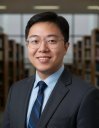
 Yi Liu
· 5 previous affiliations
- Stony Brook UniversitySince 2023
- Assistant Professor · Since 2023
- Florida State University2022–2023
- Assistant Professor · 2022–2023
- Texas A&M University2017–2022
- Research Assistant · 2017–2022
- PhD student · 2018–2022
- Teaching Assistant · 2019
- Washington State University2017–2018
- Doctor of Philosophy - PhD, Computer Science · 2017–2018
- MS student · 2012–2015
- Undergrad student · 2008–2012
24 other authors named Yi Liu: Yi Liu (City University of Hong Kong · 146 papers), Yi Liu (17 papers), Yi Liu (15 papers), Yi Liu (York University · 14 papers), Yi Liu (Chinese University of Hong Kong · 10 papers), and 19 more
Research Overview
Yi Liu focuses on geometric deep learning, scientific machine learning (SciML), and the development of artificial intelligence frameworks for the natural sciences (AI4Science). His work addresses the challenges of representing and generating complex data structures, such as 3D molecular graphs and physical systems governed by partial differential equations (PDEs). By integrating domain-specific symmetries and physical constraints into neural architectures, Liu's research aims to improve the accuracy, efficiency, and stability of models used in quantum chemistry, materials science, and biochemistry.
Research Trajectory
The evolution of Liu’s research reflects a transition from fundamental graph representation learning to the specialized domain of AI for Science. Between 2019 and 2021, his work primarily addressed structural challenges in deep learning on non-Euclidean data. During this period, he focused on the limitations of standard pooling operations and sequence representations, developing methods to preserve topological information in graph neural networks (GNNs) and exploring novel ways to map character sequences into higher-dimensional manifolds for natural language processing. This phase established a foundation in geometric deep learning, emphasizing the importance of preserving structural relationships during data coarsening and transformation.
Starting in 2022, Liu’s focus shifted toward the intersection of machine learning and the physical sciences. This transition was marked by a move from 2D graph structures to 3D geometric modeling, particularly for molecular and atomic systems. He began addressing the "completeness" of 3D representations—ensuring that neural networks could capture all necessary geometric information, such as bond angles and distances, without incurring prohibitive computational costs. This period also saw his involvement in community-level efforts, such as the development of the DIG library for graph deep learning and comprehensive surveys of AI applications in quantum and continuum systems.
In his current role as a principal investigator (2024–2026), Liu has advanced into the development of neural operators and generative diffusion models. His recent work focuses on the mathematical foundations of scientific modeling, such as incorporating coordinate symmetries into Fourier Neural Operators (FNOs) and optimizing the generative trajectories of 3D molecular diffusion models. This research direction emphasizes "size-consistency" and "corrective sampling," addressing the specific physical and geometric constraints that distinguish scientific data from traditional domains like image or text processing. His work in this area frequently intersects with Catalytic Methods for Absolute Stereochemical Control, where the spatial orientation of atoms is critical to chemical function.
Current Directions
Liu’s current research program is centered on three primary pillars: scientific machine learning, generative molecular design, and reinforcement learning for drug discovery. In the realm of SciML, he is refining neural operators to solve complex physical modeling problems, specifically focusing on how symmetries and domain shapes can be leveraged to enhance model expressivity. This involves moving beyond translation-invariant kernels to more dynamic, frequency-domain representations that can adapt to the underlying physics of a system.
In molecular generation, Liu is investigating the efficiency and stability of diffusion and flow-matching models. A significant challenge in this area is the "highly concentrated" nature of molecular data distributions, where minor deviations in atomic coordinates can render a molecule chemically invalid. His current projects aim to develop "steerable" sampling methods and size-consistent priors that allow these models to scale across different molecular sizes while maintaining structural integrity. Additionally, he is exploring the use of Particle Based Distributional Reinforcement Learning and historical feedback loops to guide large language models in drug editing tasks, aiming to move beyond isolated modification events toward a more "intuitive" and cumulative approach to molecular optimization.
Representative Work
Topology-Aware Graph Pooling Networks (2020) addresses a fundamental limitation in graph deep learning: the difficulty of performing pooling operations on data that lacks a grid-like structure. As the first author, Liu introduced the Topology-Aware Pooling (TAP) layer, which moves beyond simple node-dropping or clustering. TAP utilizes a combination of local neighborhood similarity and global graph importance, supplemented by a connectivity bonus, to select representative nodes. This approach ensures that the coarsened graph maintains its topological integrity rather than fragmenting into isolated components. The method demonstrated that preserving the underlying structure of the graph is essential for high-performance graph classification across various benchmarks.
Sent2Matrix: Folding Character Sequences in Serpentine Manifolds for Two-Dimensional Sentence (2021) represents Liu’s early exploration of alternative data representations. In this first-author paper, he proposed a method to "fold" one-dimensional character sequences into two-dimensional matrices using a serpentine padding technique. This transformation allows the application of 2D Convolutional Neural Networks (CNNs) to natural language tasks, which are traditionally handled by 1D architectures. By preserving the sequential flow of text while explicitly capturing character morphology and word boundaries within a 2D manifold, the Sent2Matrix approach provided a novel perspective on how structural priors can be used to enhance feature extraction in sequence modeling.
ComENet: Towards Complete and Efficient Message Passing for 3D Molecular Graphs (2022) marks Liu’s transition into 3D geometric modeling for scientific applications. As the second author, he contributed to the development of a message-passing scheme designed to capture the full geometric information of 3D graphs within a 1-hop neighborhood. The paper identifies that existing methods often use partial 3D information or suffer from high computational complexity. ComENet achieves both global and local completeness by introducing rotation angles into the message-passing process. This ensures that the model can distinguish between different 3D configurations that might appear identical to simpler models, while remaining significantly faster than previous state-of-the-art approaches.
Coordinate Transform Fourier Neural Operators for Symmetries in Physical Modelings (2024), where Liu served as the senior author, addresses the challenge of incorporating physical symmetries into neural operators. The work posits that the laws of physics remain invariant regardless of the coordinate system used. Rather than relying on data augmentation to teach a model these symmetries, Liu and his team proposed an architecture that integrates coordinate transformations directly into the Fourier Neural Operator (FNO) framework. This allows the model to naturally account for symmetries associated with domain shapes and physical laws, simplifying the learning process and improving the accuracy of PDE solvers in scientific simulations.
GAGA: Gaussianity-Aware Gaussian Approximation for Efficient 3D Molecular Generation (2026) focuses on the computational efficiency of generative models in chemistry. As the senior author, Liu introduced a method to truncate the long trajectories typically required by diffusion and flow-matching models. GAGA identifies the specific point in the noising process where the data becomes "Gaussian enough" to stop, thereby skipping redundant computational steps. This approach significantly accelerates both the training and sampling phases of molecular generation. Crucially, the paper demonstrates that this truncation does not sacrifice quality; instead, it often improves the stability and validity of the generated 3D molecular structures.
Diffuse and Steer: Corrective Sampling for Stable 3D Molecular Generation (2026) addresses the sensitivity of molecular geometry in generative modeling. Serving as the senior author, Liu explored the problem of "sharp probability peaks" in molecular configuration space, where even minor shifts in atomic positions can lead to unstable or chemically impossible molecules. The paper proposes a corrective sampling mechanism that "steers" the diffusion process back toward valid regions of the distribution. This method ensures that the generated molecules adhere to strict geometric and chemical constraints, providing a more robust framework for the automated design of stable chemical compounds.
Liu also participated in the development of DIG: A Turnkey Library for Diving into Graph Deep Learning Research (2021), a unified testbed for advanced graph tasks including generation, explainability, and 3D modeling. His collaborative work extends to large-scale reviews of the field, such as Artificial Intelligence for Science in Quantum, Atomistic, and Continuum Systems (2023), which provides a technical account of how AI is transforming the understanding of natural phenomena across multiple scales.
Profile updated
Loading new papers…
Other researchers whose papers cluster into the same research directions — a proxy for overlapping technical interests and shared intellectual neighborhoods.
See something wrong? Report a mistake