

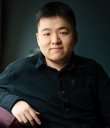
 Jingxiang Qu
· 1 previous affiliation
- Stony Brook UniversitySince 2024
- PhD student · Since 2024
- Current
Research Overview
Jingxiang Qu focuses on 3D molecular generation, generative modeling, and computer vision for intelligent transportation. His early research developed multi-sensor data fusion and image enhancement techniques for maritime surveillance systems. More recently, his work addresses the efficiency, interpretability, and stability of diffusion models and graph neural networks for computational drug design and molecular modeling.
Research Trajectory
The early phase of his research centered on intelligent maritime surveillance, addressing the limitations of standalone visual data in complex transportation environments. In 2022, he developed Edge Computing-Enabled Multi-Sensor Data Fusion for Intelligent Surveillance in Maritime Transportation Systems, proposing a method to simultaneously process visual and Automatic Identification System (AIS) data at the edge to improve the perception of maritime traffic. He expanded on this architecture with an Intelligent Maritime Surveillance Framework Driven by Fusion of Camera-Based Vessel Detection and AIS Data. This work introduced specialized filters based on data completeness, detection range, and vessel course to exclude invalid AIS signals, culminating in a robust data fusion module that synchronized camera and AIS inputs.
To handle the environmental degradations common in outdoor surveillance, his focus naturally extended to computer vision and image restoration. He participated in the development of SCANet: Self-Paced Semi-Curricular Attention Network for Non-Homogeneous Image Dehazing (2023), which utilized an attention generator and scene reconstruction module to enhance haze-occluded regions where traditional homogeneous dehazing methods failed. Alongside his focus on image restoration, his broader work in computer vision during 2023 expanded into several specialized areas. This included contributions to the research direction of Object Detection via Center Point Heatmaps and the area of Deep Learning for Spatially Sparse Target Segmentation. He also explored architectural and optimization improvements, engaging with directions such as Deformable Convolutions for Adaptive Spatial Sampling, Adaptive Weighting for Hard Regions and High Frequencies, and Composite Loss Functions for Perceptual Image Restoration.
Returning to maritime applications in 2024, he introduced Multi-Task Learning-Enabled Automatic Vessel Draft Reading for Intelligent Maritime Surveillance. This multi-task learning approach (MTL-VDR) provided a computationally efficient way to estimate vessel draft depth from images, assisting systems in determining whether vessels were overloaded. He also proposed Double Domain Guided Real-Time Low-Light Image Enhancement for Ultra-High-Definition Transportation Surveillance, designing a network (DDNet) capable of processing 2K and 4K video streams in real time while mitigating noise and vague edge features in low-light conditions.
Beginning in 2025, his research focus shifted significantly toward computational chemistry and generative artificial intelligence, specifically targeting the efficiency and reliability of 3D molecular generation. A major bottleneck in Gaussian Probability Path based Generative Models is the high computational cost of long generative trajectories. To address this, he developed IAGA: Identity-Aware Gaussian Approximation for Efficient 3D Molecular Generation, a method that improves generation efficiency without sacrificing training granularity or inference fidelity. Concurrently, he investigated the interpretability of molecular models in RISE: Radius of Influence based Subgraph Extraction for 3D Molecular Graph Explanation. This work sought to open the "black box" of 3D Geometric Graph Neural Networks by extracting explanatory subgraphs to understand why models predict specific molecular properties.
His work in molecular design also incorporates reinforcement learning and large language models. With collaborators, he designed RL-Guider: Leveraging Historical Decisions and Feedback for Drug Editing with Large Language Models (2025). By allowing the model to accumulate intuition from past feedback rather than treating each modification as an isolated event, the framework achieved higher success rates and faster inference speeds, contributing directly to the area of Steering Generative Chemical Models with Reinforcement Learning.
In 2026, he continued to refine diffusion and flow-matching models for molecular generation. He introduced GAGA: Gaussianity-Aware Gaussian Approximation for Efficient 3D Molecular Generation, which safely truncates generation trajectories by identifying the exact moment noised data becomes sufficiently Gaussian, thereby skipping redundant steps and accelerating both training and sampling. He also collaborated on Scaling the Prior: Size-Consistent Geometric Diffusion for 3D Molecular Generation, addressing "size-induced inconsistency" by rescaling noise distributions based on molecular size to harmonize generative trajectories. Finally, he participated in a study on Diffuse and Steer: Corrective Sampling for Stable 3D Molecular Diffusion, which developed corrective sampling techniques to navigate the highly concentrated and densely packed probability peaks inherent to strict chemical and geometric constraints.
Current Directions
The most recent papers in the evidence address the computational bottlenecks and structural constraints of 3D molecular generation. A primary focus is optimizing diffusion and flow-matching models to make them viable for high-throughput computational drug design. Recent work investigates techniques for safely truncating long generative trajectories by analyzing the Gaussian properties of noised data, significantly reducing the computational overhead of model training and inference.
Additionally, current research explores the strict geometric and chemical constraints that govern molecular stability. This includes developing size-consistent diffusion priors that adapt to varying molecular scales, as well as corrective sampling methods designed to prevent the generation of invalid structures caused by minor variations in atomic coordinates. Alongside these generative advancements, there is an ongoing interest in the interpretability of 3D geometric representations, ensuring that complex graph neural networks can provide explainable insights into their property predictions.
Profile updated
Loading new papers…
Other researchers whose papers cluster into the same research directions — a proxy for overlapping technical interests and shared intellectual neighborhoods.
See something wrong? Report a mistake