

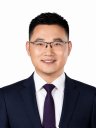
 Hongming Shan
· 2 previous affiliations
- Fudan UniversitySince 2020
- Full Professor · Since 2023
- Associate Professor · 2020–2023
- PhD student · 2011–2017
- Rensselaer Polytechnic Institute2017–2020
- Postdoc · 2017–2020
Research Overview
Hongming Shan focuses on machine learning, computer vision, and medical imaging, with an emphasis on generative AI and medical image reconstruction. His trajectory spans early work in dimensionality reduction and low-dose computed tomography to recent advances in multi-modal foundation models. Currently, his research addresses generalizable diffusion models and mixture-of-experts architectures for high-fidelity medical and cross-modal generation.
Research Trajectory
Hongming Shan’s early research explored foundational machine learning techniques, beginning with unsupervised kernel dimension reduction in Learning Linear Representation of Space Partitioning Trees Based on Unsupervised Kernel Dimension Reduction (2016). Shortly thereafter, his focus shifted significantly toward medical imaging, specifically addressing the challenges of low-dose computed tomography (LDCT). He introduced a novel 3D convolutional encoder-decoder network for LDCT denoising in 3-D Convolutional Encoder-Decoder Network for Low-Dose CT via Transfer Learning From a 2-D Trained Network (2018). By initializing a 3D model with weights from a pre-trained 2D counterpart, this approach achieved faster convergence and effectively suppressed noise while preserving crucial anatomical structures. This work contributed to the broader area of High Fidelity Reconstruction for Low Dose Medical Imaging and the research direction of Preserving High-Frequency Textures in Image Restoration.
Continuing this focus on clinical applicability, he evaluated deep learning approaches against established commercial algorithms in Competitive performance of a modularized deep neural network compared to commercial algorithms for low-dose CT image reconstruction (2019). This research demonstrated that neural networks, when combined with radiologist feedback, could produce reconstructions of higher or comparable quality to existing commercial methods. Concurrently, he participated in broader computer vision research, exploring multi-task generative adversarial networks (GANs) for gait recognition in Multi-Task GANs for View-Specific Feature Learning in Gait Recognition (2019). This period of his work frequently intersected with the area of Stabilizing Adversarial Training with Gradient Penalties.
By 2020, his research heavily integrated GANs and ensemble learning to enhance medical image resolution and quality. He contributed to CT Super-Resolution GAN Constrained by the Identical, Residual, and Cycle Learning Ensemble (GAN-CIRCLE), a framework that combined adversarial learning with cycle consistency and residual learning to generate high-resolution CT images from low-resolution inputs. He also led the development of an ensemble learning framework for magnetic resonance imaging in MRI Super-Resolution With Ensemble Learning and Complementary Priors. By fusing the outputs of multiple GANs trained on differently pre-processed data, the system produced high-fidelity images with reduced artifacts, advancing the field of Reconstructing High Resolution Medical Images from Accelerated Scans.
In 2022, his work expanded into unsupervised learning and clustering methodologies. He developed SPICE: Semantic Pseudo-Labeling for Image Clustering, a framework that bridged the gap between unsupervised clustering and supervised classification through a prototype-to-joint training strategy and contrastive learning. Returning to tomographic challenges, he also contributed to hybrid frameworks for image reconstruction in Stabilizing deep tomographic reconstruction: Part A. Hybrid framework and experimental results. The following year, he investigated the perceptual quality of restored medical images in Impact of loss functions on the performance of a deep neural network designed to restore low-dose digital mammography (2023). By analyzing how different loss functions balance noise reduction and detail preservation, this work aligned with his broader interest in the research direction of Metric Discordance in AI Assisted Medical Imaging.
Moving into 2025 and 2026, his lab has focused extensively on scaling generative architectures—such as transformers and diffusion models—for both medical imaging and cross-modal synthesis. To address the artifacts caused by incomplete-view CT scans, his team developed a multi-setting model in Prompted Contextual Transformer for Incomplete-View CT Reconstruction (2025) and explored universal pre-training strategies in Universal pre-training for generalizable incomplete-view CT reconstruction (2026), contributing to the area of Sparse View Neural Volumetric Reconstruction. They also tackled the domain gap between simulated and clinical data with Radiologist-in-the-Loop Self-Training for Generalizable CT Metal Artifact Reduction (2025), proposing a self-training framework to mitigate confirmation bias in semi-supervised learning. In the realm of diffusion models, his group introduced a foundational model for low-dose CT in FoundDiff: Foundational Diffusion Model for Generalizable Low-Dose CT Denoising (2025), which utilizes a dose-aware CLIP perception stage and a Mamba-powered diffusion process to generalize across diverse anatomical regions without task-specific fine-tuning.
Beyond clinical applications, his recent work encompasses expressive cross-modal generation and high-efficiency image synthesis. He developed a cross-modal diffusion framework to synthesize high-fidelity speech from silent video in Shushing! Let's Imagine an Authentic Speech from the Silent Video (2025), disentangling facial identity from emotional prosody. Similarly, his team introduced a discrete diffusion transformer for emotional speech synthesis in Emotional Face-to-Speech (2025), generating prosodically rich audio from a text prompt and a single reference image. They also advanced high-resolution image generation with RepLDM: Reprogramming Pretrained Latent Diffusion Models for High-Quality, High-Efficiency, High-Resolution Image Generation (2025), a training-free framework that enables 4K-resolution generation with improved efficiency. Finally, addressing the scalability of diffusion transformers, his lab proposed a novel Mixture-of-Experts framework in Routing Matters in MoE: Scaling Diffusion Transformers with Explicit Routing Guidance (2026), which separates tokens by functional roles and semantic content to overcome specialization gaps in visual generation tasks.
Current Directions
The most recent papers in the evidence indicate a strong focus on scaling generative architectures—particularly diffusion models and transformers—for both medical imaging and cross-modal synthesis. Recent work investigates foundational diffusion models capable of generalizing across diverse anatomical regions and radiation doses without requiring task-specific fine-tuning. Additionally, his lab is exploring the integration of Mixture-of-Experts (MoE) frameworks into diffusion transformers to improve routing, semantic specialization, and overall parameter efficiency. Beyond clinical applications, current research addresses complex cross-modal generative tasks, such as synthesizing emotionally expressive and prosodically rich speech directly from visual inputs like silent video or static facial images.
Profile updated
Loading new papers…
Other researchers whose papers cluster into the same research directions — a proxy for overlapping technical interests and shared intellectual neighborhoods.
See something wrong? Report a mistake