

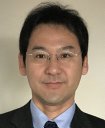
 Hiroshi Sawada
· 3 previous affiliations
- NTT (Japan)Since 1993
- Researcher · Since 1993
- NTT CorporationCurrent
- Current
- Kyoto University1987–1993
- MS student · 1991–1993
- Undergrad student · 1987–1991
Research Overview
Hiroshi Sawada focuses on the development of robust algorithms for signal processing, computational auditory scene analysis, and the optimization of complex data structures. His work is primarily centered on the Statistical and Sparse Foundations of Blind Source Separation (BSS), where he has contributed extensively to solving the "cocktail party problem" in acoustic environments. Over a career spanning more than three decades, Sawada’s research has evolved from discrete optimization in logic synthesis to the integration of Bayesian nonparametrics, Parts-Based Audio Decomposition with Non-negative Matrix Factorization (NMF), and most recently, the exploration of optoelectronic neural architectures.
Research Trajectory
The early phase of Sawada’s research, beginning in the early 1990s, was dedicated to the efficiency of digital systems and logic synthesis. During this period, he focused on the minimization of Binary Decision Diagrams (BDDs) and the synthesis of Look-Up Table (LUT) networks. This work addressed fundamental problems in computer-aided design, specifically the computational cost of representing and optimizing Boolean functions. By developing algorithms for variable exchange and pruning, he contributed to the scalability of circuit design tools.
By the mid-2000s, Sawada shifted his focus toward acoustic signal processing, specifically frequency-domain blind source separation. This transition marked a move from discrete logic optimization to continuous statistical inference. His work in this era addressed the critical "permutation problem" in BSS—the challenge of correctly aligning separated signal components across different frequency bins. He explored geometric interpretations of Independent Component Analysis (ICA) and Principal Component Analysis (PCA) to improve separation performance in convolutive mixtures, where sound reflections and sensor spacing complicate the recovery of original sources.
In the 2010s, Sawada’s work moved toward the unification of disparate separation techniques. He participated in the development of frameworks that combined the statistical independence of Independent Vector Analysis (IVA) with the structural modeling capabilities of NMF. This period also saw an increased focus on robustness through Bayesian modeling. By employing Bayesian nonparametrics and topic models, he contributed to systems capable of joint sound source localization and separation, reducing the need for environment-specific manual tuning and allowing for the estimation of an unknown number of sound sources.
In recent years, Sawada has investigated the intersection of traditional signal processing and modern machine learning. This includes the use of similarity search within large speech databases to improve the separation of short utterances, as well as the integration of neural networks into convolutional beamforming for joint denoising and dereverberation. His most recent work extends into the hardware-software co-design of optical neural networks, examining the physical constraints of optoelectronic converters in recurrent neural architectures.
Current Directions
Sawada’s current research explores two primary frontiers: the enhancement of BSS through external data and the optimization of high-speed neural computing. In the domain of audio separation, he is developing methods that leverage similarity search to provide priors for local Gaussian models, specifically targeting the separation of brief acoustic events that lack sufficient statistical samples for traditional BSS.
Simultaneously, he is investigating the performance of optoelectronic recurrent neural networks (OE-RNNs). This work addresses the technical challenges of maintaining time-series information in optical loops, specifically focusing on how resistive-capacitive (RC) delays in converters affect the processing of high-speed data. This represents a shift toward the physical layer of computation, seeking to reconcile the low-latency advantages of optical networks with the practical limitations of electrical compensation components.
Representative Work
Minimazation of Binary Decision Diagrams Based on Exchanges of Variables In this early work, Sawada and his colleagues addressed the exact minimization of BDDs, a critical task for reducing the complexity of Boolean function representations in circuit design. The paper introduced a novel algorithm based on variable exchanges that utilized pruning techniques to significantly reduce computation costs. This research demonstrated the feasibility of minimizing functions with up to 17 variables, a substantial improvement for the time, and proposed greedy and simulated annealing methods for larger-scale problems.
Near-field frequency domain blind source separation for convolutive mixtures Focusing on the permutation problem in BSS, this paper proposed a method for separating sources that originate from similar directions. While traditional Direction of Arrival (DOA) methods often fail in such scenarios, Sawada and his co-authors demonstrated that interpreting the ICA solution through a near-field model could yield information about the spheres on which sources exist. By combining this geometric information with correlation-based methods, the research provided a more robust solution for frequency-bin alignment in complex acoustic environments.
Frequency-Domain Blind Source Separation This work provides a comprehensive overview of the frequency-domain approach to BSS for acoustic signals in real-room environments. It details the application of short-time Fourier transforms to approximate convolutive mixtures as instantaneous mixtures, which can then be solved using complex-valued ICA. The chapter emphasizes the necessity of aligning permutation ambiguities and discusses the use of time difference of arrival (TDOA) and the correlation of signal envelopes as primary mechanisms for reconstruction.
Determined Blind Source Separation Unifying Independent Vector Analysis and Nonnegative Matrix Factorization In this collaborative study, Sawada participated in the development of a unified method for BSS that integrates IVA and NMF. While IVA effectively utilizes statistical independence, its spherical multivariate source model often fails to capture specific spectral structures like harmonics. By introducing NMF as the source model within the IVA framework, the researchers enabled the system to capture Additive Parts Based Representation Learning, leading to improved separation performance for pitched instrumental sounds and speech.
Similarity Search-based Blind Source Separation As the lead author of this study, Sawada proposed a BSS method designed specifically for short utterances, which typically lack the data length required for stable statistical estimation. The method utilizes a similarity search against a clean speech database to update the variance parameters of a local Gaussian model. This approach demonstrated that external acoustic data could effectively guide the separation process, particularly when the database contains components similar to the target source.
Optoelectronic Recurrent Neural Network Using Optical–Electrical–Optical Converters With RC Delay This recent research investigates the practical implementation of optical neural networks (ONNs). Sawada and his team modeled an optoelectronic RNN that uses optical-electrical-optical converters to compensate for loop losses. The study specifically analyzes the impact of RC delays on the network's ability to process time-series data, providing a critical evaluation of how hardware-level latency affects the overall performance of high-speed, low-power neural architectures.
Profile updated
Loading new papers…
Other researchers whose papers cluster into the same research directions — a proxy for overlapping technical interests and shared intellectual neighborhoods.
See something wrong? Report a mistake