

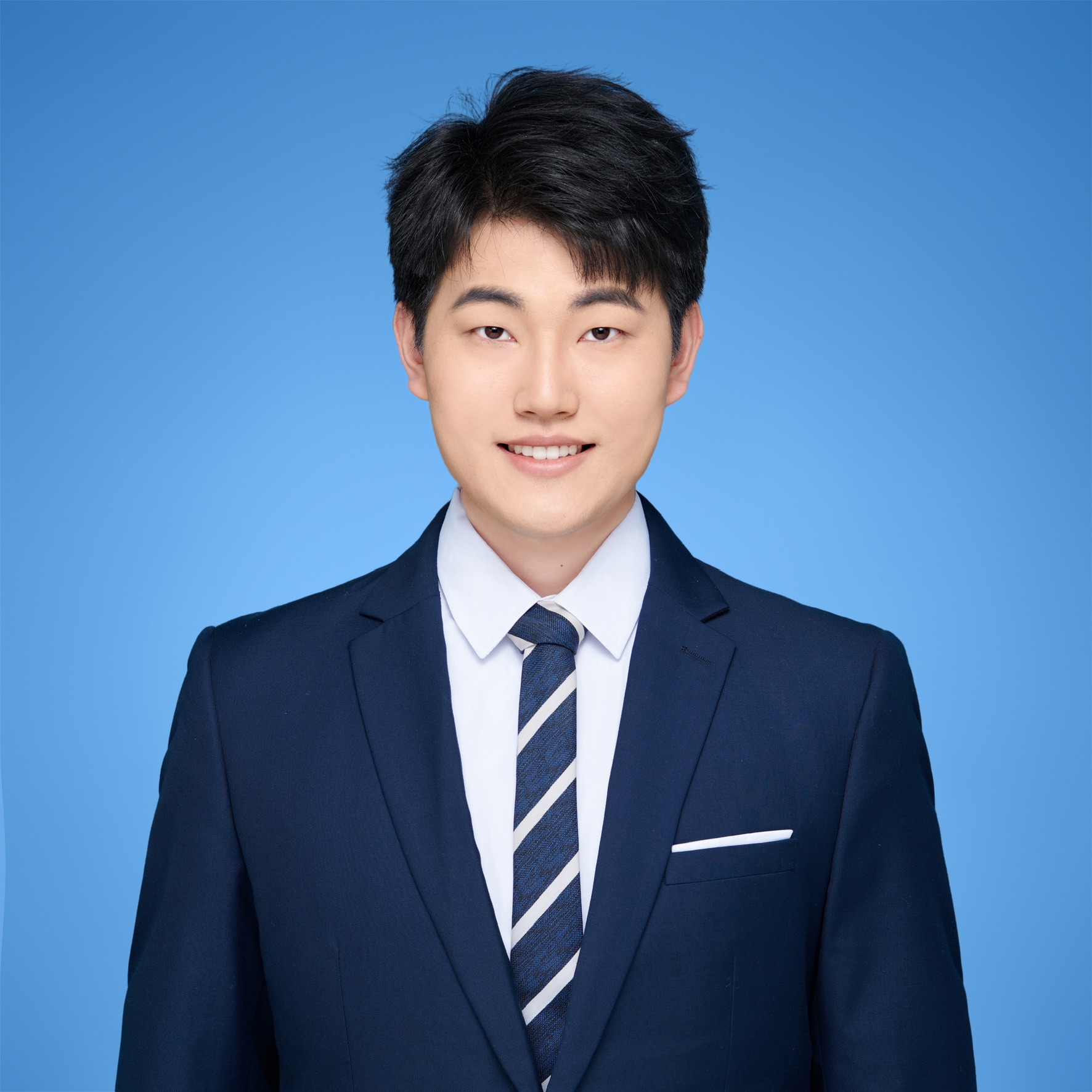
 He Sun
· 3 previous affiliations
- University of Hong KongSince 2026
- Postdoc · Since 2026
- Current
- PhD student · 2022–2026
- MS student · 2020–2022
- University of Macau2024–2025
- Intern · 2024–2025
4 other authors named He Sun: He Sun (Peking University · 112 papers), He Sun (University of Edinburgh · University of Chinese Academy of Sciences · 29 papers), He Sun (Yale University · Harvard University · 4 papers), He Sun (1 paper)
Research Overview
He Sun focuses on privacy-preserving distributed computing, federated learning, and spatial crowdsourcing. Early work addressed data trading stability and task allocation mechanisms under unknown market preferences, emphasizing differential privacy and age-of-information metrics. More recently, his research investigates the federated fine-tuning of large language models and streaming federated learning in non-stationary data environments.
Research Trajectory
In 2024, he investigated the intersection of privacy and market dynamics in crowdsensing systems. He introduced mechanisms to ensure market stability and protect seller data qualities in Crowdsensing Data Trading for Unknown Market: Privacy, Stability, and Conflicts, addressing environments where buyer preference sequences are unknown. Expanding on privacy-preserving mechanisms in spatial crowdsourcing, he developed a differentially private auction-based bandit scheme in Privacy Preserving Task Push in Spatial Crowdsourcing With Unknown Popularity. This work tackled the challenge of pushing tasks to workers when both task popularity and worker preferences contain sensitive information that must be protected from disclosure.
Concurrently, his focus extended to distributed machine learning paradigms. In Age-of-Information-Aware Federated Learning, he designed client selection strategies for scenarios where local datasets update periodically. By incentivizing the use of fresh data, this approach minimizes global model loss while maintaining the core privacy guarantees of federated learning.
The following year, he participated in comprehensive evaluations of the research direction Communication Efficient Federated Fine-tuning of Foundation Models. As part of a broader collaboration, he contributed to A Survey on Federated Fine-Tuning of Large Language Models, which synthesized challenges and parameter-efficient fine-tuning methods for collaborative model adaptation. This survey intersects with several emerging fields, including the broader area of Low-Rank Weight Decomposition for Efficient Model Adaptation and the research direction Federated Low-Rank Adaptation of Foundation Models, further advancing work in the area of Decentralized Model Training via Federated Learning.
Most recently, his research has addressed dynamic and non-stationary data streams. In 2026, he collaborated on SFedPO: Streaming Federated Learning with a Prediction Oracle under Temporal Shifts, a framework designed for decentralized learning where data flows continuously and distributions change over time. By utilizing a prediction oracle to anticipate these shifts and intelligently weight client updates, this contribution aligns with the research direction Federated Learning for Non-Stationary Data Environments and touches upon the area of Mitigating Non-Stationary Distribution Shift in Time-Series Forecasting.
Current Directions
Recent work investigates the adaptation of federated learning systems to increasingly complex and dynamic environments. The most recent papers in the evidence address the challenges of streaming data, where local client distributions shift over time. By incorporating predictive mechanisms to anticipate these temporal shifts, this research aims to maintain robust global models without compromising decentralized privacy. Additionally, current efforts explore the intersection of federated learning and large language models, focusing on parameter-efficient fine-tuning techniques that enable collaborative model adaptation under strict communication and privacy constraints.
Profile updated
Loading new papers…
Other researchers whose papers cluster into the same research directions — a proxy for overlapping technical interests and shared intellectual neighborhoods.
See something wrong? Report a mistake