

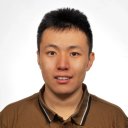
 He Sun
· 4 previous affiliations
- Peking UniversitySince 2022
- Assistant Professor · Since 2022
- California Institute of Technology2019–2022
- Postdoc · 2019–2022
- Princeton University2014–2019
- PhD student · 2014–2019
- Research intern · 2018
4 other authors named He Sun: He Sun (University of Edinburgh · University of Chinese Academy of Sciences · 29 papers), He Sun (University of Hong Kong · University of Science and Technology of China · 10 papers), He Sun (Yale University · Harvard University · 4 papers), He Sun (1 paper)
Research Overview
He Sun focuses on computational imaging, generative modeling for inverse problems, and uncertainty quantification in scientific applications. His trajectory spans from probabilistic inference for astronomical imaging to the development of robust generative priors for corrupted data. Recently, his work emphasizes diffusion distillation and 3D generation techniques for both scientific and general visual domains.
Research Trajectory
Early research included collaborative work in the area of Sensor Noise Robustness for Sim-to-Real Transfer. During this period, he also contributed to Learning Heuristic Functions for Mobile Robot Path Planning Using Deep Neural Networks, applying deep neural networks to learn heuristic functions for mobile robot navigation.
Moving into the early 2020s, the focus shifted toward computational imaging and astronomical applications, particularly addressing the challenge of extracting reliable signals from noisy, indirect measurements. He established a strong foundation in the direction of Uncertainty Quantification for Imaging Inverse Problems. In this domain, he introduced Deep Probabilistic Imaging: Uncertainty Quantification and Multi-modal Solution Characterization for Computational Imaging in 2021. Building on these concepts, he subsequently proposed alpha-Deep Probabilistic Inference (alpha-DPI): efficient uncertainty quantification from exoplanet astrometry to black hole feature extraction, a framework designed to efficiently estimate posteriors for high-dimensional inverse problems in astrophysics.
By 2023, his research expanded into biomedical imaging, specifically targeting the dynamic behavior of biomolecules. In Recovering a Molecule's 3D Dynamics from Liquid-phase Electron Microscopy Movies, his lab developed TEMPOR, an algorithm utilizing implicit neural representations and dynamical variational inference to observe conformational changes in native liquid environments. This work directly contributes to the broader area of Continuous Volumetric Modeling with Coordinate Based Networks.
In 2024, a major theme emerged around training generative models without access to pristine data. He led several projects advancing the research direction of Learning Clean Distributions from Corrupted Observations. This included An Expectation-Maximization Algorithm for Training Clean Diffusion Models from Corrupted Observations, which introduced a framework to iteratively reconstruct clean images and retrain diffusion models from highly corrupted datasets—a project that also advanced the area of Restoring Images with Unknown Complex Degradations. Parallel work led to Blind Inversion using Latent Diffusion Priors, which nested latent diffusion models within an expectation-maximization loop to solve blind inverse problems like deblurring and sparse-view reconstruction. Further extending these concepts, his group developed Integrating Amortized Inference with Diffusion Models for Learning Clean Distribution from Corrupted Images, pairing conditional normalizing flows with diffusion models to simultaneously recover images and model their underlying distributions. Alongside these methodological advances, he continued to address complex astronomical imaging challenges, proposing a pipeline for Reconstructing Satellites in 3D from Amateur Telescope Images that overcomes severe motion blur and atmospheric turbulence using 3D Gaussian techniques.
In 2025 and beyond, his trajectory has increasingly focused on accelerating generative inference and improving 3D generation. He developed Uni-Instruct: One-step Diffusion Model through Unified Diffusion Divergence Instruction, which provides a unified theoretical framework for one-step diffusion distillation. This interest in fast inference also informed collaborative work on InstantViR: Real-Time Video Inverse Problem Solver with Distilled Diffusion Prior, achieving high-speed video restoration. In the medical domain, he participated in developing a generative neural physics framework for In vivo 3D ultrasound computed tomography of musculoskeletal tissues with generative neural physics, enabling rapid, high-resolution 3D quantitative imaging. Simultaneously, his lab has addressed the limitations of text-to-3D generation. To combat limited diversity in generated assets, he introduced Dive3D: Diverse Distillation-based Text-to-3D Generation via Score Implicit Matching. Most recently, in 2026, he proposed Let Language Constrain Geometry: Vision–Language Models as Semantic and Spatial Critics for 3D Generation, a framework that leverages large vision-language models to critique and guide 3D generation, mitigating geometric hallucinations and semantic misalignment.
Current Directions
The most recent work in the evidence investigates the acceleration of diffusion models and the refinement of 3D generative processes. A primary focus is on diffusion distillation techniques that enable one-step generation and real-time solving of video inverse problems without sacrificing output fidelity. Additionally, current research addresses the geometric and semantic reliability of text-to-3D generation. By integrating novel loss formulations like Score Implicit Matching and utilizing large vision-language models as spatial critics, this work aims to resolve common artifacts—such as hallucinated geometry and multi-face inconsistencies—while preserving high diversity and alignment in generated 3D assets.
Profile updated
| Paper | Venue | Year |
|---|---|---|
| FlowDAS: A Stochastic Interpolant-based Framework for Data AssimilationGitHubumjiayx/ | NeurIPS | 2025 |
Loading new papers…
Other researchers whose papers cluster into the same research directions — a proxy for overlapping technical interests and shared intellectual neighborhoods.
See something wrong? Report a mistake