

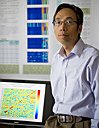
 Yu-Ping Wang
· 2 previous affiliations
- Tulane UniversityCurrent
- Current
- Full Professor · 2010–2025
- Xi'an Jiaotong University1993–1996
- PhD student · 1993–1996
1 other author named Yu-Ping Wang: Yu-Ping Wang (Beijing Institute of Technology · 114 papers)
Research Overview
Yu-Ping Wang focuses on computational neuroimaging, graph neural networks, and biomedical informatics. Initial work emphasized the development of advanced graph-based models for analyzing functional connectivity and MRI-derived brain networks to improve disease diagnosis and prognosis. More recently, this focus has expanded to include the integration of federated learning and foundation models in healthcare applications.
Research Trajectory
In 2024, Wang directed significant research into the application of graph neural networks (GNNs) for complex neuroimaging and neuro-oncology tasks. A primary focus during this period was the extraction of richer, more relational features from brain scans to predict patient outcomes. As the senior author on A Graph Neural Network Based Fusion of MRI-Derived Brain Network and Clinical Data for Glioblastoma Survival Prediction, Wang's lab investigated how regional radiomics similarity networks (R2SNs) could improve overall survival predictions for patients with glioblastoma. Rather than treating MRI-derived radiomics features from different brain regions independently, this work utilized GNNs to model the underlying associations between regions exhibiting radiomic similarity, facilitating more personalized therapeutic insights and early intervention strategies.
Concurrently, Wang led methodological advancements in functional connectivity network (FCN) analysis for brain disease diagnosis. In Adaptive Multiview Community-Preserved Graph Convolutional Network for Multiatlas-Based Functional Connectivity Analysis, Wang and colleagues addressed the limitations of single-atlas FCNs and static population graphs. As the principal investigator, Wang guided the development of an adaptive multiview community-preserved graph convolutional network (CP-GCN). This architecture was designed to integrate complementary information across multiatlas-based FCNs while dynamically learning the population graph structure during training, thereby capturing a more accurate representation of subject relations for population-level classification.
By 2025, Wang's collaborative efforts expanded to address broader infrastructural and privacy-preserving challenges in biomedical artificial intelligence. Participating as a co-author in Open challenges and opportunities in federated foundation models towards biomedical healthcare, Wang contributed to a comprehensive survey examining the intersection of federated learning and large-scale foundation models. This work explored how models that rely on massive datasets and self-supervised learning can be securely and effectively adapted for diverse clinical data modalities, including diagnostic images and clinical reports.
Current Directions
The most recent papers in the evidence indicate a continuing interest in the intersection of advanced machine learning architectures and biomedical healthcare. Building upon a foundation of graph-based deep learning for neuroimaging, recent collaborative work investigates the deployment of federated foundation models in clinical settings. This direction addresses the critical need to process diverse, multimodal medical data while navigating the privacy, security, and scalability constraints inherent to healthcare via federated learning frameworks.
Profile updated
Loading new papers…
Other researchers whose papers cluster into the same research directions — a proxy for overlapping technical interests and shared intellectual neighborhoods.
See something wrong? Report a mistake