

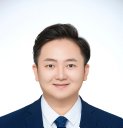
 Hanyu Zhou
· 4 previous affiliations
- 新加坡国立大学Since 2024
- 博士后研究员 · Since 2024
- Current
- Postdoc · 2024–2026
- PhD student · 2019–2024
- Central South University2015–2019
- Undergrad student · 2015–2019
2 other authors named Hanyu Zhou: Hanyu Zhou (Huazhong University of Science and Technology · 2 papers), Hanyu Zhou (1 paper)
Research Overview
Hanyu Zhou focuses on 4D vision, multimodal sensor fusion, and embodied artificial intelligence, with an emphasis on scene perception under challenging physical conditions. His trajectory spans from domain adaptation for optical flow in adverse weather to the integration of event cameras for high-speed dynamic tracking. Most recently, his work investigates spatiotemporal-aware large multimodal models for dynamic scene understanding and robotic manipulation.
Research Trajectory
Zhou’s early research addressed the fragility of visual perception systems in non-ideal environments, particularly focusing on image restoration and motion estimation under adverse weather conditions. With collaborators, he explored bidirectional learning for joint image degradation and restoration in Closing the Loop: Joint Rain Generation and Removal via Disentangled Image Translation. This work utilized a disentangled translation network to bridge the gap between simplistic synthetic rain and complex real-world rainy images. Recognizing that adverse weather also severely degrades motion estimation, Zhou extended these principles to optical flow. He developed Unsupervised Hierarchical Domain Adaptation for Adverse Weather Optical Flow, which transferred knowledge from clean source domains to degraded target domains by leveraging the insight that weather alters warp errors rather than intrinsic scene motion. He further refined this approach in Unsupervised Cumulative Domain Adaptation for Foggy Scene Optical Flow to address both clean-to-synthetic and synthetic-to-real domain gaps. This line of inquiry culminated in Adverse Weather Optical Flow: Cumulative Homogeneous-Heterogeneous Adaptation, which systematically tackled the distinct impacts of static weather, such as fog, and dynamic weather, such as rain, on optical flow estimation.
As his focus on challenging environments deepened, Zhou recognized the fundamental limitations of standard frame cameras in high-speed and low-light scenarios. This led him into the research direction of Sharp 3D Reconstruction from Motion Blurred Imagery. To address the spatial misalignment issues that plague autonomous driving sensors, he introduced CoSEC: A Coaxial Stereo Event Camera Dataset for Autonomous Driving. By utilizing a beam-splitter hardware setup to eliminate the baseline between event and frame cameras, this work achieved pixel-perfect alignment, advancing the field of Robust Feature Fusion for Spatially Misaligned Sensors. Building on this multimodal foundation, he developed Bring Event into RGB and LiDAR: Hierarchical Visual-Motion Fusion for Scene Flow, which utilized event data as a homogeneous bridge to resolve the modality gap between RGB and LiDAR in visual and motion spaces.
Zhou also applied event-based vision to nighttime environments, contributing to the broader area of Hierarchical Feature Alignment for Domain Adaptation. He proposed Exploring the Common Appearance-Boundary Adaptation for Nighttime Optical Flow to improve motion tracking in the dark, and contributed to NER-Net+: Seeing Motion at Nighttime With an Event Camera, further extending motion perception capabilities in low-light conditions. To handle high-dynamic scenes where standard frames suffer from severe motion blur, he advanced the area of Complementary Fusion of Event Streams and Intensity Frames. He introduced Bridge Frame and Event: Common Spatiotemporal Fusion for High-Dynamic Scene Optical Flow, a framework that projects both modalities into a common spatiotemporal gradient space to enable dense, continuous motion estimation. This work intersected with work in the area of Full Velocity Estimation from Partial Radial Observations. Working with co-authors, he also integrated these fusion concepts into generative architectures in Injecting Frame-Event Complementary Fusion into Diffusion for Optical Flow in Challenging Scenes, maintaining sharp motion tracking despite sensor noise and blur.
Expanding from 2D motion to 3D and 4D scene reconstruction, Zhou developed STD-GS: Exploring Frame-Event Interaction for SpatioTemporal-Disentangled Gaussian Splatting to Reconstruct High-Dynamic Scene. This method disentangled static backgrounds from dynamic objects, using event data to guide the motion of 4D Gaussians for high-quality visual reconstruction. He then introduced 4D-VGGT: A General Foundation Model with SpatioTemporal Awareness for Dynamic Scene Geometry Estimation, which employed a divide-and-conquer approach to separately process spatial relationships across views and temporal continuity across time, supporting tasks like depth estimation and point trajectory prediction.
Most recently, Zhou has focused on embedding this spatiotemporal awareness into Large Multimodal Models (LMMs). He developed Uni4D-LLM: A Unified SpatioTemporal-Aware VLM for 4D Understanding and Generation, a Transformer-based framework that bridges autoregressive reasoning for scene description with diffusion-based denoising for scene generation, contributing to the research direction of Multi-dimensional Rotary Embeddings for Spatiotemporal Transformers. To address the temporal blind spots inherent in standard video-based models, he introduced LLaFEA: Frame-Event Complementary Fusion for Fine-Grained Spatiotemporal Understanding in LMMs, which fuses traditional frames with temporally dense event streams via a hierarchical attention mechanism. He also proposed LLaVA-4D: Embedding SpatioTemporal Prompt into LMMs for 4D Scene Understanding, which disentangles visual features into distinct spatial and temporal components to track moving objects in the physical world. Applying these 4D representations to embodied AI, he developed VLA-4D: Embedding 4D Awareness into Vision-Language-Action Models for SpatioTemporally Coherent Robotic Manipulation, a model that predicts both the trajectory and the duration of movements to achieve smoother, more precise robotic control.
Current Directions
Recent work investigates the integration of 4D spatiotemporal awareness into large multimodal models and robotic control systems. The most recent papers in the evidence address the challenge of dynamic scene understanding by embedding temporal prompts and high-resolution event-camera data into vision-language architectures. This includes developing foundation models that unify 4D perception with generative capabilities, allowing a single framework to both reason about and synthesize complex dynamic environments. Additionally, current research extends these multimodal representations into the physical world through vision-language-action models, focusing on predicting the temporal duration of actions alongside spatial coordinates to enable temporally coherent and robust robotic manipulation.
Profile updated
Loading new papers…
Other researchers whose papers cluster into the same research directions — a proxy for overlapping technical interests and shared intellectual neighborhoods.
See something wrong? Report a mistake