

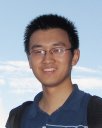
 Yi Chang
· 2 previous affiliations
- Full Professor · Since 2026
- Associate Professor · 2024–2025
- Lecturer · 2022–2023
- PhD student · 2016–2019
- MS student · 2011–2014
- Peng Cheng Laboratory2020–2022
- Postdoc · 2020–2022
2 other authors named Yi Chang: Yi Chang (Jilin University · 357 papers), Yi Chang (48 papers)
Research Overview
Yi Chang focuses on computational imaging, computer vision, and image restoration, with an emphasis on recovering high-quality visual information from degraded environments. His trajectory spans from hyperspectral image recovery and weather-degraded scene restoration to multi-modal sensor fusion. Most recently, his work investigates event-based vision and spatio-temporal target detection for dynamic, real-world applications.
Research Trajectory
Chang’s early research concentrated on hyperspectral image (HSI) restoration, addressing the complex spatial-spectral correlations required to recover clean signals from degraded inputs. He introduced HSI-DeNet: Hyperspectral Image Restoration via Convolutional Neural Network, establishing a deep learning foundation for this task. Building on this, he developed Weighted Low-Rank Tensor Recovery for Hyperspectral Image Restoration, a unified framework that models HSIs as tensors to simultaneously resolve multiple overlapping degradation issues.
Moving into broader environmental degradations, Chang explored the removal of rain and haze from images, focusing on the gap between synthetic training data and real-world conditions. With collaborators, he proposed Closing the Loop: Joint Rain Generation and Removal via Disentangled Image Translation, which tightly couples rain generation and removal to better handle complex real rain. This approach intersects with the area of Autonomous Self-Correction Loops for Generative Output Refinement. He subsequently contributed to Physically Disentangled Intra- and Inter-domain Adaptation for Varicolored Haze Removal, addressing chromatic casts in real scenes by separating color correction from knowledge transfer. This work aligns with the research direction of Robustness through Latent Representation Alignment.
In 2024, Chang’s focus expanded to severe geometric distortions caused by atmospheric turbulence in long-range imaging. He participated in the creation of a large-scale dataset and a coarse-to-fine framework in Long-Range Turbulence Mitigation: A Large-Scale Dataset and A Coarse-to-Fine Framework. This research advanced the areas of Coarse to Fine Refinement for Motion Estimation and Low Rank and Sparse Decomposition for Video Analysis. Concurrently, he continued to refine deraining techniques by introducing Unsupervised Deraining: Where Asymmetric Contrastive Learning Meets Self-Similarity, an unsupervised approach that leverages internal image patch similarities to remove rain without requiring paired training data.
A significant portion of Chang’s recent trajectory involves multi-modal sensor fusion and event-based vision, particularly for challenging lighting and dynamic conditions. To bridge the modality gap between standard optical sensors and LiDAR, he collaborated on Bring Event into RGB and LiDAR: Hierarchical Visual-Motion Fusion for Scene Flow, integrating event data as a homogeneous bridge in both visual and motion spaces. This effort contributes to the broader area of Hierarchical Feature Alignment for Domain Adaptation. He also explored nighttime optical flow in Exploring the Common Appearance-Boundary Adaptation for Nighttime Optical Flow.
Recognizing the limitations of conventional RGB cameras in low-light dynamic scenes, Chang’s collaborative work investigated event cameras, which offer microsecond temporal resolution and high dynamic range. He contributed to Seeing Motion at Nighttime with an Event Camera, analyzing the temporal trailing and spatial non-stationary distribution of nighttime events. This aligns with the research direction of Sharp 3D Reconstruction from Motion Blurred Imagery. Building on event-based motion modeling, he developed TimeTracker: Event-based Continuous Point Tracking for Video Frame Interpolation with Non-linear Motion, utilizing continuous local region tracking to improve dense optical flow estimation for video frame interpolation.
Most recently, Chang has participated in research targeting infrared unmanned aerial vehicle (UAV) detection, a domain characterized by weak target features and complex backgrounds. His collaborative efforts include DANet: Multi-scale UAV Target Detection with Dynamic Feature Perception and Scale-aware Knowledge Distillation, which employs scale-adaptive feature enhancement. He also contributed to Spatio-Temporal Context Learning with Temporal Difference Convolution for Moving Infrared Small Target Detection, balancing motion cues and spatial feature extraction, and Differentiated Attention Guided Network over Hierarchical and Aggregated Features for Intelligent UAV Surveillance, which uses spatial-aware channel attention to isolate UAV targets from background distraction.
Current Directions
Recent work investigates the intersection of spatio-temporal feature modeling and specialized sensor data for robust machine perception. The most recent papers in the evidence address moving infrared small target detection, particularly for UAV surveillance in complex environments. This involves developing dynamic attention mechanisms and temporal difference convolutions to isolate weak target features from background interference. Additionally, ongoing themes include leveraging event-based cameras for continuous point tracking and non-linear motion modeling, pushing the capabilities of video frame interpolation and nighttime dynamic imaging.
Profile updated
Loading new papers…
Other researchers whose papers cluster into the same research directions — a proxy for overlapping technical interests and shared intellectual neighborhoods.
See something wrong? Report a mistake