

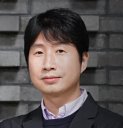
 Gunhee Kim
· 2 previous affiliations
- Seoul National UniversitySince 2015
- Full Professor · Since 2019
- Assistant Professor · 2015–2019
- Carnegie Mellon University2006–2013
- PhD student · 2009–2013
- MS student · 2006–2008
Research Overview
Gunhee Kim focuses on computer vision, natural language processing, and multimodal artificial intelligence. His trajectory spans from early unsupervised image analysis and video question answering to advanced generative models and reinforcement learning. Recently, his work emphasizes large language model reasoning, autonomous agents, and immersive audio-visual generation.
Research Trajectory
Gunhee Kim’s early research focused on unsupervised image analysis and scalable object discovery. He developed fast, alternating optimization techniques for discovering regions of interest in cluttered web images, as detailed in Unsupervised Detection of Regions of Interest Using Iterative Link Analysis. Building on this foundation, he introduced CoSand, a distributed approach for segmenting common regions across large-scale image collections in Distributed cosegmentation via submodular optimization on anisotropic diffusion.
Moving beyond static image analysis, his research expanded into multimodal storytelling and video understanding. He proposed the CRCN architecture to generate coherent narratives across photo sequences in Expressing an Image Stream with a Sequence of Natural Sentences, contributing to research in narrative coherence across image sequences and tracking discourse entities for local text coherence. He subsequently directed the creation of the TGIF-QA benchmark in TGIF-QA: Toward Spatio-Temporal Reasoning in Visual Question Answering, pushing visual question answering into the video domain by modeling spatial and temporal attention. This advanced the broader area of Asymmetric Spatiotemporal Decoupling for Video Models, alongside work in disambiguating actions through temporal context.
Concurrently, his lab explored generative sequence modeling and reinforcement learning. In A Hierarchical Latent Structure for Variational Conversation Modeling, his team addressed the degeneration problem in variational autoencoders applied to dialogue, contributing to the area of Mitigating Posterior Collapse in Latent Variable Models. In reinforcement learning, he developed an information-theoretic exploration strategy in Curiosity-Bottleneck: Exploration By Distilling Task-Specific Novelty, which helps agents ignore task-irrelevant distractions and mitigates the "noisy TV" problem.
The application of information bottleneck principles was further extended to generative adversarial networks in IB-GAN: Disentangled Representation Learning with Information Bottleneck Generative Adversarial Networks, advancing the area of Learning Minimal Sufficient Representations via Information Bottlenecks by balancing latent space structure and reconstruction fidelity. Around the same time, he participated in developing efficient training paradigms for video models, such as the approach detailed in Self-Supervised Learning of Compressed Video Representations, which avoids full frame decoding and intersects with self-supervised video representation learning via compressed domain motion vectors.
More recently, his research has heavily emphasized the reasoning capabilities and adaptability of large language models (LLMs). In GrowOVER: How Can LLMs Adapt to Growing Real-World Knowledge?, his group investigated how retrieval-augmented generation systems handle evolving facts, contributing to areas like Iterative Retrieval Augmented Generation for Multi Hop Reasoning and overcoming temporal knowledge obsolescence. He also explored fundamental conceptual reasoning in LLMs with Is a Peeled Apple Still Red? Evaluating LLMs' Ability for Conceptual Combination with Property Type. To support continuous model adaptation, his team introduced an unsupervised method for detecting out-of-distribution document collections in When Should Dense Retrievers Be Updated in Evolving Corpora? Detecting Out-of-Distribution Corpora Using GradNormIR, advancing continuous model adaptation for evolving data streams.
His recent multimodal work extends into complex audio-visual generation and perception. He directed the development of an end-to-end framework for generating 3D spatial audio from silent video in ViSAGe: Video-to-Spatial Audio Generation, contributing to audio-visual disentanglement in multi-source environments. To rigorously test the acoustic perception of audio-language models, his lab introduced a benchmark based on marine mammal vocalizations in WoW-Bench: Evaluating Fine-Grained Acoustic Perception in Audio-Language Models via Marine Mammal Vocalizations, supporting research in bridging the perceptual validation gap in acoustic research. In the domain of continuous learning for complex data representations, he led the work on Meta-Continual Learning of Neural Fields, which intersects with dynamic architecture expansion and modular parameter isolation for continual learning.
His latest research also tackles autonomous agents and advanced rendering techniques. He evaluated GUI agents on long-form narrative tasks in FlashAdventure: A Benchmark for GUI Agents Solving Full Story Arcs in Diverse Adventure Games, contributing to role specialization in multi-agent architectures. For web-browsing agents, his team developed a data selection framework in Weasel: Out-of-Domain Generalization for Web Agents via Importance-Diversity Data Selection, advancing dataset pruning and high information density curation for model training. Finally, in the realm of photorealistic scene representation, he proposed a distribution-based approach to fix rendering artifacts in Gaussian Blending: Rethinking Alpha Blending in 3D Gaussian Splatting, contributing to 3D Gaussian splatting and anti-aliasing for multi-scale neural rendering.
Current Directions
The most recent papers in the evidence indicate a strong focus on the reasoning capabilities of large language models and the development of autonomous agents. Recent work investigates how LLMs adapt to evolving real-world knowledge and how they perform conceptual combinations. Concurrently, there is a significant emphasis on building robust GUI and web-browsing agents capable of long-horizon tasks and out-of-domain generalization. In the multimodal domain, current directions include generating immersive 3D spatial audio from visual inputs, evaluating fine-grained acoustic perception in audio-language models, and refining photorealistic scene representations through advanced 3D Gaussian Splatting techniques.
Profile updated
Loading new papers…
Other researchers whose papers cluster into the same research directions — a proxy for overlapping technical interests and shared intellectual neighborhoods.
See something wrong? Report a mistake