

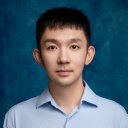
 Yu Cheng
· 10 previous affiliations
- Chinese University of Hong KongSince 2024
- Associate Professor · Since 2024
- Current
- SkyworkSince 2026
- Chief Scientist · Since 2026
- Skywork AISince 2026
- Chief Scientist · Since 2026
- MiniMax (People's Republic of China)2023–2025
- Chief Scientist · 2023–2025
- Rice University2023
- Visiting Professor · 2023
- Renmin University of China2018–2023
- Visiting Professor · 2018–2023
- Microsoft (United States)2018–2023
- Principal Researcher · 2018–2023
- Research Staff Member · 2015–2018
- Northwestern University2010–2015
- PhD student · 2010–2015
- Tsinghua University2006–2010
- Undergrad student · 2006–2010
7 other authors named Yu Cheng: Yu Cheng (Brown University · 96 papers), Yu Cheng (7 papers), Yu Cheng (Peking University · 7 papers), Yu Cheng (Mayun University · 4 papers), Yu Cheng (Huawei Technologies (China) · National University of Singapore · 3 papers), and 2 more
Research Overview
Yu Cheng focuses on efficient neural architectures, model compression, and multimodal learning. His early work addressed temporal sequence modeling and knowledge distillation for natural language understanding, while his recent research investigates reinforcement learning strategies and reasoning capabilities in large language and vision-language models. He currently explores methods for iterative self-improvement and physical consistency in generative foundation models.
Research Trajectory
Cheng’s early research explored temporal dynamics in video analysis. He introduced Temporal Sequence Modeling for Video Event Detection, which captured long-range dependencies at the sub-event level without relying on explicit event annotations. As the field shifted toward large-scale pre-training, his focus expanded to natural language processing and model efficiency. He developed Patient Knowledge Distillation for BERT Model Compression, addressing the computational overhead of deploying deep transformer architectures. To improve the generalization and robustness of these models, he proposed FreeLB: Enhanced Adversarial Training for Natural Language Understanding, an algorithm that promotes higher invariance in the embedding space by minimizing adversarial risk during fine-tuning. Concurrently, he collaborated on UNITER: UNiversal Image-TExt Representation Learning, which established a unified framework for joint visual and textual understanding through large-scale pre-training across multiple datasets.
Building on his foundation in both temporal modeling and language representation, Cheng began investigating how large language models process time. His work on Timo: Towards Better Temporal Reasoning for Language Models systematically evaluated temporal reasoning tasks, leveraging mathematical datasets to establish a stronger foundation for models to understand temporal relationships. This contributed to the broader research direction of Temporal Grounding for Large Language Models.
In the vision-language domain, his research identified critical limitations in how models synthesize independent skills. He introduced Unveiling the Compositional Ability Gap in Vision-Language Reasoning Model, proposing a diagnostic benchmark and a reinforcement learning strategy with progressive rewards to improve cross-modal reasoning. Addressing the physical plausibility of generated content, he led the development of VideoREPA: Learning Physics for Video Generation through Relational Alignment with Foundation Models. By distilling relational physics knowledge into text-to-video diffusion models, this work advanced the area of Aligning Video Generation Models with Physical Laws. He also contributed to Diving into Self-Evolving Training for Multimodal Reasoning, which presented a framework for large multimodal models to learn from their own reasoning trajectories, aligning with ongoing work in the area of Iterative Self Improvement for Large Language Models.
Cheng’s most recent trajectory is characterized by a deep integration of reinforcement learning (RL) and novel architectures to unlock complex reasoning. In the domain of Scaling Language Model Reasoning Beyond Verifiable Rewards, his team proposed ExGRPO: Learning to Reason from Experience, a framework that stabilizes RL training by strategically replaying past successful experiences and prioritizing low-entropy reasoning chains. This focus on rigorous reasoning culminated in Achieving Gold-Medal-Level Olympiad Reasoning via Simple and Unified Scaling, where he directed the creation of a compact model capable of sustaining extensive reasoning trajectories to solve complex mathematical and physical Olympiad problems. To ensure these advanced capabilities remain aligned with specific behavioral constraints, he explored test-time deliberation in Reasoning over Boundaries: Enhancing Specification Alignment via Test-time Deliberation.
In parallel, Cheng has significantly advanced multimodal reasoning paradigms. He guided work on Revisual-R1: Advancing Multimodal Reasoning From Optimized Cold Start to Staged Reinforcement Learning, introducing a three-stage curriculum that combines text-centric initialization with stabilized multimodal RL. He also investigated the perceptual mechanisms of these models in Spotlight on Token Perception for Multimodal Reinforcement Learning, optimizing training by isolating tokens that actively rely on visual input. Pushing beyond traditional text-centric approaches, his research introduced DiffThinker: Towards Generative Multimodal Reasoning with Diffusion Models, which reframes reasoning as an iterative image-to-image denoising process, contributing to the emerging field of The Textual Information Bottleneck in Multimodal Reasoning. For autoregressive generation, he developed From Broad Exploration to Stable Synthesis: Entropy-Guided Optimization for Autoregressive Image Generation, utilizing token-level uncertainty to guide the learning budget. Addressing the challenge of extended visual contexts, his team tackled long-form video processing in FrameThinker: Learning to Think with Long Videos via Multi-Turn Frame Spotlighting.
Alongside algorithmic improvements, Cheng continues to innovate in model efficiency. He presented ExpertWeaver: Unlocking the Inherent MoE in Dense LLMs with GLU Activation Patterns, a training-free method to convert dense models into sparse architectures by leveraging natural neuron activation patterns. Further addressing architectural bottlenecks, his group designed MoM: Linear Sequence Modeling with Mixture-of-Memories. By routing tokens to multiple independent memory states, this work enhances the capacity of linear sequence models, advancing the research direction of Memory Efficient Inference for Mixture of Experts Models.
Current Directions
Recent work investigates the intersection of reinforcement learning, generative modeling, and architectural efficiency to scale the reasoning capabilities of foundation models. Cheng is focused on developing staged RL curricula and experience-replay mechanisms that allow both language and vision-language models to tackle highly complex, multi-step problems, such as those found in scientific Olympiads. Additionally, he is exploring native visual reasoning paradigms—using diffusion processes rather than text-based chains of thought—and designing sparse, memory-efficient architectures that can process long contexts and sustain extended reasoning trajectories without prohibitive computational costs.
Profile updated
Loading new papers…
Other researchers whose papers cluster into the same research directions — a proxy for overlapping technical interests and shared intellectual neighborhoods.
See something wrong? Report a mistake