

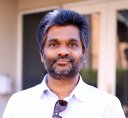
 Mohit Bansal
· 3 previous affiliations
- Full Professor · Since 2016
- Research Assistant Professor · 2013–2016
- PhD student · 2008–2013
Research Overview
Mohit Bansal focuses on multimodal representation learning, efficient model merging, and verifiable reasoning in large language models. His work spans the development of parameter-efficient fusion techniques for video-language tasks to the design of dynamic data selection frameworks for continual learning. Recently, his research emphasizes autonomous agent planning, symbolic world models, and scaling test-time compute for complex information-seeking environments.
Research Trajectory
At UNC Chapel Hill, Bansal's recent trajectory begins with foundational investigations into model composition and the area of Overcoming Parameter Interference in Model Merging. In What Matters for Model Merging at Scale? (2024), his group provided a systematic study of merging large-scale models up to 64 billion parameters, demonstrating that larger models merge more effectively and can surpass traditional multitask training in zero-shot generalization. This work naturally extended into optimizing low-rank adaptations. With LoRA Merging with SVD: Understanding Interference and Preserving Performance (2025), he analyzed the trade-offs between direct and multiplied merging strategies, identifying how direct merging introduces interfering cross-terms while multiplied merging maintains linear mode connectivity in the loss landscape.
Concurrently, his research expanded into progressive alignment for multimodal representation learning. To address the computational bottlenecks of integrating diverse sensory inputs, he introduced CREMA: Generalizable and Efficient Video-Language Reasoning via Multimodal Modular Fusion (2025). This modular framework utilizes parameter-efficient adapters and early-exit training to incorporate audio, depth, and thermal data into video-language models while drastically reducing trainable parameters. Building on these efficiency gains, he explored lifelong instruction tuning in Adapt-$\infty$: Scalable Continual Multimodal Instruction Tuning via Dynamic Data Selection (2025). By clustering data based on learning gradients and employing a pool of experts for sample selection, this dynamic framework mitigates catastrophic forgetting, contributing to the broader direction of orthogonal subspaces and parameter isolation for continual learning.
A significant portion of Bansal's 2025 output focuses on agentic reasoning and the suboptimality of sequential subgoal decomposition. In System 1.x: Learning to Balance Fast and Slow Planning with Language Models, he addressed the dichotomy between rapid, hallucination-prone generation and exhaustive, computationally heavy search, developing methods for input-adaptive compute allocation. To support the training of such reasoning models, his lab investigated closed-loop data synthesis via model feedback with DataEnvGym: Data Generation Agents in Teacher Environments with Student Feedback, replacing manual data engineering with automated, scalable generation agents. Further advancing long-horizon tasks, he contributed to the research direction of Scaling Test-Time Compute via Candidate Selection through PRInTS: Reward Modeling for Long-Horizon Information Seeking. This generative process reward model utilizes dense information gain scoring and recursive trajectory summarization to guide smaller models to frontier-level performance.
Moving into 2026, Bansal's work tackles increasingly complex, stochastic environments. Pushing beyond the deterministic transition assumption in reinforcement learning, he developed One Life to Learn: Inferring Symbolic World Models for Stochastic Environments from Unguided Exploration. This research enables agents to infer underlying environmental rules on the fly without external guidance or rewards. In the visual domain, he explored video generation as a foundation for robot planning with EPiC: Efficient Video Camera Control Learning with Precise Anchor-Video Guidance. By training on perfectly aligned anchor videos created via visibility masking, this lightweight framework achieves highly efficient and precise camera control, bypassing the need for expensive 3D rendering.
Finally, his recent trajectory emphasizes the reliability and collaborative inference of language models. In Multimodal Fact-Level Attribution for Verifiable Reasoning (2026), he introduced the MURGAT benchmark to evaluate granular verification via atomic fact decomposition, revealing a "grounding gap" where models hallucinate citations even when reasoning correctly. To optimize reasoning efficiency, he proposed Skill-Based Mixture-of-Experts: Adaptive Routing for Heterogeneous Reasoning via Inferred Skills, a training-free framework that adaptively routes queries to specialized small models, outperforming massive monolithic architectures. Addressing the fundamental limits of model self-evaluation, he developed Generalized Correctness Models: Learning Calibrated and Cross-Model Correctness Predictors from Historical Patterns. This work advances uncertainty calibration for large language models by treating confidence estimation as a transferable skill learned from historical performance rather than relying on flawed self-reporting.
Current Directions
The most recent papers in the evidence, published in 2026, indicate a strong focus on the reliability, verification, and environmental grounding of generative models. Current work investigates how agents can autonomously infer symbolic world models in stochastic settings without external reward signals. Additionally, there is a significant emphasis on verifiable reasoning, specifically addressing the "grounding gap" in multimodal models to ensure that complex reasoning steps are accurately attributed to factual evidence. This is complemented by ongoing research into adaptive routing and generalized correctness prediction, aiming to build more efficient, calibrated, and trustworthy AI systems through collaborative inference and historical performance modeling.
Profile updated
Loading new papers…
Other researchers whose papers cluster into the same research directions — a proxy for overlapping technical interests and shared intellectual neighborhoods.
See something wrong? Report a mistake