

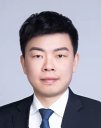
 Guang Chen
· 7 previous affiliations
- Frontiers Media SA (Switzerland)Since 2018
- Associate Editor · Since 2018
- Tongji UniversitySince 2018
- Full Professor · Since 2018
- Automotive InnovationSince 2021
- Associate Editor · Since 2021
- Fortiss2017–2018
- Autonomous Driving Scientist · 2017–2018
- Technical University of Munich2012–2018
- Postdoc · 2016–2018
- Doctor of Philosophy (Ph.D.), Computer Vision · 2012–2016
- Human Brain Project2016–2017
- Research Scientist · 2016–2017
- Hunan University2004–2011
- M.Sc, Mechatronics · 2004–2011
4 other authors named Guang Chen: Guang Chen (Xiaomi (China) · 34 papers), Guang Chen (6 papers), Guang Chen (2 papers), Guang Chen (1 paper)
Research Overview
Guang Chen focuses on autonomous decision-making, event-based vision, and robust representation learning for complex environments. His trajectory spans from source-free domain adaptation and continuous event stream processing to safe reinforcement learning and multi-agent coordination. Recently, his work emphasizes out-of-distribution detection, large-scale 3D scene reconstruction, and collaborative vision-language navigation for robotics.
Research Trajectory
Guang Chen’s early work concentrated on robust representation learning and domain adaptation, particularly in scenarios where source data is unavailable due to privacy or storage constraints. In 2022, he addressed challenges in the research area of Source Free Domain Adaptation. With BMD: A General Class-Balanced Multicentric Dynamic Prototype Strategy for Source-Free Domain Adaptation, he introduced a strategy to mitigate the biases inherent in single-center class prototypes. By integrating global balanced sampling with dynamic, real-time updates across multiple cluster centers, this approach significantly improved adaptation performance across both 2D image and 3D point cloud benchmarks.
Expanding into dynamic perception, he began contributing to the broader area of Overcoming the Event to Frame Conversion Bottleneck. His 2023 work, TMA: Temporal Motion Aggregation for Event-based Optical Flow, proposed treating event camera data as a continuous stream rather than discrete static frames. By segmenting event streams into fine-grained intervals and applying cross-attention mechanisms to aggregate motion patterns, this framework advanced the field of Motion-Compensated Feature Alignment for Video Understanding and offered an efficient solution for Overcoming the Neuromorphic Data Bottleneck.
By 2025, his research agenda broadened significantly to encompass autonomous control, safe decision-making, and spatial perception. Addressing the research direction of Safe Reinforcement Learning via Constrained Markov Decision Processes, his group developed CHPO: Constrained Hybrid-action Policy Optimization for Reinforcement Learning. This algorithm tackled "hybrid" action spaces—where agents must select discrete actions alongside continuous parameters—while strictly adhering to safety constraints via a novel Constrained Parameterized-action Markov Decision Process (CPMDP) framework. Concurrently, he explored classical control methods for autonomous vehicles, proposing a constrained model predictive control approach in Novel Path Following for a Four-Wheel Steering Vehicle Based on Model Predictive Control. This work utilized a high-precision linearization transformation to convert non-linear four-wheel steering kinematics into a manageable linear control-state system.
In parallel, he advanced visual place recognition (VPR) for complex environments. In Range and Bird's Eye View Fused Cross-Modal Visual Place Recognition, his team addressed the challenge of matching RGB image queries to LiDAR point cloud databases, proposing a retrieval and re-ranking method that fuses vertical and horizontal field-of-view information to exploit the complementary strengths of both sensors. He further refined VPR in MutualVPR: A Mutual Learning Framework for Resolving Supervision Inconsistencies via Adaptive Clustering, which replaced rigid GPS labels with adaptive clustering to co-evolve image descriptors and place labels based on visual semantics. To handle open-set environments, he oversaw the development of OOD-Barrier: Build a Middle-Barrier for Open-Set Single-Image Test Time Adaptation via Vision Language Models, a framework that enables vision-language models like CLIP to adapt to new data streams one image at a time while filtering out unknown categories through a constructed "middle domain."
Moving into 2026, his focus on reinforcement learning and multi-agent systems deepened. In Potentially Optimal Joint Actions Recognition for Cooperative Multi-Agent Reinforcement Learning, he investigated centralized training with decentralized execution (CTDE), seeking to optimize how teams of agents coordinate using global information before acting on local observations. He also addressed offline reinforcement learning in Beyond Penalization: Diffusion-based Out-of-Distribution Detection and Selective Regularization in Offline Reinforcement Learning. This work, introducing the DOSER framework, utilized diffusion processes to accurately identify out-of-distribution actions, distinguishing between risky behaviors and those offering high potential rewards to apply smarter, selective regularization.
His most recent work extensively covers 3D scene understanding and multi-robot systems. Contributing to the area of Reconstructing Complete Geometry from Partial Point Clouds, he explored out-of-distribution modeling for autonomous driving in GOOD: Geometry-guided Out-of-Distribution Modeling for Open-set Test-time Adaptation in Point Cloud Semantic Segmentation. He also advanced large-scale reconstruction techniques with Signal Structure-Aware Gaussian Splatting for Large-Scale Scene Reconstruction, introducing a scheduler that synchronizes image supervision resolution with the frequency content of 3D representations and utilizes Sphere-Constrained Gaussians to prevent artifacts. Finally, bridging vision, language, and robotics, he introduced CoNavBench: Collaborative Long-Horizon Vision-Language Navigation Benchmark, which features an automated pipeline called NavCraft that synthesizes complex missions into collaborative schedules to improve multi-agent task completion.
Current Directions
The most recent papers in the evidence indicate a strong focus on scaling autonomous systems through collaborative multi-agent reinforcement learning, advanced 3D scene reconstruction, and robust out-of-distribution (OOD) detection. Recent work investigates how diffusion models can selectively regularize offline reinforcement learning by distinguishing between high-risk and high-reward OOD actions, moving beyond traditional conservative penalization. Additionally, his group is actively exploring large-scale 3D representation using structure-aware Gaussian splatting, as well as pushing the boundaries of vision-language navigation from single-agent tasks to complex, long-horizon multi-robot collaboration.
Profile updated
Loading new papers…
Other researchers whose papers cluster into the same research directions — a proxy for overlapping technical interests and shared intellectual neighborhoods.
See something wrong? Report a mistake