

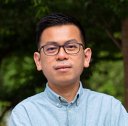
 Gim Hee Lee
· 2 previous affiliations
- National University of SingaporeSince 2015
- Associate Professor · Since 2022
- Current
- Assistant Professor · 2015–2021
- ETH Zurich2009–2014
- PhD student · 2009–2014
Research Overview
Gim Hee Lee focuses on 3D computer vision, robotic perception, and geometric deep learning. His research trajectory spans from early work on visual ego-motion and multi-camera SLAM for autonomous systems to foundational architectures for point cloud processing. Currently, his work addresses dynamic scene reconstruction, generalizable neural rendering, and the integration of vision-language models for embodied navigation.
Research Trajectory
His early research established foundational methods for visual localization and ego-motion in autonomous systems. In Motion Estimation for Self-Driving Cars with a Generalized Camera, he developed a two-point minimal solution for generalized essential matrices by applying non-holonomic motion constraints. He subsequently extended these geometric principles to micro aerial vehicles in Self-Calibration and Visual SLAM with a Multi-Camera System on a Micro Aerial Vehicle, introducing a computationally efficient three-point algorithm that leveraged inertial data to recover metric-scale motion without external markers.
As deep learning transformed computer vision, his focus expanded to the processing and analysis of 3D point clouds. He explored the research direction of Permutation Invariant Architectures for Unordered Point Sets through works like SO-Net: Self-Organizing Network for Point Cloud Analysis, which modeled spatial distributions using Self-Organizing Maps to perform hierarchical feature extraction. Concurrently, he developed PointNetVLAD: Deep Point Cloud Based Retrieval for Large-Scale Place Recognition, combining local feature extraction with global aggregation to create a robust retrieval system that maintained accuracy across challenging environmental variations. To address the reliance on human-annotated data in geometric vision, he introduced USIP: Unsupervised Stable Interest Point Detection From 3D Point Clouds, utilizing a probabilistic chamfer loss to discover repeatable keypoints through transformation consistency. He further advanced rigid point cloud registration with RPM-Net: Robust Point Matching Using Learned Features, replacing handcrafted spatial distances and fixed annealing schedules with learned hybrid features and parameter-prediction networks to improve robustness against noise and partial visibility.
In the domain of object detection and representation learning, his work has addressed the challenges of catastrophic forgetting and complex data distributions. With collaborators, he investigated incremental learning in Bridging Non Co-occurrence with Unlabeled In-the-wild Data for Incremental Object Detection, proposing methods to train models on novel classes without requiring co-occurrence of base classes. This period also saw contributions to the broader area of Multi-Prototype Representations for Intra-Class Diversity.
More recently, his trajectory has heavily emphasized neural rendering, dynamic scene reconstruction, and generalizable 3D priors. He advanced the field of Bypassing Per Scene Optimization in 3D Scene Reconstruction with DBARF: Deep Bundle-Adjusting Generalizable Neural Radiance Fields, a framework that jointly optimizes camera poses and scene representations using a deep recurrent optimizer, enabling novel view synthesis from random initial camera positions. He also explored the area of Category-Agnostic Priors for Universal 3D Understanding in ESCAPE: Encoding Super-keypoints for Category-Agnostic Pose Estimation, which introduced a Bayesian framework leveraging abstract "super-keypoints" to predict poses for entirely unseen object categories from minimal annotated data. His work during this era frequently intersects with the research direction of Hybrid Parametric and Non-parametric 3D Shape Reconstruction.
His latest research integrates foundation models and 3D Gaussian Splatting (3DGS) to solve complex spatial and dynamic challenges. In embodied AI, he contributed to the area of Bridging the Indoor to Outdoor 3D Domain Gap through Dynam3D: Dynamic Layered 3D Tokens Empower VLM for Vision-and-Language Navigation. To tackle dynamic environments, his lab developed 4D3R: Motion-Aware Neural Reconstruction and Rendering of Dynamic Scenes from Monocular Videos, a pose-free framework utilizing sparse control points and motion-aware refinement for efficient animation. He also applied 3DGS to human-centric problems in Reconstructing Close Human Interaction with Appearance and Proxemics Reasoning, combining appearance reasoning with a diffusion-based proxemics prior to resolve heavy occlusions in monocular video.
Further refining 3DGS and generative priors, he introduced ComPC: Completing a 3D Point Cloud with 2D Diffusion Priors, a test-time framework that hallucinates missing geometry by merging rendering efficiency with 2D diffusion models. To address fundamental limitations in surface extraction, he co-authored Revisiting Photometric Ambiguity for Accurate Gaussian-Splatting Surface Reconstruction, which mitigates photometric ambiguity in textureless or reflective regions. Finally, 1000FPS+ Novel View Synthesis from End-to-End Opaque Triangle Optimization bridges the gap between modern radiance fields and conventional graphics pipelines, optimizing opaque primitives to achieve extremely high frame rates without the overhead of alpha-blending.
Current Directions
Recent work investigates the intersection of highly efficient 3D representations and generative foundation models. A primary focus is advancing 3D Gaussian Splatting (3DGS) to handle dynamic scenes, complex human interactions, and photometric ambiguities, moving beyond static novel view synthesis toward robust surface reconstruction and graphics-pipeline compatibility. Additionally, current research addresses embodied AI and spatial reasoning, utilizing dynamic 3D tokens and vision-language models to improve autonomous navigation and scene understanding in complex environments.
Profile updated
Loading new papers…
Other researchers whose papers cluster into the same research directions — a proxy for overlapping technical interests and shared intellectual neighborhoods.
See something wrong? Report a mistake