

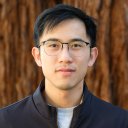
 Guandao Yang
· 7 previous affiliations
- Apple (United States)Since 2025
- Researcher · 2025–2026
- Stanford University2023–2025
- Postdoctoral Researcher · 2023–2025
- Cornell University2014–2023
- Doctor of Philosophy - PhD, Computer Science · 2018–2023
- Bachelor's degree, Mathematics and Computer Science · 2014–2018
- Cornell Tech2014–2023
- PhD student · 2018–2023
- Undergrad student · 2014–2018
- Google (United States)2021–2022
- Research Intern · 2021–2022
- Research Intern · 2021
- Nvidia (United States)2019–2020
- Research Intern · 2019–2020
Research Overview
Guandao Yang focuses on 3D computer vision, generative modeling, and neural geometry processing. His trajectory spans from early work in point cloud generation and single-view reconstruction to the development of neural fields and diffusion priors for complex 3D scenes. Recently, his research addresses the integration of vision-language models for 3D editing and the refinement of neural representations for physical simulation and rendering.
Research Trajectory
During his doctoral studies at Cornell Tech, Yang's early research addressed foundational challenges in computer vision, evaluation metrics, and 3D reconstruction. He developed a novel, learning-based metric in Learning to Evaluate Image Captioning (2018). By training a discriminative model to distinguish between human-written and machine-generated captions, this work provided an evaluation tool that correlated significantly better with human judgment than traditional n-gram metrics. Moving into 3D vision, he addressed the high cost of acquiring precise camera poses and 3D structure labels in Learning Single-View 3D Reconstruction with Limited Pose Supervision (2018). This unified framework combined a small amount of camera pose annotations with unlabeled images and an adversarial loss, contributing to the broader area of View Invariant Representation Learning through Cross View Alignment. Continuing in early vision, Learning Data-Adaptive Interest Points through Epipolar Adaptation (2019) leveraged the epipolar constraint associated with the fundamental matrix to supervise interest point detection, bringing useful 3D information to bear without requiring full depth estimation.
Transitioning to generative 3D models, Yang explored continuous normalizing flows in PointFlow: 3D Point Cloud Generation With Continuous Normalizing Flows (2019). By modeling 3D point clouds as a two-level hierarchy—a distribution of shapes and a distribution of points given a shape—this probabilistic framework advanced the research direction of Scaling 3D Point Cloud Generation to Arbitrary Densities. Building on these generative approaches, Learning Gradient Fields for Shape Generation (2020) introduced ShapeGF. This model represented 3D shapes as a learned gradient field of a probability density, using Langevin dynamics to move random points toward high-density regions to generate high-quality point clouds and smooth implicit surfaces.
In 2021, his work expanded into augmented reality and neural representations. Stay Positive: Non-Negative Image Synthesis for Augmented Reality (2021) tackled the physical limitations of AR displays, which can only add light to a scene. By leveraging human optical illusions like lightness constancy, this optimization framework created the perception of darkness under a strict non-negativity constraint, contributing to the area of Non-Negative Image Synthesis for Additive Augmented Reality. Concurrently, Geometry Processing with Neural Fields (2021) proposed using infinitely differentiable neural fields rather than discrete meshes for geometry processing. This approach allowed shapes to be optimized for objectives involving higher-order derivatives without the need for complex remeshing procedures.
During his postdoctoral work at Stanford and subsequent research at Apple, Yang increasingly focused on integrating diffusion models and vision-language models with 3D representations. Learning a Diffusion Prior for NeRFs (2023) demonstrated how training a diffusion model on regularized Neural Radiance Fields could yield a generative prior that improves single-view reconstruction tasks. Addressing the customization of these generative models, Orthogonal Adaptation for Modular Customization of Diffusion Models (2024) tackled the challenge of merging personalized models without losing identity or producing blurry outputs. This work advanced research directions such as Zero-Overhead Weight Merging for Efficient Inference and Overcoming Parameter Interference in Model Merging.
To evaluate the rapid progress in text-to-3D generation, GPT-4V(ision) is a Human-Aligned Evaluator for Text-to-3D Generation (2024) proposed using large multimodal models as automated judges, a key contribution to the area of Pairwise Evaluation Arenas for Generative Models. He also explored using these models directly in the creative process. BlenderAlchemy: Editing 3D Graphics with Vision-Language Models (2024) provided visual feedback loops to large language models, allowing them to effectively write and verify Blender scripts for complex scene composition.
Most recently, as an incoming Assistant Professor at UT Austin, Yang's work has refined the mathematical and structural foundations of neural rendering and simulation. Neural Control Variates with Automatic Integration (2024) introduced a method to use neural networks as control variates for Monte Carlo integration by representing the antiderivative, significantly reducing noise in PDE solvers. InfoGaussian: Structure-Aware Dynamic Gaussians through Lightweight Information Shaping (2024) made 3D Gaussian Splatting structure-aware, enabling consistent object-level scene editing by shaping mutual information within an attribute decoding network. Finally, Accurate Differential Operators for Hybrid Neural Fields (2025) addressed the high-frequency noise often found in the derivatives of fast representations like Instant NGP. By introducing a local polynomial-fitting operator, the method produces smooth gradients essential for stable physical simulations.
Current Directions
Recent work investigates the intersection of large multimodal models and 3D scene creation, as well as the mathematical refinement of neural representations for physical simulation. One major focus involves leveraging vision-language models to evaluate and edit 3D graphics, providing automated visual feedback loops that bridge the gap between textual prompts and complex 3D modeling environments. Concurrently, ongoing research addresses the structural and mathematical limitations of fast neural representations. By developing accurate differential operators for hybrid neural fields and structure-aware dynamic Gaussian splatting, these recent efforts aim to produce stable, editable, and physically accurate 3D environments suitable for advanced rendering and simulation tasks.
Profile updated
Loading new papers…
Other researchers whose papers cluster into the same research directions — a proxy for overlapping technical interests and shared intellectual neighborhoods.
See something wrong? Report a mistake