

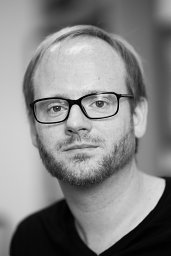
 Gordon Wetzstein
· 6 previous affiliations
- Stanford UniversitySince 2014
- Associate Professor · Since 2021
- Assistant Professor · 2014–2021
- Rhoda AISince 2024
- Co-Founder · Since 2024
- Zinn Labs2020–2024
- Co-Founder and Chief Scientist · 2020–2024
- Raxium2017–2020
- Co-Founder · 2017–2020
- Researcher · 2011–2014
- University of British Columbia2006–2011
- Doctor of Philosophy (PhD), Computer Science · 2006–2011
1 other author named Gordon Wetzstein: Gordon Wetzstein (15 papers)
Research Overview
Gordon Wetzstein focuses on computational optics, computer graphics, and artificial intelligence for next-generation imaging systems. His work spans the development of novel hardware and algorithms for virtual and augmented reality, evolving from early tomographic light field displays to advanced neural rendering techniques. Recently, his research emphasizes real-time holographic displays, 3D generative models, and neuromorphic photonics.
Research Trajectory
Wetzstein’s early research explored the physical and algorithmic limits of computational displays. In 2011, he introduced Layered 3D: tomographic image synthesis for attenuation-based light field and high dynamic range displays, developing techniques to recreate 4D light fields using compact volumes of light-attenuating material. This foundational interest in computational optics later extended to imaging through scattering media, demonstrated by the development of a confocal scanning technique for fast, high-quality reconstructions of hidden macroscopic objects in Confocal non-line-of-sight imaging based on the light-cone transform (2018).
By the late 2010s, his focus expanded to incorporate emerging deep learning techniques for 3D scene understanding. He guided the development of Scene Representation Networks: Continuous 3D-Structure-Aware Neural Scene Representations (2019), which modeled scenes as continuous functions mapping world coordinates to local properties without requiring explicit 3D supervision. This work highlighted the need for neural architectures capable of capturing high-frequency spatial details. To address this, his group proposed Implicit Neural Representations with Periodic Activation Functions (2020), introducing sinusoidal activation networks (SIRENs) that significantly advanced the research direction of Sinusoidal Neural Representations for High Frequency Signals. Recognizing the computational bottlenecks inherent in neural volume rendering, he also co-authored AutoInt: Automatic Integration for Fast Neural Volume Rendering (2021) to streamline the numerical integration required along rendered rays, contributing to the research direction of Neural Antiderivatives for Exact and Fast Integration.
Concurrently, Wetzstein applied these neural paradigms to virtual and augmented reality hardware. In Neural 3D holography: learning accurate wave propagation models for 3D holographic virtual and augmented reality displays (2021), his team utilized camera-in-the-loop training to close the gap between physical optics and simulation. This trajectory of hardware-software co-design continued to mature, contributing heavily to the broader area of Real-Time Neural and Computational Holography. Recent milestones in this domain include Large Étendue 3D Holographic Display with Content-adpative Dynamic Fourier Modulation (2024), which combined multi-source laser arrays with dynamic masks to expand the viewing eyebox, and Synthetic aperture waveguide holography for compact mixed-reality displays with large étendue (2025), which achieved massive eyebox volumes within ultra-thin optical stacks. These innovations also intersect with challenges in the area of Computational Restoration for Under-Display Camera Systems. Bridging modern neural scene representations with holographic displays, his lab recently introduced Random-phase Gaussian Wave Splatting for Computer-generated Holography (2025).
Beyond displays, Wetzstein has made significant contributions to 3D generative modeling and scientific imaging. In 2022, his group published Efficient Geometry-aware 3D Generative Adversarial Networks (EG3D), which introduced a highly efficient tri-plane representation for synthesizing high-resolution, 3D-consistent images, marking a key development in the research direction of Tri-Plane Feature Representations for 3D Deep Learning. That same year, he applied deep learning to structural biology with CryoAI: Amortized Inference of Poses for Ab Initio Reconstruction of 3D Molecular Volumes from Real Cryo-EM Images, accelerating the reconstruction of molecular structures by amortizing the computationally expensive pose estimation step. This scientific AI focus has continued into recent years with Generative Modeling of Protein Conformational Ensembles With Cryo-EM Density Map Diffusion (2026), advancing work in the area of Atomic Structure Modeling from Low Resolution Density Maps.
During this period, Wetzstein also co-founded several startups, including Raxium, Zinn Labs, and Rhoda AI, reflecting a commitment to translating computational imaging and display research into practice.
His recent work increasingly explores efficient generative architectures and novel sensor paradigms. In 2025, he contributed to FLARE: Feed-forward Geometry, Appearance and Camera Estimation from Uncalibrated Sparse Views, enabling rapid 3D scene reconstruction without iterative optimization, and Diffusion Self-Distillation for Zero-Shot Customized Image Generation, which allows text-to-image models to maintain character consistency without fine-tuning. He also oversaw the development of AIpparel: A Multimodal Foundation Model for Digital Garments (2025), bridging creative intent with technical garment construction. On the hardware front, he proposed Neural Ganglion Sensors: Learning Task-specific Event Cameras Inspired by the Neural Circuit of the Human Retina (2025) and coordinated a comprehensive Roadmap on Neuromorphic Photonics (2025) to outline the future of light-based, brain-inspired processors. Moving into 2026, his research addresses the efficiency of generative models through pi-Flow: Policy-Based Few-Step Generation via Imitation Distillation and Mixture of Contexts for Long Video Generation, which recasts long-video generation as an internal information retrieval task to drastically reduce computational costs.
Current Directions
The most recent papers in the evidence indicate a dual focus on scaling efficient generative models and advancing hardware-algorithm co-design for next-generation optics. In the generative domain, current work investigates methods to reduce the computational burden of synthesis, such as policy-based few-step generation and sparse attention mechanisms for long-video creation. This extends to specialized foundation models for digital garments and zero-shot customized image generation. Concurrently, ongoing research in computational imaging addresses the physical constraints of mixed-reality displays, utilizing synthetic aperture approaches and random-phase wave splatting to expand the eyebox and fidelity of holographic systems. Finally, recent efforts apply these advanced neural architectures to scientific challenges, particularly the generative modeling of protein conformational ensembles from cryo-electron microscopy data.
Profile updated
Loading new papers…
Other researchers whose papers cluster into the same research directions — a proxy for overlapping technical interests and shared intellectual neighborhoods.
See something wrong? Report a mistake