

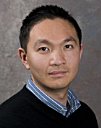
 Jingyi Yu
· 2 previous affiliations
- ShanghaiTech UniversitySince 2015
- Full Professor · Since 2015
- Dean · 2018–2020
- University of Delaware2005–2015
- Professor · 2005–2015
Research Overview
Jingyi Yu focuses on computer graphics, neural rendering, and 3D computer vision. His trajectory spans early innovations in multiperspective imaging and light field cameras to extensive contributions in neural radiance fields and generative 3D asset creation. Currently, he investigates real-time video relighting, non-line-of-sight videography, and advanced representations like 3D Gaussian splatting for panoramic view synthesis.
Research Trajectory
Yu’s early research explored novel imaging systems and non-photorealistic rendering techniques. He developed A Framework for Multiperspective Rendering, which formalized multiperspective images as continuous manifolds in ray space using General Linear Cameras. He also collaborated on Non-photorealistic camera: depth edge detection and stylized rendering using multi-flash imaging, a system that strategically cast shadows to detect depth discontinuities, distinguishing them from material edges to produce stylized static and animated images.
Moving into computational photography in the 2010s, he investigated the research direction of Multi-Cue Saliency Fusion and the area of Resolving Foreground Background Ambiguity in Salient Object Detection. In Saliency Detection on Light Field, he demonstrated how the refocusing capabilities and depth cues inherent to light field cameras could be used to identify salient regions in highly challenging scenarios where traditional color-based methods fail. This work contributed to the broader area of Segmenting Camouflaged Objects via Global Context and Edge Refinement.
A major phase of his trajectory centers on neural rendering, 3D reconstruction, and relighting. He led work in the area of Material Lighting Disentanglement for 3D Reconstruction and the direction of Resolving Shape Radiance Ambiguity in Sparse View Reconstruction. His group presented A Neural Rendering Framework for Free-Viewpoint Relighting, which explicitly modeled image formation in terms of environment lighting, object intrinsic attributes, and light transport functions to enable simultaneous view synthesis and relighting. This work intersected with directions like Neural Light Transport Approximation and Uncalibrated Photometric Stereo.
To address the computational bottlenecks of neural radiance fields (NeRFs), he introduced MVSNeRF: Fast Generalizable Radiance Field Reconstruction from Multi-View Stereo. By leveraging plane-swept cost volumes, the approach reconstructed scenes from just three views via fast network inference, advancing the research direction of Bypassing Per Scene Optimization in 3D Scene Reconstruction and the area of Memory Efficient Volumetric Representations for 3D Vision. He further tackled unposed image collections in GNeRF: GAN-based Neural Radiance Field without Posed Camera, combining adversarial training with photometric loss to recover both radiance fields and camera extrinsics from random initializations. This contributed significantly to the area of Joint Optimization of Camera Poses and Neural Geometry and the direction of Pose Free 3D Reconstruction and Novel View Synthesis.
Continuing to optimize volumetric representations, he developed TensoRF: Tensorial Radiance Fields, which modeled radiance fields as factorized 4D tensors. This drastically reduced training time and memory footprint, advancing the direction of Accelerating Neural Scene Representations for Real Time Rendering and the area of Tensor Factorization for Efficient Volumetric Scene Representations. He also extended neural rendering to dynamic subjects with HumanNeRF: Efficiently Generated Human Radiance Field from Sparse Inputs, synthesizing free-viewpoint video of humans from sparse inputs. This progressed the areas of Hybrid Deformation Fields for Animatable Neural Representations and Reconstructing Non Rigid Geometry Beyond Parametric Templates.
In recent years, Yu expanded his focus into generative models, motion synthesis, and specialized imaging domains. He introduced Executing your Commands via Motion Diffusion in Latent Space, which performed diffusion in a compressed latent space to generate human motions from text or action prompts. This work contributed to the direction of Bridging the Coarse to Fine Articulation Gap in Motion Synthesis and the area of Generative Diffusion in Compressed Latent Spaces. In the domain of 3D asset creation, he presented CLAY: A Controllable Large-scale Generative Model for Creating High-quality 3D Assets, enabling the generation of detailed geometry and physically-based rendering materials from diverse inputs, touching upon areas such as 3D Generation via Latent Space Diffusion and Synthesizing Multi-Channel PBR Materials for 3D Assets.
His research has also addressed specialized structural and scientific imaging challenges. He oversaw the development of GaussianHair: Hair Modeling and Rendering with Light-aware Gaussians, which modeled individual strands as cylindrical 3D Gaussians, advancing the area of Reconstructing Thin Structures in 3D Geometry. In scientific imaging, he led DRACO: A Denoising-Reconstruction Autoencoder for Cryo-EM, applying a denoising-reconstruction hybrid training scheme to handle severe corruption in cryogenic electron microscopy movies.
Most recently, Yu's work has increasingly focused on real-time relighting and novel applications of transformer architectures. He directed research on Neural Video Portrait Relighting in Real-time via Consistency Modeling, which jointly models semantic, temporal, and lighting consistency for dynamic illuminations. He also addressed the scarcity of high-quality training data in Free-view Face Relighting using a Hybrid Parametric Neural Model on a SMALL-OLAT Dataset, employing parametric 3D faces coupled with implicit material modeling. Beyond rendering, he applied sequence modeling to semiconductor manufacturing in TokMan:Tokenize Manhattan Mask Optimization for Inverse Lithography, treating mask optimization as a discrete task using a Diffusion Transformer. This contributed to the research direction of Computational Lithography and Inverse Mask Optimization and the area of Integrating Fabrication Constraints into Differentiable Design Pipelines. He also explored non-line-of-sight imaging with TransiT: Transient Transformer for Non-line-of-sight Videography, compressing temporal data to enable real-time videography around corners, advancing the area of Exploiting Temporal Redundancy in Video Neural Networks. Finally, he collaborated on CylinderSplat: 3D Gaussian Splatting with Cylindrical Triplanes for Panoramic Novel View Synthesis, which introduced a cylindrical triplane representation to achieve high-fidelity synthesis from panoramic imagery, contributing to the direction of Relaxing the Manhattan World Assumption and the area of Tri-Plane Feature Representations for 3D Deep Learning.
Current Directions
The most recent papers in the evidence indicate a strong focus on real-time, high-fidelity rendering and the adaptation of advanced neural architectures to specialized imaging domains. Recent work investigates neural video portrait relighting, emphasizing semantic and temporal consistency under dynamic illuminations, as well as hybrid parametric models that reduce the dependency on massive datasets for face relighting. Additionally, current research explores the application of transformer and diffusion models to complex physical and optical challenges, including real-time non-line-of-sight videography and inverse lithography for semiconductor mask optimization. Finally, there is an ongoing effort to extend explicit 3D representations, such as Gaussian splatting, to panoramic and $360^\circ$ environments.
Profile updated
Loading new papers…
Other researchers whose papers cluster into the same research directions — a proxy for overlapping technical interests and shared intellectual neighborhoods.
See something wrong? Report a mistake