

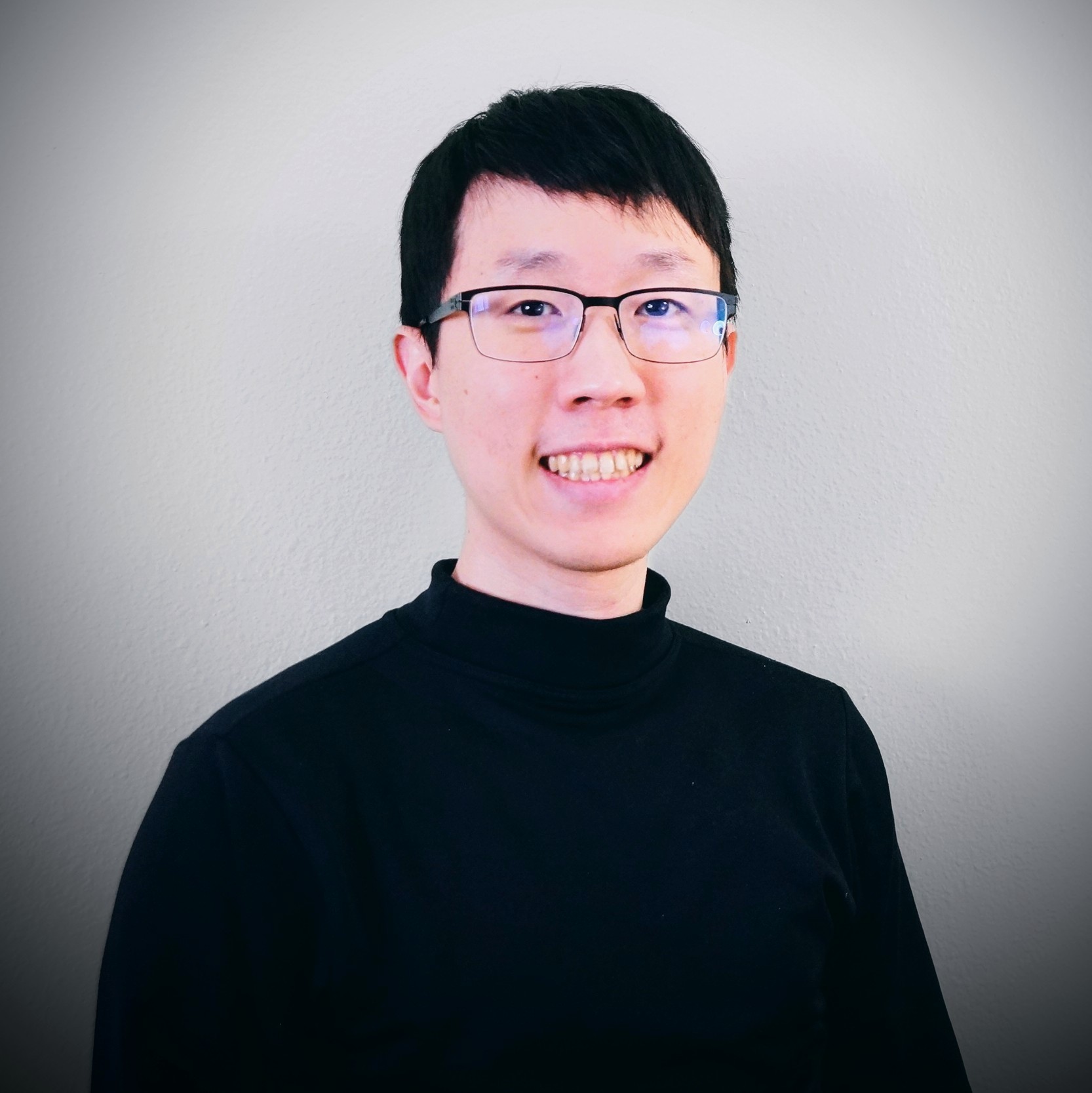
 Hsin-Ying Lee
· 3 previous affiliations
- IllocaCurrent
- Current
- Snap Inc.2020–2025
- Researcher · 2020–2025
- University of California, Merced2016–2020
- PhD student · 2016–2020
1 other author named Hsin-Ying Lee: Hsin-Ying Lee (Illoca · 1 paper)
Research Overview
Hsin-Ying Lee focuses on computer vision and machine learning, with a primary emphasis on 2D, 3D, and 4D generation and manipulation. Lee's research investigates the intersection of generative modeling and architectural design, developing frameworks for high-fidelity scene synthesis, controllable image editing, and 3D reconstruction from sparse or unposed observations. This work frequently addresses the challenges of maintaining geometric consistency and semantic integrity when transitioning between disparate modalities, such as hand-drawn sketches, semantic maps, and implicit 3D representations.
Research Trajectory
Lee’s early research was characterized by a focus on distributed systems and physical design automation. In 2013, Lee explored bio-inspired algorithms for device-to-device (D2D) communications, specifically addressing proximity discovery and synchronization in large-scale network topologies. This period of work emphasized optimization and synchronization in constrained environments. By 2018, Lee’s focus shifted toward electronic design automation, contributing to high-quality placement algorithms for mixed-size circuit designs. This work addressed modern technology and region constraints through novel density control and analytical placement models, demonstrating a foundational interest in complex spatial optimization problems.
Around 2016, Lee began transitioning into computer vision, specifically investigating Depth Aware Motion Deblurring in 3D Scenes. This marked a move toward visual computing, where the focus shifted from abstract network nodes to the geometric and photometric properties of the physical world. This transition culminated in a significant body of work at the intersection of generative adversarial networks (GANs) and semantic image synthesis. During this period, Lee explored Adversarial Regularization of Latent Representations to improve the stability and diversity of generative models.
Between 2019 and 2021, Lee’s research matured into the domain of controllable content creation. This phase focused on using intermediate representations, such as semantic maps, to provide users with intuitive control over image generation. Lee investigated Content Aware Graphic Layout Generation and Sequential Scene Composition, addressing the problem of "semantic collapse" where models fail to respect complex attribute constraints in a single-pass generation. This era also saw contributions to Balancing Reconstruction Fidelity and Editability in Generative Inversion, a critical area for real-world image editing where an image must be accurately mapped into a model's latent space before it can be manipulated.
From 2022 onward, Lee’s work has increasingly focused on 3D and 4D generation, leveraging the power of diffusion priors. This recent trajectory involves bridging the gap between 2D generative models and 3D-aware representations. Lee has contributed to methods for generating 3D objects from single "in-the-wild" images and performing language-guided manipulation of 3D scenes. This work often involves distilling features from large-scale vision-language models into 3D geometry, allowing for precise object selection and movement within a synthesized environment. Lee’s current focus also includes Robust Computer Vision for Stylized Artistic Representations, seeking to overcome the "natural image bias" of standard models to enable effective synthesis and understanding of non-photorealistic data.
Current Directions
Lee’s current research is centered on high-fidelity 3D reconstruction and scene manipulation using diffusion-based priors. A major theme is the development of systems that can perform novel view synthesis from sparse, unposed observations, bypassing the traditional requirement for explicit camera pose information. This direction addresses the practical limitations of 3D capture in real-world scenarios.
Another active area of investigation is the synthesis of high-quality, style-consistent textures for complex indoor scenes. By formulating texture synthesis as an optimization problem in the RGB space and utilizing depth-to-image diffusion priors, Lee’s work aims to produce 3D environments that are both geometrically accurate and visually coherent. Furthermore, Lee is exploring disentangled representations in 3D scenes, which allow for the independent manipulation of individual objects via natural language prompts while maintaining background consistency. This work at the intersection of AI, 3D vision, and architectural design points toward more intuitive and powerful tools for digital content creation.
Representative Work
UpFusion: Novel View Diffusion from Unposed Sparse View Observations In this first-author paper, Lee addresses the challenge of 3D reconstruction from a very limited set of images (3–6) without known camera poses. The system combines transformer-based feature aggregation with the generative capabilities of diffusion models. By bypassing the need for explicit geometry or pose estimation, the method outperforms existing single-view and pose-reliant baselines, providing a more flexible approach to novel view synthesis.
Adaptively-Realistic Image Generation from Stroke and Sketch with Diffusion Model As the senior author, Lee proposes a unified framework for generating images from hand-drawn sketches and strokes. The research identifies a fundamental tension between faithfulness to the user's input and the realism of the generated output. The proposed diffusion-based model allows for three-dimensional control over these factors, enabling users to calibrate the degree of realism and adherence to the original sketch, which is often inconsistent with real-world image statistics.
Semantic View Synthesis In this second-author work, Lee introduces a task that generates photorealistic, free-viewpoint 3D renderings from a single 2D semantic label map. The framework utilizes a constrained Multi-Plane Image (MPI) representation to maintain geometric consistency as a user "flies through" a scene generated from a simple layout. This work bridges the gap between 2D semantic image synthesis and 3D scene generation.
Controllable Image Synthesis via SegVAE As a second author, Lee contributed to the development of SegVAE, a framework for generating semantic maps from a given label set. The model uses a conditional variational autoencoder to synthesize these maps in an iterative manner, providing a more controllable intermediate representation for image generation than raw pixels. This approach facilitates easier user modification and more diverse output in conditional image generation tasks.
NTUplace4dr: A Detailed-Routing-Driven Placer for Mixed-Size Circuit Designs With Technology and Region Constraints In this second-author paper from the field of electronic design automation, Lee presents a placement algorithm designed to satisfy the complex technology and region constraints of modern circuit design. The work introduces techniques such as dynamic penalty factors and novel density control to minimize global routing congestion and ensure routability, demonstrating Lee's early expertise in complex spatial optimization.
Bio-Inspired Proximity Discovery and Synchronization for D2D Communications This early second-author paper presents a distributed mechanism for proximity services in device-to-device communications. Derived from the bio-inspired firefly algorithm, the method achieves simultaneous neighbor discovery and synchronization of physical communication timing. The research adapts the basic firefly algorithm to be suitable for larger-scale systems like LTE-A, addressing the limitations of node visibility in complex network topologies.
Profile updated
Loading new papers…
Other researchers whose papers cluster into the same research directions — a proxy for overlapping technical interests and shared intellectual neighborhoods.
See something wrong? Report a mistake