

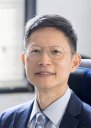
 Fugee Tsung
· 6 previous affiliations
- Co-Director, Industrial Informatics and Intelligence Institute (Triple-i), HKUST(GZ) · Since 2023
- Chair Professor, HKUST, HKUST(GZ) · Since 2019
- Full Professor · Since 1997
- Current
- Full Professor · 2022–2025
- Founding Acting Dean, Information Hub, HKUST(GZ) · 2020–2023
- Professor · 2008–2018
- Head of Department of Industrial Engineering and Logistics Management (IELM) · 2009–2015
- Associate Professor · 2003–2008
- American Society for Quality2016–2018
- Editor-in-Chief · 2016–2018
- Journal of Quality Technology (JQT)2015
- Editor-Elect · 2015
- University of Michigan1992–1997
- Post-Doctoral Research Fellow · 1997
- Ph.D., IOE · 1992–1997
- Stellantis North America (United States)1997
- Post-Doctoral Research Fellow · 1997
- National Taiwan University1986–1990
- B.S., ME · 1986–1990
Research Overview
Fugee Tsung focuses on industrial analytics, statistical process control, and quality engineering. His trajectory spans foundational work in proportional-integral control schemes and multivariate process monitoring to modern applications of industrial informatics. Most recently, his research investigates graph anomaly detection, time series foundation models, and multimodal learning for medical and manufacturing applications.
Research Trajectory
Tsung's early research established foundational methods in statistical process control (SPC) and quality engineering. His initial work analyzed the efficiency and robustness of discrete feedback control schemes, particularly On the Efficiency and Robustness of Discrete Proportional-Integral Control Schemes, which evaluated PI schemes under stationary and nonstationary process disturbances. He subsequently participated in developing Proportional Integral Derivative Charts for Process Monitoring and contributed to Monitoring General Linear Profiles Using Multivariate Exponentially Weighted Moving Average Schemes. Expanding beyond factory-floor process control, his research group also investigated broader operational strategies, such as Pushing Quality Improvement Along Supply Chains.
As manufacturing systems grew more complex, his focus shifted toward multivariate and data-driven diagnostics. He introduced A LASSO-Based Diagnostic Framework for Multivariate Statistical Process Control to handle high-dimensional process data. Recognizing the digital transformation of industry, his research group later synthesized the role of connected sensors and data analytics in The internet of things for smart manufacturing: A review.
In the 2020s, Tsung's work increasingly leveraged deep learning, particularly graph neural networks (GNNs), for anomaly detection in complex systems. He and his collaborators developed GRELEN: Multivariate Time Series Anomaly Detection from the Perspective of Graph Relational Learning, a framework that models sensor dependencies as a latent graph using a variational autoencoder. His group also investigated the theoretical vulnerabilities of graph learning, presenting an error analysis of self-annotation strategies in Deep Insights into Noisy Pseudo Labeling on Graph Data. Building on self-supervised learning, his lab demonstrated that Graph Pre-Training Models Are Strong Anomaly Detectors, showing how pre-trained models excel at identifying distant anomalies, contributing significantly to the area of Graph Anomaly Detection in Label Scarce Regimes.
Tsung's recent trajectory encompasses industrial vision, foundation models, and advanced graph optimization. For industrial defect inspection, his group developed An Incremental Unified Framework for Small Defect Inspection, which employs object-aware attention and semantic feature compression to learn new objects without catastrophic forgetting. He also guided A Survey of Time Series Foundation Models: Generalizing Time Series Representation with Large Language Model, exploring how LLMs can be adapted for cross-task transferability in time series analysis. In graph learning, his lab addressed the homophily bias of GNNs by introducing a causal message-passing framework in Heterophilic Graph Neural Networks Optimization with Causal Message-passing. Returning to manufacturing applications, he synthesized approaches for unstructured 3D point clouds in 3D vision-based anomaly detection in manufacturing: A survey. Additionally, his group explored parameter-efficient fine-tuning for large models, proposing a sparse spectral subspace re-parameterization in Revisiting LoRA through the Lens of Parameter Redundancy: Spectral Encoding Helps.
Most recently, Tsung has applied time series and multimodal learning to the medical domain. His lab designed Sparseformer: a Transferable Transformer with Multi-granularity Token Sparsification for Medical Time Series Classification, an architecture that filters noise and enables zero-shot transfer across medical datasets. Expanding into multimodal fusion, his group developed MedualTime: A Dual-Adapter Language Model for Medical Time Series-Text Multimodal Learning, which integrates clinical text and signals to improve diagnostic accuracy, contributing to the research direction of Integrating Clinical Narratives with Structured Medical Data. Finally, returning to graph anomaly detection, he participated in developing Towards Anomaly-Aware Pre-Training and Fine-Tuning for Graph Anomaly Detection, a framework that utilizes dual-branch spectral filters to identify spectral roughness in label-scarce scenarios, advancing the area of High-Frequency Spectral Analysis for Graph Anomaly Detection.
Extending multimodal interaction into human-agent collaboration, Tsung contributed to Inkitiate: Initiating and Steering Agent Assistance through Ink in a Spatial Workspace, an interactive system that lets users direct and guide agents during knowledge work by combining handwriting, sketching, and spatial organization.
Current Directions
The most recent work in the evidence indicates a strong focus on multimodal learning and advanced graph anomaly detection. In the medical domain, current research investigates the fusion of structured time series data (such as ECGs) with unstructured clinical text, utilizing dual-adapter language models and token-sparse transformers to improve diagnostic accuracy and enable zero-shot transfer across datasets. Concurrently, ongoing work in graph learning addresses the limitations of traditional graph neural networks in heterophilic and label-scarce environments. This includes employing causal message-passing to uncover true underlying relationships and utilizing high-frequency spectral analysis to detect anomalies prior to label exposure. Additionally, recent efforts explore parameter-efficient fine-tuning for large foundation models, leveraging spectral encoding to reduce redundancy while maintaining performance on reasoning and coding tasks.
Profile updated
Loading new papers…
Other researchers whose papers cluster into the same research directions — a proxy for overlapping technical interests and shared intellectual neighborhoods.
See something wrong? Report a mistake