

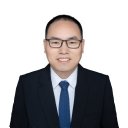
 zhao kang
· 2 previous affiliations
- Full Professor · Since 2025
- Current
- Associate Professor · 2020–2025
- Assistant Professor · 2017–2020
- PhD student · 2013–2017
1 other author named zhao kang: Zhao Kang (3 papers)
Research Overview
Zhao Kang focuses on unsupervised machine learning, graph representation learning, and multi-view clustering. His early work addressed the computational bottlenecks of spectral clustering and robust graph construction from noisy data. More recently, his research has shifted toward developing universal graph foundation models and integrating large language models with complex topological structures.
Research Trajectory
Zhao Kang’s early research concentrated on refining spectral clustering and improving the robustness of graph learning algorithms. Traditional spectral clustering often relied on a disjointed multi-step process, which could lead to suboptimal performance. In 2018, he addressed this by developing Unified Spectral Clustering With Optimal Graph, a framework that simultaneously learns the similarity graph, continuous labels, and discrete cluster assignments. This unified approach allowed the subtasks to mutually inform one another, significantly advancing the research direction of Unified Graph Learning for One-Step Clustering and the area of Aligning Continuous Spectral Embeddings with Discrete Labels.
Recognizing that real-world data is frequently corrupted, he subsequently introduced Robust Graph Learning From Noisy Data (2020), which adaptively removes noise from raw data to construct reliable graphs for clustering and semi-supervised learning. To handle the computational demands of massive datasets, he also developed Large-Scale Multi-View Subspace Clustering in Linear Time (2020). By utilizing anchor graphs to represent data relationships through a small set of landmark points, this work reduced the complexity of multi-view clustering from quadratic or cubic levels down to linear time, contributing to the broader area of Linear Time Graph Learning via Anchor Points and the area of Managing Hyperparameter Sensitivity in Multi-View Clustering.
In 2021, his focus expanded to contrastive learning and graph signal processing. With Multi-view Contrastive Graph Clustering, he proposed a framework to learn a consensus graph from noisy or incomplete multi-view attributed data, filtering out high-frequency noise while preserving essential structures. This aligned with his ongoing work in Adaptive View Weighting for Multi-View Representation Learning. Concurrently, he demonstrated in Graph Filter-based Multi-view Attributed Graph Clustering that simple low-pass graph filters combined with an anchor-based sampling strategy could replace complex deep neural networks, achieving high accuracy while operating significantly faster than competing deep learning methods.
By 2024, a major theme in his trajectory became the handling of heterophilic graphs—networks where connected nodes are more likely to be dissimilar than similar. He introduced Robust Graph Structure Learning under Heterophily, an unsupervised framework that combines a high-pass filter with a noise-adaptive norm to extract high-quality structures from heterophilic data. He further expanded on this with Provable Filter for Real-world Graph Clustering, constructing separate homophilic and heterophilic graph representations and employing adaptive filters to handle diverse datasets. These contributions heavily influenced the research direction Dual Frequency Spectral Filters for Heterophilic Graph Learning.
During this period, he also advanced the structural representation of complex networks. Beyond Redundancy: Information-aware Unsupervised Multiplex Graph Structure Learning (2024) provided a framework to capture both shared and unique task-relevant information across multiple graph views. Similarly, Structure-Preserving Graph Representation Learning (2024) maximized mutual information between graph structures and node embeddings via a complementary feature graph, effectively capturing both local and global topologies.
Most recently, his work has pivoted toward foundational models, complex sequence modeling, and the integration of large language models (LLMs) with graph reasoning. In 2025, he explored event sequence modeling with ITPP: Learning Disentangled Event Dynamics in Marked Temporal Point Processes, utilizing Neural ODEs and type-aware attention to treat different event types as independent channels. He also addressed multimodal fusion through Cooperation of Experts: Fusing Heterogeneous Information with Large Margin (2025), which replaced the traditional competition in Mixture of Experts models with a collaborative, two-level architecture.
A significant milestone in his recent trajectory is the development of Graph Foundation Models designed to transfer knowledge across domains with fundamentally different relational structures. Multi-Domain Graph Foundation Models: Robust Knowledge Transfer via Topology Alignment (2025) tackled the challenge of structural shifts between datasets. This was followed by Structure-Centric Graph Foundation Model via Geometric Bases (2026), which uses Gromov-Wasserstein distances to align disparate datasets against learnable geometric templates, enabling few-shot transfer across entirely different domains. Intersecting this structural work with natural language processing, he co-authored Clustering as Reasoning: A $k$-Means Interpretation of Chain-of-Thought Graph Learning (2026), revealing a mathematical equivalence between LLM Chain-of-Thought reasoning on graphs and the $k$-means clustering algorithm. Additionally, research on Posterior relation augmentation for multi-view and gradual network alignment (2026) continues to refine techniques for aligning complex, multi-view networks. In incomplete multi-view clustering, Kang introduced Beyond Missing Rates: Rethinking Incomplete Multi-View Clustering with Protocol Divergence (2026), identifying structural disparities across missing-view protocols and proposing CRAFT, a train-once attention-masked fusion framework that evaluates across protocols without retraining. Kang also deepened the exploration of multimodal interactions by targeting synergistic information: HRIL: Learning Multimodal Synergy via Higher-Order Tensor Modeling (2026) uses higher-order cross-moment tensors and Tucker decomposition to preserve coupling capacity for synergy, while MSCR: Jointly Balancing Utilization Across Modalities and Discovering Synergistic Information (2026) integrates an anti-dominance objective with synergy-oriented regularization to prevent single-modality dominance during fusion.
Current Directions
The most recent papers in the evidence indicate a strong focus on establishing universal paradigms for graph machine learning. A primary current direction is the design of Graph Foundation Models capable of robust knowledge transfer across diverse domains. By treating graph topology as a primary source of knowledge and utilizing geometric bases for topology alignment, this work seeks to overcome the limitations of domain-specific graph neural networks, allowing models trained on one type of network (e.g., social graphs) to generalize to entirely different structures (e.g., molecular graphs).
Additionally, recent work investigates the intersection of graph learning and Large Language Models. By mapping iterative reasoning processes—such as Chain-of-Thought prompting—to established clustering algorithms, this research aims to improve both the interpretability and performance of LLMs operating on text-attributed graphs. Finally, ongoing research addresses the modeling of complex temporal dynamics, protocol divergence in incomplete multi-view clustering, and higher-order multimodal synergy modeling.
Profile updated
Loading new papers…
Other researchers whose papers cluster into the same research directions — a proxy for overlapping technical interests and shared intellectual neighborhoods.
See something wrong? Report a mistake