

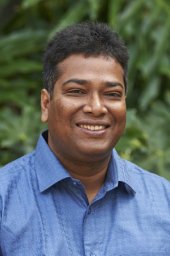
 Ferdous Sohel
· 5 previous affiliations
- Murdoch UniversitySince 2015
- Professor · Since 2023
- Associate Professor · 2018–2023
- Full Professor · 2015–2018
- WA Agricultural Research Collaboration2024–2025
- Program Lead, Agricultural Technologies · 2024–2025
- The University of Western Australia2008–2015
- Assistant Professor · 2008–2015
- Monash University2004–2008
- PhD student · 2004–2008
- BSc & Engineering, Computer Science and Engineering · 1996–2002
Research Overview
Ferdous Sohel focuses on computer vision, pattern recognition, and applied machine learning, particularly in addressing data scarcity and class imbalance. His trajectory spans early contributions to 3D shape coding and object recognition to the development of weakly supervised segmentation models. His current work emphasizes deploying robust artificial intelligence for complex real-world domains, including clinical risk prediction, agricultural disease detection, and quantum neural networks.
Research Trajectory
Ferdous Sohel’s early research concentrated on shape representation and 3D vision. He introduced an algorithm to enhance digital shape compression in An Improved Shape Descriptor Using Bezier Curves, which segmented shapes based on "cornerity" and employed a periodic encoding strategy for control points to reduce data size and distortion. This foundational interest in shape coding led to a comprehensive analysis of the field in Geometric distortion measurement for shape coding: A contemporary review, which evaluated metrics within the Rate Distortion framework. Moving into 3D object recognition, he contributed to the development of Rotational Projection Statistics (RoPS) in Rotational Projection Statistics for 3D Local Surface Description and Object Recognition. This method was designed to recognize 3D objects amidst noise and occlusion by calculating scatter matrices of local surface points. He further synthesized this domain by co-authoring 3D Object Recognition in Cluttered Scenes with Local Surface Features: A Survey, detailing the pipeline of 3D keypoint detection, feature description, and surface matching.
As his research expanded into broader image processing and deep learning challenges, he participated in work on Automatic Shadow Detection and Removal from a Single Image. A major theme subsequently emerged around handling skewed data distributions, contributing to the area of Overcoming Majority Class Bias in Imbalanced Classification. In Cost-Sensitive Learning of Deep Feature Representations From Imbalanced Data, he and his collaborators introduced a cost-sensitive deep neural network (CoSen CNN) that jointly optimizes feature representations and class-dependent costs, advancing the broader research direction of Addressing Class Imbalance with Weighted Loss Functions.
In subsequent years, a significant focus shifted toward reducing the annotation burden in computer vision, specifically in the area of Expanding Sparse Activations for Weakly Supervised Segmentation. He oversaw the development of the Scale-Aware Feature Network (SAFN) in Scale-Aware Feature Network for Weakly Supervised Semantic Segmentation, which uses spatial attention to combine multi-scale features, generating accurate object localization maps from simple image-level labels. Continuing this trajectory, he contributed to Leveraging Auxiliary Tasks with Affinity Learning for Weakly Supervised Semantic Segmentation, introducing the AuxSegNet framework. This approach treats saliency detection and image classification as auxiliary tasks, learning a shared affinity map to iteratively refine training labels.
His recent work demonstrates a strong emphasis on applying advanced machine learning to high-stakes and complex domains, alongside fundamental architectural improvements. In clinical prediction, he was part of a large collaborative effort to develop CORE-COVID-19, detailed in An artificial intelligence approach for predicting death or organ failure after hospitalization for COVID-19: development of a novel risk prediction tool and comparisons with ISARIC-4C, CURB-65, qSOFA, and MEWS scoring systems. This machine-learning-derived scoring system distilled 92 variables into a 16-point bedside tool for predicting severe patient outcomes. He also explored fundamental network improvements in the area of Signal Processing Principles for Alias-Free Neural Networks, such as in Anti-aliasing deep image classifiers using novel depth adaptive blurring and activation function.
By 2025, his lab produced several specialized applications of deep learning. In agriculture, he guided A transformer-based few-shot learning pipeline for barley disease detection from field-collected imagery, utilizing cutting-edge transformers like Swin-B to overcome data scarcity, and directed A semi-supervised approach for classifying insect developmental phases from repurposed IP102. In medical imaging, he led work on Multiscale guided attention network for optic disc segmentation of retinal images. Addressing environmental computer vision, he oversaw Hierarchical Wavelet Decomposition Network for Water-Related Optical Image Enhancement, which leverages wavelet transforms to separately restore low- and high-frequency degradations in underwater imagery. Finally, he has expanded into quantum machine learning with LHQNN: sequential and non-sequential layered hybrid quantum neural networks for image classification, a framework that stacks quantum layers and utilizes amplitude embedding to achieve high accuracy on image classification tasks with fewer parameters than traditional convolutional networks.
Current Directions
The most recent papers in the evidence address the deployment of advanced neural architectures across diverse, specialized domains. A primary focus is on overcoming data scarcity and complex environmental degradations, utilizing few-shot learning and transformer models for agricultural disease detection, as well as hierarchical wavelet decomposition for underwater optical image enhancement. Additionally, recent work investigates the intersection of quantum computing and computer vision, exploring layered hybrid quantum neural networks that optimize qubit counts and embedding strategies to perform image classification efficiently. Finally, ongoing research continues to refine medical image analysis, applying multiscale attention mechanisms to tasks such as retinal optic disc segmentation.
Profile updated
Loading new papers…
Other researchers whose papers cluster into the same research directions — a proxy for overlapping technical interests and shared intellectual neighborhoods.
See something wrong? Report a mistake