

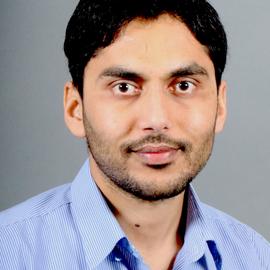
 Munawar Hayat
· 3 previous affiliations
- Qualcomm (United States)Since 2023
- Researcher · Since 2023
- Monash University2020–2023
- Senior Lecturer · 2020–2023
- University of Canberra2016–2019
- Assistant Professor · 2016–2019
Research Overview
Munawar Hayat focuses on computer vision, generative AI, and multimodal learning, bridging fundamental research with real-world applications. His trajectory spans from foundational image set classification and efficient vision transformers to robust deepfake detection and continual learning architectures. Most recently, his work investigates physics-aware vision-language models, multi-human image generation, and efficient token compression for long video understanding.
Research Trajectory
His early research addressed foundational challenges in computer vision and classification. He introduced Deep Reconstruction Models for Image Set Classification (2015), developing a template-based framework that automatically discovers underlying geometric structures in image sets without relying on prior assumptions. Building on this focus on robust classification, he later addressed the challenge of imbalanced datasets with Gaussian Affinity for Max-Margin Class Imbalanced Learning (2019), proposing a hybrid loss function that jointly performs classification and clustering to prevent classifiers from biasing toward frequent classes.
In 2022, his work expanded into efficient vision architectures and learning with limited supervision. He contributed to the development of Restormer: Efficient Transformer for High-Resolution Image Restoration, a highly efficient architecture that achieves linear complexity by computing self-attention across channels rather than spatial dimensions. This work aligns with the broader area of Progressive Patch Size Training for Vision Models. Concurrently, he developed MTGLS: Multi-Task Gaze Estimation with Limited Supervision, which distills knowledge from off-the-shelf models to train robust gaze estimators on unlabelled "in-the-wild" images, advancing the research direction of Scaling Gaze Analysis with Synthetic and Self-Supervised Learning.
Continuing his focus on facial analysis and representation, he oversaw the creation of MARLIN: Masked Autoencoder for facial video Representation LearnINg (2023), a self-supervised framework that learns universal facial features from unlabelled web videos for downstream tasks like expression recognition and lip synchronization. This period also marked a significant focus on the societal impacts of generative AI, specifically deepfake detection. He led the introduction of Do You Really Mean That? Content Driven Audio-Visual Deepfake Dataset and Multimodal Method for Temporal Forgery Localization (2022), which addresses sophisticated manipulations where only small segments of video or audio are altered to invert sentiment. This was followed by Glitch in the matrix: A large scale benchmark for content driven audio-visual forgery detection and localization (2023), further establishing robust evaluation methods for audio-visual forgeries.
His architectural contributions continued with Transformer Scale Gate for Semantic Segmentation (2023), a lightweight module that repurposes Vision Transformer attention maps as scale guides to improve accuracy without heavy computational overhead. He also extended incremental learning to complex spatial domains in Geometry and Uncertainty-Aware 3D Point Cloud Class-Incremental Semantic Segmentation (2023), combining geometry-aware distillation with uncertainty-aware pseudo-labeling to combat semantic shift. Applying computer vision to medical domains, he guided research on AI-Assisted Digital Pathology for Computational distinction of adenocarcinoma vs squamous cell carcinoma (2023) to support clinical evaluations of lung diseases. In 2024, he addressed security in distributed training environments with Concealing Sensitive Samples against Gradient Leakage in Federated Learning, proposing a defense strategy that synthesizes concealed samples to obfuscate private information while maintaining global model performance.
Currently leading the Multimodal AI team at Qualcomm AI Research, his most recent work emphasizes generative models, physical reasoning, and efficient multimodal processing. He introduced HyperNet Fields: Efficiently Training Hypernetworks without Ground Truth by Learning Weight Trajectories (2025), a method that models optimization trajectories via gradient supervision to drastically reduce the compute required for image personalization and 3D reconstruction. He also advanced continual learning with Tripartite Weight-Space Ensemble for Few-Shot Class-Incremental Learning (2025), enabling models to adapt to new data with minimal examples while preventing catastrophic forgetting.
In the generative space, he collaborated on Ar2Can: An Architect and an Artist Leveraging a Canvas for Multi-Human Generation (2025), a two-stage framework that disentangles spatial planning from rendering to solve identity merging in complex multi-subject scenes. His work on multimodal reasoning includes Do-Undo: Generating and Reversing Physical Actions in Vision-Language Models (2025), which introduces a benchmark requiring models to simulate and reverse physical transformations, forcing a deeper understanding of scene dynamics. Most recently, he contributed to FLoC: Facility Location-Based Efficient Visual Token Compression for Long Video Understanding (2026), a training-free framework that uses submodular optimization to intelligently compress visual tokens, enabling Large Multimodal Models to process long videos efficiently.
Current Directions
The most recent papers in the evidence point to a strong focus on the efficiency and physical grounding of generative and multimodal AI systems. A primary theme is optimizing large-scale architectures for complex tasks, such as compressing visual tokens for long-video understanding and training hypernetworks without ground-truth weights to reduce computational overhead. Additionally, recent work investigates the physical reasoning capabilities of Vision-Language Models, moving beyond surface-level image editing to teach models the cause-and-effect dynamics of physical actions. Finally, ongoing research addresses the persistent challenges of multi-subject generative AI, developing frameworks that preserve distinct identities and spatial coherence in complex synthesized scenes.
Profile updated
Loading new papers…
Other researchers whose papers cluster into the same research directions — a proxy for overlapping technical interests and shared intellectual neighborhoods.
See something wrong? Report a mistake