

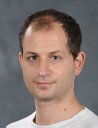
 Erez Berg
· 1 previous affiliation
- Weizmann Institute of ScienceSince 2020
- Full Professor · Since 2020
Research Overview
Erez Berg focuses on condensed matter theory, specifically strongly correlated electrons, high-temperature superconductivity, and topological phases of matter. His trajectory spans from early work on stripe-ordered superconductors and quantum Hall edge states to the development of solvable models for non-Fermi liquids. His most recent research investigates the theoretical bounds of superconductivity, flat band systems, and the evaluation of artificial intelligence in theoretical physics.
Research Trajectory
Berg’s early research focused on the anomalous behaviors of high-temperature superconductors and quantum Hall systems. In 2007, as first author, he published Dynamical Layer Decoupling in a Stripe-Ordered High-$T_c$ Superconductor, which provided a theoretical mechanism for understanding how certain cuprate materials effectively lose their three-dimensional coherence. This work explained how superconductivity could persist in isolated two-dimensional layers while remaining absent in the bulk crystal. Continuing his focus on low-dimensional quantum systems, he led the 2009 study Fractional Charges on an Integer Quantum Hall Edge. This paper proposed a novel mechanism to observe fractional charge excitations within Integer Quantum Hall (IQH) systems—a phenomenon typically restricted to the Fractional Quantum Hall regime. By analyzing Coulomb interactions between separate edge channels, the research demonstrated that a single injected electron could split into collective excitations carrying non-integer charges, detectable via high-frequency shot noise measurements.
Moving into the 2010s, Berg’s focus expanded to quantum criticality and the breakdown of Fermi liquid theory in strongly correlated metals. As a second author in 2013, he contributed to Singularity of the London Penetration Depth at Quantum Critical Points in Superconductors, which established a theoretical foundation for how magnetic fields interact with superconductors near quantum critical points (QCPs) at absolute zero. He further explored the theoretical underpinnings of non-Fermi liquids in Translationally Invariant Non-Fermi-Liquid Metals with Critical Fermi Surfaces: Solvable Models (2018). In this work, Berg and his collaborators constructed solvable models using lattices of Sachdev-Ye-Kitaev (SYK) dots. These models successfully captured crossovers into regimes of local quantum criticality and marginal-Fermi-liquid behavior, providing a rigorous framework for studying systems where the dc resistivity increases linearly with temperature over a broad range.
In recent years, Berg has investigated the fundamental limits of superconducting transition temperatures. As the senior author of the 2021 paper Heuristic bounds on superconductivity and how to exceed them, he systematically analyzed the heuristic rules often used to predict the maximum critical temperature ($T_c$). By constructing rigorous theoretical counter-examples, the work demonstrated that transition temperatures can theoretically exceed commonly accepted bounds based on Fermi temperature, superfluid stiffness, and phonon frequency.
Most recently, Berg has also participated in interdisciplinary efforts evaluating the intersection of artificial intelligence and theoretical physics. As a middle author of the 2026 collaborative study CMT-Benchmark: A Benchmark for Condensed Matter Theory Built by Expert Researchers, he contributed to the development of a dataset designed to test the capabilities of large language models on expert-level condensed matter theory problems, highlighting the current limitations of AI in advanced scientific reasoning.
Current Directions
The most recent papers in the evidence indicate an ongoing focus on the complex interplay between interactions, band geometry, and transport phenomena in strongly correlated materials. Recent work investigates topologically trivial flat bands, utilizing numerically exact quantum Monte Carlo simulations to understand how a continuously tunable quantum metric influences the competition between superconductivity, charge density wave order, and supersolidity. Additionally, Berg's recent research addresses the transport characteristics of quasi-two-dimensional materials, specifically examining how magneto-elastic scattering between itinerant carriers and localized magnetic moments can give rise to regimes of $T$-linear resistivity. Alongside these core condensed matter problems, his recent collaborative work extends into benchmarking the utility of artificial intelligence models as research assistants in theoretical physics.
Profile updated
Loading new papers…
Other researchers whose papers cluster into the same research directions — a proxy for overlapping technical interests and shared intellectual neighborhoods.
See something wrong? Report a mistake