

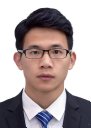
 Dayang Wang
· 5 previous affiliations
- Subtle MedicalSince 2022
- Researcher · Since 2024
- R&D deep learning research intern · 2022–2023
- University of Massachusetts Lowell2019–2025
- Research Assistant Professor · 2024–2025
- Research And Teaching Assistant · 2019–2023
- University of Massachusetts Amherst2023–2024
- Assistant Professor · 2023–2024
- Hangzhou Yinhu Middle school2017–2019
- Computer Science Teacher · 2017–2019
- Certificate, multi-media · 2017
Research Overview
Dayang Wang focuses on the intersection of computer vision, medical imaging, and the theoretical foundations of neural network architectures. Their work emphasizes the development of self-supervised learning frameworks, particularly for low-level vision tasks such as image restoration and denoising, as well as the exploration of efficient architectural priors and non-parameterized space partitioning. Recent research has expanded into model compression, large-scale immune network representation, and the integration of large language models for clinical evaluation in medical imaging.
Research Trajectory
The early stages of Wang’s research, beginning around 2017, were characterized by a focus on feature engineering and the theoretical expressivity of neural networks. Initial work addressed specific classification challenges in astrophysics, specifically the identification of pulsar candidates. In Weighting Features Before Applying Machine Learning Methods to Pulsar Search, Wang investigated how the distribution of features could be leveraged to assign weights based on their discriminative power, improving the accuracy of subsequent machine learning models. This period also included significant contributions to the understanding of network topology. In Universal Approximation by a Slim Network with Sparse Shortcut Connections, Wang explored the mechanisms behind shortcut connections, demonstrating that sparse shortcut topologies could enable even one-neuron-wide deep networks to function as universal approximators. This work aligns with broader investigations into Untrained Neural Networks as Structural Priors, suggesting that architectural design can inherently encode significant representational power.
By 2021, Wang’s focus shifted toward medical imaging, specifically addressing the limitations of low-dose computed tomography (LDCT). While LDCT reduces radiation exposure, it introduces significant noise and artifacts. Wang pioneered the application of Vision Transformers (ViTs) to this domain, moving away from traditional convolution-based methods. This transition is exemplified by the development of TED-net: Convolution-free T2T Vision Transformer-based Encoder-decoder Dilation network for Low-dose CT Denoising, which utilized a Tokens-to-Token (T2T) mechanism to capture complex feature interactions. This work laid the groundwork for a sustained interest in Preserving High-Frequency Textures in Image Restoration, a critical requirement for clinical diagnostic accuracy.
In 2022 and 2023, Wang’s research evolved to address the scarcity of paired training data in medical contexts through self-supervised learning. This led to the adaptation of Masked Autoencoders (MAE) for denoising tasks. Recognizing that standard MAE models, designed for high-level classification, often fail to capture the fine-grained details necessary for restoration, Wang developed specialized architectures for Overcoming the Pixel Reconstruction Bottleneck. This effort culminated in LoMAE: Low-level Vision Masked Autoencoders for Low-dose CT Denoising, which redesigned the pre-training and fine-tuning paradigm to better suit low-level vision requirements. This period also saw the exploration of Masked Patch Reconstruction for Vision Transformers as a means of building robust, label-free representations.
Parallel to these developments, Wang continued to innovate in architectural efficiency and interpretability. In 2022, they introduced Manifoldron: Direct Space Partition via Manifold Discovery, which proposed a non-parameterized approach to space partitioning, avoiding the limitations of the convex polytopes typically formed by ReLU-based networks. Additionally, Wang explored Quadratic Integration for Efficient Neural Representations through the development of the SQ-Swin architecture, which was applied to industrial quality control tasks such as browning prediction in agriculture. This work contributed to the field of Automating Subjective Quality Assessment with Machine Vision, replacing inconsistent human judgment with repeatable deep learning standards.
Current Directions
Wang’s most recent work, spanning 2024 to 2026, reflects a broadening of scope toward system-level efficiency and human-aligned evaluation. A significant development in this phase is the move toward senior leadership in research, as seen in the development of the FOCUS-Med architecture. This work, detailed in Large Language Model Evaluated Stand-alone Attention-Assisted Graph Neural Network with Spatial and Structural Information Interaction for Precise Endoscopic Image Segmentation, not only advances segmentation accuracy through graph neural networks but also introduces a novel evaluation framework using Large Language Models (LLMs) to provide clinical qualitative assessments.
Current research also addresses the computational demands of modern AI. Wang has participated in the development of "Hyper-Compression" frameworks that utilize mathematical ergodic theory for model pruning and quantization, as well as plug-and-play visual token compression for Vision Language Models (VLMs). Furthermore, Wang has contributed to large-scale biological modeling, participating in the creation of ImmunoGraph, a pipeline designed for the accelerated representation of immune networks. These diverse projects indicate a current focus on making complex, multi-modal models more scalable, equitable, and clinically relevant.
Representative Work
Weighting Features Before Applying Machine Learning Methods to Pulsar Search (2017) In this first-author paper, Wang addresses the challenge of identifying pulsars within large astronomical datasets. The research proposes a feature weighting method that precedes the application of standard machine learning classifiers. By analyzing the separation degree of pulsar and non-pulsar distributions for specific features, the method assigns weights that enhance the model's ability to distinguish candidates, resulting in improved identification accuracy and reduced modeling time.
Universal Approximation by a Slim Network with Sparse Shortcut Connections (2018) As a second author, Wang investigates the theoretical expressivity of neural network topologies. The paper demonstrates that a novel sparse shortcut connection architecture can empower a one-neuron-wide deep network to approximate any univariate continuous function. This work provides a width-bounded universal approximator, offering insights into why shortcut connections improve both the generalizability and the power of deep architectures.
TED-net: Convolution-free T2T Vision Transformer-based Encoder-decoder Dilation network for Low-dose CT Denoising (2021) This first-author work introduces a convolution-free architecture for medical image denoising. By utilizing the Tokens-to-Token (T2T) vision transformer within an encoder-decoder framework, Wang addresses the noise and artifacts prevalent in low-dose CT scans. The model leverages the superior feature interaction capabilities of transformers compared to traditional convolutional neural networks, establishing a new direction for LDCT image enhancement.
Manifoldron: Direct Space Partition via Manifold Discovery (2022) In this first-author paper, Wang critiques the parameterized way traditional neural networks partition sample space into convex polytopes. The proposed "Manifoldron" uses a non-parameterized approach to discover manifolds and partition space directly. This method aims to improve interpretability and flexibility in decision boundary construction, mitigating the risk of models falling into "shortcut solutions" that fail to capture the underlying data structure.
LoMAE: Low-level Vision Masked Autoencoders for Low-dose CT Denoising (2023) Addressing the scarcity of paired clinical data, this first-author paper adapts the Masked Autoencoder (MAE) framework for self-supervised pre-training in low-level vision. Wang identifies that standard MAE pre-training is often mismatched with denoising tasks. LoMAE introduces a redesigned architecture and training strategy that enables transformers to learn effective feature representations from unpaired noisy images, significantly improving denoising performance in data-constrained environments.
Large Language Model Evaluated Stand-alone Attention-Assisted Graph Neural Network with Spatial and Structural Information Interaction for Precise Endoscopic Image Segmentation (2025) Serving as the senior author, Wang presents the FOCUS-Med architecture for endoscopic polyp segmentation. The work combines graph neural networks with a shortest-path attention mechanism to capture complex spatial and structural interactions. A key contribution of this research is the integration of GPT-4o to provide human-aligned, clinical-grade evaluations of the segmentation results, bridging the gap between technical metrics and practical medical utility.
Profile updated
Loading new papers…
Other researchers whose papers cluster into the same research directions — a proxy for overlapping technical interests and shared intellectual neighborhoods.
See something wrong? Report a mistake