

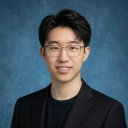
 Chenhe Du
· 2 previous affiliations
- ShanghaiTech UniversitySince 2022
- PhD student · Since 2022
- Current
- Shandong University2018–2022
- Undergrad student · 2018–2022
Research Overview
Chenhe Du focuses on computational imaging, medical image reconstruction, and generative models. Their research trajectory explores the integration of implicit neural representations and diffusion models to solve highly ill-posed inverse problems in CT and MRI. Recent work investigates advanced optimization frameworks and dual-variable coupling to improve the robustness and speed of unsupervised medical imaging.
Research Trajectory
Chenhe Du’s research trajectory began with a focus on unsupervised deep learning frameworks for medical image reconstruction, particularly addressing the limitations of supervised models that require massive, paired datasets. In 2024, Du co-first authored Moner: Motion Correction in Undersampled Radial MRI with Unsupervised Neural Representation, which introduced a novel method to correct motion artifacts in radial MRI scans without external training data. By combining a physics-informed motion model with a coarse-to-fine hash encoding and projection-domain optimization, this work contributed significantly to the research direction of Deep Learning for Retrospective Motion Correction in MRI and the broader area of Robust Reconstruction for Non-Cartesian Magnetic Resonance Imaging.
During this period, Du also explored how generative models could constrain the highly ill-posed solution spaces caused by incomplete data acquisition. As the first author of DPER: Diffusion Prior Driven Neural Representation for Limited Angle and Sparse View CT Reconstruction, Du developed a framework that integrated diffusion priors with implicit neural representations (INRs) to reconstruct computed tomography (CT) images from limited angles and sparse views. This approach aligned with the emerging theme of Neural Fields as Implicit Regularizers for Inverse Problems, utilizing the continuous function parameterization of INRs to handle severely under-determined imaging tasks. Concurrently, Du served as the second author on Highly Accelerated MRI via Implicit Neural Representation Guided Posterior Sampling of Diffusion Models, which provided effective data consistency guidance for posterior sampling in diffusion models to improve MRI reconstruction accuracy and stability.
In 2025, Du extended these hybrid INR-diffusion methodologies to tackle specific, severe clinical imaging artifacts. As the first author of Diffusion Model Regularized Implicit Neural Representation for CT Metal Artifact Reduction, Du proposed an unsupervised framework designed to clean up the streaky artifacts caused by metal implants, such as dental fillings or stents. By leveraging the physics-based consistency of INRs alongside the generative capabilities of diffusion models, the system achieved high-quality reconstructions without relying on paired "clean versus metallic" datasets. Throughout this time, Du also participated as a middle author in collaborative efforts applying INRs to sparse-view CT reconstruction, further establishing a consistent focus on self-supervised and unsupervised paradigms for medical inverse problems.
By 2026, Du’s work evolved to address the fundamental optimization and memory bottlenecks inherent in diffusion-based solvers. Leading this effort as first author, Du published Plug-and-Play Diffusion Meets ADMM: Dual-Variable Coupling for Robust Medical Image Reconstruction. This research reintroduced classical optimization techniques—specifically dual variables—alongside a novel spectral homogenization method to accelerate and stabilize the reconstruction process for both CT and MRI. This advancement directly contributed to the research direction of Adaptive Penalty Schemes for Alternating Direction Methods, demonstrating a shift from purely architectural innovations to rigorous, algorithm-level optimization strategies.
Current Directions
The most recent papers in the evidence indicate a continued focus on integrating classical optimization algorithms with modern generative priors to solve complex, blind inverse problems. Recent work investigates how structured forward operator modeling and dual-variable coupling can enforce physical constraints—such as monotonicity and spectral homogenization—without requiring paired training data. This includes contributions to zero-shot frameworks capable of handling unknown degradation processes, such as dynamic range compression and low-light enhancement, while maintaining radiometric fidelity. Furthermore, Du’s ongoing research engages with the broader theme of Generalist Foundation Models for Universal Medical Image Representation, moving beyond modality-specific specialist models toward unified, robust reconstruction frameworks that operate efficiently across diverse medical imaging tasks and hardware constraints.
Profile updated
Loading new papers…
Other researchers whose papers cluster into the same research directions — a proxy for overlapping technical interests and shared intellectual neighborhoods.
See something wrong? Report a mistake