

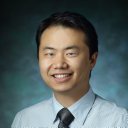
 Kai Ding
· 1 previous affiliation
- Johns Hopkins UniversitySince 2020
- Associate Professor · Since 2020
2 other authors named Kai Ding: Kai Ding (INTSIG Information · 19 papers), Kai Ding (Technische Universität Dresden · 1 paper)
Research Overview
Kai Ding focuses on medical artificial intelligence, with a specific emphasis on the development of high-fidelity reconstruction frameworks, large-scale annotated datasets, and robust evaluation metrics for Computed Tomography (CT). Ding’s work addresses the critical gap between standard computer vision metrics and the stringent requirements of clinical diagnostics, particularly in the context of sparse-view imaging and oncological segmentation. By integrating anatomical constraints into generative models and automating the curation of multi-institutional data, Ding contributes to the creation of more reliable and scalable AI systems for medical imaging.
Research Trajectory
Ding’s research evolution reflects a transition from broader computational linguistics and document analysis toward specialized applications in medical imaging and oncology. Early thematic interests included Language Agnostic Document Layout Understanding, which focused on decoupling spatial structure from linguistic content to interpret the "visual grammar" of documents. This foundational interest in spatial reasoning and structural integrity was further refined through work on Mitigating Error Propagation in Visual Document Understanding, where the focus was on reducing the brittleness of serial processing pipelines.
Parallel to these developments in document AI, Ding’s work intersected with natural language processing challenges, specifically Overcoming the Classical Gap in Modern Language Models and Hybrid Lexical and Semantic Retrieval for Retrieval Augmented Generation. These areas explored the tensions between standardized modern training data and the complexities of historical or specialized texts, as well as the trade-offs between lexical precision and semantic breadth in information retrieval.
By 2025, Ding’s research focus shifted decisively toward the medical domain, specifically addressing the "fortress" of the tumor microenvironment. This work aligns with clinical themes such as Vascular Normalization to Overcome Immunotherapy Resistance and In Situ Vaccination for Systemic Cancer Control. In this context, Ding has contributed to large-scale efforts to improve the detection and segmentation of aggressive malignancies, such as pancreatic cancer, by providing the high-quality data and evaluation frameworks necessary to move these "immunologically cold" tumors into more treatable states.
Current Directions
Ding’s current research is characterized by three primary pillars: the critique of traditional image quality metrics, the development of anatomy-aware generative models, and the acceleration of medical data curation.
A central concern in Ding’s recent work is the unreliability of pixel-wise metrics like PSNR and SSIM in medical contexts. Ding argues that these metrics are often "blind" to the loss of small but vital anatomical structures during image reconstruction. To address this, Ding has participated in the development of frameworks that prioritize structural and physiological completeness over simple pixel-level similarity.
Furthermore, Ding is involved in advancing the scale of medical AI through the creation of massive, multi-institutional datasets. These efforts aim to overcome the limitations of small, single-center cohorts, which often lead to models that fail in "out-of-distribution" clinical settings. By utilizing agentic AI to assist in data curation and annotation, Ding seeks to reduce the time required to build trusted medical datasets from years to months.
Representative Work
Ding has contributed to several significant projects that address the technical and infrastructural barriers to effective medical AI. These contributions are primarily situated within large-scale collaborative frameworks at the intersection of computer science and radiology.
In the area of image reconstruction, Ding participated in the development of the CARE framework, detailed in Are Pixel-Wise Metrics Reliable for Sparse-View Computed Tomography Reconstruction?. This work critiques the use of traditional metrics in sparse-view CT, which aims to reduce radiation doses by using fewer X-ray projections. The research demonstrates that standard metrics can fail to signal the disappearance of critical anatomical structures. The CARE framework instead employs AI-driven segmentation to evaluate and enforce structural completeness, significantly improving the preservation of vital organs and vessels in reconstructed images. This work was also presented at NeurIPS 2025 as Are Pixel-Wise Metrics Reliable for Computerized Tomography Reconstruction?.
Ding also contributed to the development of PanTS: The Pancreatic Tumor Segmentation Dataset, a substantial open-resource dataset designed to advance pancreatic cancer research. PanTS comprises over 36,000 CT scans from 145 medical centers, providing nearly one million expert-validated annotations across 28 anatomical structures. As a middle author on this project, Ding supported the curation of a dataset that is significantly larger than previous resources, enabling AI models to achieve higher accuracy in tumor detection and localization across diverse clinical environments.
In the domain of generative AI for medical imaging, Ding was part of the team that developed SMILE, an anatomy-aware diffusion framework. As described in See More, Change Less: Anatomy-Aware Diffusion for Contrast Enhancement, this framework enhances non-contrast CT scans by adding realistic contrast while strictly maintaining anatomical integrity. By enforcing structural and physiological constraints, the SMILE framework attempts to mitigate the "hallucinations" common in standard generative models, thereby supporting earlier and more reliable cancer detection.
Finally, Ding participated in the development of ScaleMAI: Accelerating the Development of Trusted Datasets and AI Models. This project proposes an agentic approach to medical AI development, where data curation and model training occur in a self-reinforcing cycle. By integrating AI into the annotation process, the ScaleMAI framework aims to accelerate the creation of high-quality datasets, using pancreatic tumor detection as a primary use case to demonstrate how development timelines can be compressed without sacrificing data quality.
Profile updated
| Paper | Venue | Year |
|---|---|---|
| PanTS: The Pancreatic Tumor Segmentation DatasetGitHubMrGiovanni/ | NeurIPS | 2025 |
Loading new papers…
Other researchers whose papers cluster into the same research directions — a proxy for overlapping technical interests and shared intellectual neighborhoods.
See something wrong? Report a mistake