

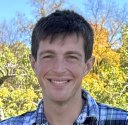
 David R. Burt
· 3 previous affiliations
- Massachusetts Institute of TechnologySince 2022
- Postdoc · Since 2022
- University of Cambridge2017–2022
- PhD student · 2018–2022
- MS student · 2017–2018
- Williams College2013–2017
- Undergrad student · 2013–2017
Research Overview
David R. Burt focuses on validation and uncertainty quantification for spatiotemporal data, as well as approximate inference in Gaussian processes and Bayesian models. His trajectory spans foundational work on the convergence of sparse variational inference to the development of robust statistical methods for the physical sciences. Currently, he investigates spatial statistics under model misspecification, replacing standard independent assumptions with physically interpretable constraints.
Research Trajectory
During his doctoral studies at the University of Cambridge, Burt's early research established rigorous theoretical foundations for scalable Bayesian inference. In Rates of Convergence for Sparse Variational Gaussian Process Regression, he analyzed how the number of inducing variables must scale with dataset size to maintain approximation quality, avoiding the standard cubic computational cost associated with exact inference. This theoretical grounding was expanded in Convergence of Sparse Variational Inference in Gaussian Processes Regression, which formalized upper and lower bounds for this scaling behavior.
Continuing to refine Gaussian process (GP) inference, he explored computational trade-offs in Barely Biased Learning for Gaussian Process Regression, proposing an adaptive method to bound the bias of the objective function when estimating the log marginal likelihood. He also advanced optimization techniques in Tighter Bounds on the Log Marginal Likelihood of Gaussian Process Regression Using Conjugate Gradients, contributing to broader efforts in scaling Gaussian processes beyond cubic complexity. Alongside GP scalability, Burt investigated generalization bounds for small datasets. With collaborators, he evaluated the limits of test set bounds in How Tight Can PAC-Bayes be in the Small Data Regime?, contributing to the research direction of Data-Dependent Priors for Tight PAC-Bayesian Bounds.
Moving toward applied probabilistic modeling and AI for science, Burt's work began incorporating physical constraints into machine learning. In Gaussian processes at the Helm(holtz): A more fluid model for ocean currents, he participated in developing a model that places priors on the divergence and curl-free components of vector fields. This approach successfully reconstructed complex oceanographic features, such as vortices and upwellings, from sparse buoy data by encoding physical laws into Bayesian priors. He also applied temporal modeling to environmental health; A Framework for Evaluating PM2.5 Forecasts from the Perspective of Individual Decision Making introduced the Mean Excess Exposure metric to assess how well air quality forecasts assist individuals in timing activities to minimize smoke exposure.
Returning to the methodological core of GP research, Burt addressed the need for rigorous empirical standards. Recommendations for Baselines and Benchmarking Approximate Gaussian Processes proposed a tuning-free evaluation framework, demonstrating that properly implemented sparse variational GPs serve as formidable baselines that often achieve near-exact solutions. Complementing this focus on reliability, Numerically Stable Sparse Gaussian Processes via Minimum Separation using Cover Trees analyzed the numerical stability of inducing-point approximations. Building on interpolation theory, this work derived sufficient conditions to prevent instability when GPs are deployed within larger machine learning and decision-making systems.
In 2025, during his postdoctoral research at MIT, Burt's focus shifted heavily toward spatial statistics, particularly the challenge of drawing valid inferences when standard assumptions fail. Consistent Validation for Predictive Methods in Spatial Settings formalized validation checks for spatial prediction tasks where test locations are fixed rather than independently and identically distributed, addressing the illusion of model accuracy caused by spatial autocorrelation. To handle model misspecification in spatial data, he introduced methods relying on physical smoothness rather than correct model specification. Smooth Sailing: Lipschitz-Driven Uncertainty Quantification for Spatial Associations developed techniques to quantify associations in spatial domains, advancing the area of The Sensitivity of Lipschitz Bounds in Safe Learning. This approach was further extended in Lipschitz-Driven Inference: Bias-corrected Confidence Intervals for Spatial Linear Models, which constructed valid frequentist confidence intervals for non-random data locations. Additionally, Wrong Model, Right Uncertainty: Spatial Associations for Discrete Data with Misspecification adapted these principles for binary and count-valued responses, allowing scientists to reliably estimate how variables like disease presence associate with environmental covariates despite unrealistic spatial assumptions.
Current Directions
The most recent work in the evidence centers on robust validation and uncertainty quantification for spatial and spatiotemporal data. A major ongoing theme is overcoming the limitations of standard independent and identically distributed (i.i.d.) assumptions, which often lead to overconfident or invalid conclusions in spatial statistics. Recent research investigates how to replace these assumptions with physically interpretable constraints, such as Lipschitz continuity, to guarantee valid frequentist coverage even when models are misspecified or data locations are non-random. This includes developing bias-corrected confidence intervals for spatial linear models and extending robust inference techniques to discrete, binary, and count-valued environmental and epidemiological data.
Profile updated
Loading new papers…
Other researchers whose papers cluster into the same research directions — a proxy for overlapping technical interests and shared intellectual neighborhoods.
See something wrong? Report a mistake