

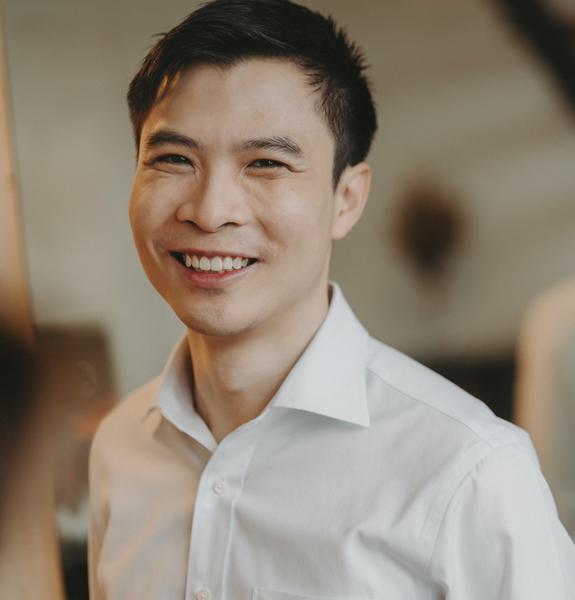
 Andrew Y. K. Foong
· 3 previous affiliations
- Mayo ClinicSince 2025
- Researcher · Since 2025
- Microsoft (United States)2022–2024
- Researcher · 2022–2024
- University of Cambridge2014–2022
- PhD student · 2018–2022
- Undergrad student · 2014–2018
Research Overview
Andrew Y. K. Foong focuses on probabilistic modeling, Bayesian deep learning, and generative artificial intelligence for scientific and medical applications. His early work identified fundamental limitations in approximate inference for neural networks and developed translation-equivariant neural processes. More recently, his research has shifted toward generative models for molecular dynamics, protein design, and the interpretability of clinical foundation models.
Research Trajectory
His early research rigorously evaluated the reliability of uncertainty estimates in deep learning, particularly within Bayesian neural networks (BNNs). He demonstrated that widely used variational inference techniques, such as mean-field Gaussian approximations and Monte Carlo dropout, suffer from fundamental limitations in function space. In 'In-Between' Uncertainty in Bayesian Neural Networks, he introduced a "gap split" benchmark to show that mean-field variational inference can be catastrophically overconfident in regions between separated data clusters, whereas classical techniques like linearized Laplace approximations provide more reliable uncertainty estimates. He expanded on these functional limitations in Pathologies of Factorised Gaussian and MC Dropout Posteriors in Bayesian Neural Networks and On the Expressiveness of Approximate Inference in Bayesian Neural Networks, proving that these common weight-space distributions struggle to increase uncertainty between well-separated regions of low uncertainty. To improve BNN training, he also contributed to methods for treating prior parameters distributionally, leading to tighter Evidence Lower Bounds in Collapsed Variational Bounds for Bayesian Neural Networks. Beyond variational inference, he investigated the theoretical guarantees of learning algorithms in the small-data regime, exploring how to optimize generalization bounds without withholding validation data in How Tight Can PAC-Bayes be in the Small Data Regime?.
Concurrently, he advanced the development of Neural Processes (NPs), a family of meta-learning models that combine the flexibility of neural networks with the uncertainty quantification of Gaussian processes. Recognizing that many physical and spatial datasets exhibit statistical symmetries, he participated in the development of Convolutional Conditional Neural Processes, which embed datasets into an infinite-dimensional function space to model translation equivariance. He subsequently led the extension of this framework in Meta-Learning Stationary Stochastic Process Prediction with Convolutional Neural Processes, demonstrating that prediction can be framed as a translation-equivariant map from observed datasets to predictive stochastic processes. This work significantly advanced the research direction of Translation Equivariant Neural Processes. Later, he contributed to addressing a key limitation of conditional neural processes—their inability to model dependencies in predictions—by helping to formulate a method for autoregressive deployment at test time in Autoregressive Conditional Neural Processes, contributing to the broader area of Joint Probabilistic Prediction via Sequential Conditioning.
Transitioning into the domain of computational chemistry and structural biology, his research applied deep generative modeling to accelerate scientific simulation and design. A major focus has been overcoming the timescale limitations of traditional molecular dynamics. He co-developed Timewarp, detailed in Timewarp: Transferable Acceleration of Molecular Dynamics by Learning Time-Coarsened Dynamics, a machine learning framework that combines transformer-based normalizing flows with Markov Chain Monte Carlo methods to take massive time steps. This work generalized to unseen molecular systems, advancing the areas of Generative Time-Stepping for Molecular Dynamics and Transferable Foundation Models for Atomistic Simulation. In the realm of protein engineering, he contributed to the research direction of The Computational Experimental Validation Gap through Improved motif-scaffolding with SE(3) flow matching. This work extended SE(3) flow matching models to generate structurally diverse protein scaffolds around desired functional motifs using novel amortization and guidance strategies. He further participated in the development of BioEmu, a generative deep learning system capable of rapidly sampling protein structure ensembles, as presented in Scalable emulation of protein equilibrium ensembles with generative deep learning.
Current Directions
Reflecting his affiliation as an Assistant Professor at the Mayo Clinic, the most recent work in the evidence indicates a shift toward the interpretability and application of foundation models in clinical settings. In Probing Clinical Concepts in an EHR Foundation Model via Sparse Autoencoders, he oversaw research applying sparse autoencoders to decode the latent representations of Electronic Health Record (EHR) foundation models. This work investigates how these models organize medical knowledge, revealing that they often structure concepts by prevalence rather than traditional clinical taxonomies, while still successfully capturing complex clinical syndromes as interpretable features. This direction bridges his foundational expertise in probabilistic modeling and representation learning with high-stakes medical AI applications.
Profile updated
Loading new papers…
Other researchers whose papers cluster into the same research directions — a proxy for overlapping technical interests and shared intellectual neighborhoods.
See something wrong? Report a mistake