

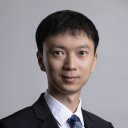
 Chen Wang
· 8 previous affiliations
- Spatial AI & Robotics LabSince 2021
- Founder · Since 2021
- Assistant Professor · Since 2022
- IEEE RAS TC for Computer & Robot VisionSince 2022
- Associate Co-Chair · Since 2022
- Associate Editor · Since 2026
- BuffaloCurrent
- Current
- Carnegie Mellon University2019–2022
- Postdoctoral Fellow, Robotics · 2019–2022
- Nanyang Technological University2014–2019
- Doctor of Philosophy - PhD, Robotics · 2014–2019
- Beijing Institute of Technology2010–2014
- Undergrad student · 2010–2014
26 other authors named Chen Wang: Chen Wang (Nankai University · 368 papers), Chen Wang (Huazhong University of Science and Technology · 144 papers), Chen Wang (Rensselaer Polytechnic Institute · 72 papers), Chen Wang (IBM Research - Thomas J. Watson Research Center · IBM · Columbia University · New York University · IBM Research · 69 papers), Chen Wang (University of Pennsylvania · 37 papers), and 21 more
Research Overview
Chen Wang focuses on spatial AI, robotic perception, and neuro-symbolic learning for autonomous systems. His trajectory spans from early work on robust visual correlation and lifelong graph learning to the development of imperative learning frameworks that integrate neural networks with physics-based optimization. Currently, he investigates differentiable robotics, vision-language navigation, and unified diffusion models for 3D point cloud processing.
Research Trajectory
His early work focused on visual perception, including contributions to the research direction of Subpixel Alignment via Fourier Phase Correlation. He introduced the Kernel Cross-Correlator to extend linear cross-correlation into non-linear spaces, improving robustness to signal noise and distortions in visual tracking tasks. Building on this foundation, he developed Kervolutional Neural Networks, a patch-wise kernel function approach that enhances model capacity by capturing higher-order feature interactions without introducing additional parameters.
Expanding into spatial perception and mapping, he made significant contributions to the area of Loop Closure Deficiency in Local Odometry and Mapping and the broader field of Geometric Degeneracy in LiDAR Odometry and Mapping. He developed F-LOAM : Fast LiDAR Odometry and Mapping, a lightweight framework that replaces computationally heavy iterative distortion compensation with a non-iterative two-stage method, enabling high-accuracy processing for resource-constrained robots. To address catastrophic forgetting in dynamic environments, he introduced AirLoop: Lifelong Loop Closure Detection, which focuses on the relationships between image descriptors to maintain robust SLAM across changing conditions. Concurrently, he advanced the research direction of Continual Graph Learning for Evolving Data Streams by proposing Lifelong Graph Learning. This work transforms node features into nodes themselves, allowing existing lifelong learning techniques to be applied directly to graph neural networks.
A defining theme of his recent trajectory is the formalization of "Imperative Learning" (IL), a self-supervised neuro-symbolic framework that bridges data-driven networks and structured reasoning via bi-level optimization. He formalized this paradigm in Imperative Learning: A Self-supervised Neural-Symbolic Learning Framework for Robot Autonomy, demonstrating how robots can learn complex tasks by leveraging the inherent logic and physical principles of the world rather than relying on expensive human-labeled data. This framework has been applied across multiple robotic domains. To address challenges in the area of Reducing Error Propagation in Modular Autonomous Pipelines, he introduced iPlanner: Imperative Path Planning. He also directed the development of iMatching: Imperative Correspondence Learning for self-supervised feature correspondence on uninterrupted videos, and iKap: Kinematics-aware Planning with Imperative Learning, which integrates kinematic constraints directly into the learning pipeline to generate more feasible trajectories. Further extending this paradigm, he oversaw iSLAM: Imperative SLAM, which tightly couples data-driven front-end motion estimation with geometry-based back-end optimization to prevent the sub-optimal performance typical of decoupled systems.
Alongside algorithmic advances, he led the creation of PyPose: A Library for Robot Learning with Physics-based Optimization, a PyTorch-based library that unifies deep learning perception with physics-based optimization for SLAM, planning, and control. In stereo vision, he developed the Neural Markov Random Field for Stereo Matching, replacing hand-crafted MRF components with learnable neural modules to achieve highly accurate, real-time depth estimation.
In his most recent work, he has focused on complex reasoning and unified models. He directed the development of Fast Task Planning with Neuro-Symbolic Relaxation, which combines neural importance prediction with symbolic expansion to prune search spaces in the area of Long Horizon Planning for Efficient Robotic Exploration. He also led VL-Nav: Real-time Vision-Language Navigation with Spatial Reasoning, a neuro-symbolic system that enables robots to navigate unseen environments based on abstract human instructions. For 3D processing, he oversaw SuperPC: A Single Diffusion Model for Point Cloud Completion, Upsampling, Denoising, and Colorization, which unifies multiple point cloud correction tasks into a single model to prevent error accumulation. Finally, he contributed to a comprehensive evaluation of spatial intelligence architectures in What Is The Best 3D Scene Representation for Robotics? From Geometric to Foundation Models, tracing the evolution from classic geometric primitives to modern foundation models.
Current Directions
Recent work investigates the integration of neuro-symbolic reasoning with large-scale spatial intelligence. A primary focus is on vision-language navigation, where neural reasoning is combined with symbolic guidance to allow robots to interpret and execute abstract, multi-target human instructions in unstructured environments. Additionally, current research addresses the unification of 3D perception tasks, exploring how single diffusion models can simultaneously handle point cloud completion, upsampling, denoising, and colorization to reduce computational overhead and error propagation. This is complemented by ongoing evaluations of how emerging foundation models and advanced 3D scene representations—such as Neural Radiance Fields and 3D Gaussian Splatting—impact a robot's ability to perceive, map, and manipulate its surroundings.
Profile updated
Loading new papers…
Other researchers whose papers cluster into the same research directions — a proxy for overlapping technical interests and shared intellectual neighborhoods.
See something wrong? Report a mistake