

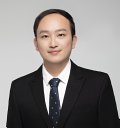
 Chang-Yu Hsieh
· 2 previous affiliations
- Zhejiang UniversitySince 2022
- Full Professor · Since 2022
- Tencent (China)2018–2022
- Researcher · 2018–2022
Research Overview
Chang-Yu Hsieh focuses on molecular machine learning, generative drug discovery, and quantum simulation for chemical systems. His early work explored quantum architecture search and neural quantum states to accelerate ground-state preparation. Recently, his research has shifted toward foundational models for biomolecular modeling, emphasizing structure-based protein design, enzymatic function prediction, and advanced antibody therapeutics.
Research Trajectory
Hsieh’s early research focused on quantum dynamics and the simulation of complex chemical systems. He introduced methods to capture geometric phase effects in the quantum-classical Liouville formalism, demonstrating in Analysis of geometric phase effects in the quantum-classical Liouville formalism that applying a Wigner transformation before projecting onto electronic states allows for accurate simulations without manual phase corrections. Expanding into quantum computing, he developed algorithms to accelerate ground-state preparation, such as the approach detailed in Variational quantum simulation of the imaginary-time Lyapunov control for accelerating the ground-state preparation. His work in the area of Phase-Amplitude Decoupling in Neural Quantum States includes Unitary-coupled restricted Boltzmann machine ansatz for quantum simulations, which presented a scalable method to run neural-network quantum states on quantum hardware using minimal ancilla qubits. To further optimize quantum resources, he created a continuous framework for circuit design in Differentiable quantum architecture search and improved quantum annealer performance using AlphaZero-inspired neural networks in Optimizing quantum annealing schedules with Monte Carlo tree search enhanced with neural networks.
Parallel to his quantum research, Hsieh began addressing the data and representation bottlenecks in computational chemistry. He participated in the creation of a major benchmark for the research direction of Geometric Graph Neural Networks for Molecular Modeling with Alchemy: A Quantum Chemistry Dataset for Benchmarking AI Models, which provided a rigorous testing ground for models in medicinal chemistry. He also contributed to predictive toxicology tools, such as the widely used ADMETlab 2.0: an integrated online platform for accurate and comprehensive predictions of ADMET properties. Advancing the broader area of Hierarchical Molecular Representations, he developed a multi-channel self-supervised framework in From molecules to scaffolds to functional groups: building context-dependent molecular representation via multi-channel learning that aggregates structural views to predict biological activity and activity cliffs. He further explored generative design by participating in the development of MolCode, an equivariant model detailed in An Equivariant Generative Framework for Molecular Graph-Structure Co-Design. To bridge the gap between AI-generated molecules and wet-lab viability, he led the development of ClickGen: Directed exploration of synthesizable chemical space via modular reactions and reinforcement learning, which uses click chemistry and reinforcement learning to guarantee synthesizability. He also contributed to the area of Dynamic Fragment Libraries for Molecular Generation through FragGen: towards 3D geometry reliable fragment-based molecular generation, a framework that combines chemical theory with deep learning to produce highly realistic 3D structures for kinase inhibitors.
Most recently, Hsieh’s focus has expanded to large-scale biomolecular modeling, protein engineering, and multi-modal deep learning. In the area of Cross-Modal Alignment for Molecular Representation Learning, he developed EasIFA, a framework that fuses protein sequences, 3D structures, and chemical reaction data to predict enzymatic active sites, as described in Multi-modal deep learning enables efficient and accurate annotation of enzymatic active sites. He also introduced BEC-Pred in A general model for predicting enzyme functions based on enzymatic reactions, leveraging transfer learning from organic reactions to predict Enzyme Commission numbers directly from substrate and product structures. Advancing the field of Navigating Combinatorial Sequence Space for Protein Design, he collaborated on ProtFlow: Fast Protein Sequence Design via Flow Matching on Compressed Protein Language Model Embeddings, which accelerates the generation of structurally plausible proteins and antibodies. His recent work emphasizes foundational tools for complex interactions, including BioScore: A Foundational Scoring Function For Diverse Biomolecular Complexes, which uses a dual-scale geometric representation to predict binding affinity across diverse benchmarks. Extending these foundational approaches to specialized therapeutic domains, he developed Ophiuchus-Ab: A Versatile Generative Foundation Model for Advanced Antibody-Based Immunotherapy to capture the highly coupled interactions between heavy and light chains in antibody design, and introduced physics-aware deep learning for metalloprotein drug discovery in MetalloDock: Decoding Metalloprotein–Ligand Interactions via Physics-Aware Deep Learning for Metalloprotein Drug Discovery.
Current Directions
The most recent papers in the evidence indicate a strong focus on developing foundational generative models for complex biomolecular systems and targeted therapeutics. Recent work investigates the use of flow matching within the compressed latent spaces of protein language models to accelerate sequence design for proteins and antibodies. Additionally, Hsieh is developing versatile scoring functions and physics-aware deep learning frameworks to decode intricate structural dependencies, such as the inter-chain interactions in antibody-based immunotherapies and the specialized ligand interactions in metalloprotein drug discovery.
Profile updated
Loading new papers…
Other researchers whose papers cluster into the same research directions — a proxy for overlapping technical interests and shared intellectual neighborhoods.
See something wrong? Report a mistake