

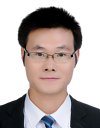
 Chang Tang
· 2 previous affiliations
- Full Professor · Since 2025
- China University of Geosciences2021–2024
- Full Professor · 2021–2024
Research Overview
Chang Tang focuses on pattern recognition, machine learning, and computer vision, with a particular emphasis on multi-view learning and data mining. His trajectory spans from foundational work in kernel-based feature representation to scalable clustering algorithms and multimodal data integration. Recently, his research addresses medical artificial intelligence and the application of large language models to spatially resolved transcriptomics.
Research Trajectory
Tang’s early research explored advanced feature representations in computer vision. With collaborators, he investigated the use of symmetric positive-definite matrices, contributing to Beyond Covariance: Feature Representation with Nonlinear Kernel Matrices in 2015. This work proposed an open framework utilizing kernel matrices over feature dimensions to overcome the limitations of traditional covariance descriptors, such as singularity and fixed representation forms.
Between 2019 and 2021, a major theme in his work became multi-view clustering, particularly addressing incomplete data and computational efficiency. He participated in developing methods to integrate pre-specified incomplete views, as seen in Late Fusion Incomplete Multi-View Clustering. Recognizing that many existing models failed to exploit complementary diversity across views, he introduced Learning a Joint Affinity Graph for Multiview Subspace Clustering, which learns a unified graph to better handle noise and outliers. He expanded on graph-based approaches with CGD: Multi-View Clustering via Cross-View Graph Diffusion, addressing the high computational complexity and hyper-parameter sensitivity of previous consensus graph models. Continuing to refine incomplete multi-view clustering, he contributed to Efficient and Effective Regularized Incomplete Multi-View Clustering, which optimized kernel matrix imputation to reduce storage and computational burdens. This drive for efficiency culminated in One Pass Late Fusion Multi-view Clustering, a parameter-free algorithm that unifies consensus partition learning and label generation into a single step, advancing the research direction of Linear Time Multi View Clustering via Anchor Graphs.
In 2022, Tang’s work spanned both deep learning for computer vision and scalable clustering algorithms. He developed DeFusionNET: Defocus Blur Detection via Recurrently Fusing and Refining Discriminative Multi-Scale Deep Features, a neural network designed to overcome background clutter and scale sensitivity by propagating semantic and shallow features across network layers. Returning to kernel methods, he proposed Efficient Multiple Kernel Clustering via Spectral Perturbation, which significantly reduced the computational complexity of learning optimal kernels. He also addressed unsupervised feature selection, introducing Cross-View Locality Preserved Diversity and Consensus Learning for Multi-View Unsupervised Feature Selection to capture both shared and distinguishing information across views. To further scale multi-view clustering, his group proposed Bipartite Graph-based Discriminative Feature Learning for Multi-View Clustering, which leverages small anchor points rather than full sample graphs, contributing to the broader area of Linear Time Multi-View Clustering with Anchor Graphs.
More recently, Tang has applied his expertise in multimodal learning to complex domains like medical artificial intelligence and remote sensing. He introduced Multi-Level Confidence Learning for Trustworthy Multimodal Classification, a framework that filters redundant features and enforces label-space orthogonality to improve reliability on multi-omics datasets. In remote sensing, he developed MS-Former: Memory-Supported Transformer for Weakly Supervised Change Detection with Patch-Level Annotations, bridging the gap between coarse image-level labels and precise pixel-level change maps. His work on multi-view alignment continued with Scalable Cross-View Sample Alignment for Multi-View Clustering with View Structure Similarity, addressing unsynchronized data by leveraging structural similarity—a key advancement in the area of Learning from Incomplete Multi-View Data. Demonstrating an interest in integrating large language models with biological data, he collaborated on When Genes Speak: A Semantic-Guided Framework for Spatially Resolved Transcriptomics Data Clustering, which uses LLMs to incorporate semantic biological knowledge into spatial transcriptomics. His ongoing research in representation learning is reflected in Contrastive and Dual Adversarial Representation Learning for Multi-View Clustering, further refining how complex multi-view data is modeled.
Current Directions
The most recent papers in the evidence indicate a strong focus on integrating advanced deep learning architectures with complex, domain-specific data, particularly in biology and medicine. Recent work investigates the application of large language models to spatially resolved transcriptomics, moving beyond numerical gene expression to incorporate semantic biological knowledge into clustering frameworks. Additionally, ongoing research addresses trustworthy multimodal classification for medical diagnostics by modeling confidence at both the feature and label levels. Methodologically, the trajectory points toward increasingly sophisticated alignment and representation techniques, including contrastive and dual adversarial learning, to handle unaligned, incomplete, or unsynchronized multi-view data in real-world scenarios.
Profile updated
Loading new papers…
Other researchers whose papers cluster into the same research directions — a proxy for overlapping technical interests and shared intellectual neighborhoods.
See something wrong? Report a mistake