

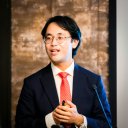
 Byung-Jun Yoon
· 2 previous affiliations
- Brookhaven National LaboratorySince 2019
- Scientist · Since 2019
- Texas A&M UniversitySince 2008
- Full Professor · Since 2023
- Associate Professor · 2014–2023
- Assistant Professor · 2008–2014
Research Overview
Byung-Jun Yoon focuses on computational network biology, bioinformatics, and machine learning for scientific discovery. His early work developed probabilistic frameworks for analyzing complex biological networks and high-dimensional genomic data. More recently, his research addresses objective-based uncertainty quantification and the application of advanced generative models to biological and physical systems.
Research Trajectory
Yoon’s early research established foundational computational methods for analyzing biological sequences and networks. His initial work introduced Context-Sensitive Hidden Markov Models for Modeling Long-Range Dependencies in Symbol Sequences (2006), providing a robust statistical approach for sequence analysis. Building on probabilistic frameworks, he subsequently addressed the challenges of cancer classification by shifting the analytical focus from individual noisy gene markers to broader functional pathways. This approach was detailed in Accurate and Reliable Cancer Classification Based on Probabilistic Inference of Pathway Activity (2009), which utilized log-likelihood ratios to aggregate gene expression data into pathway-level activity scores, significantly improving reproducibility across clinical datasets. This work advanced the research direction of Learning from High Dimensional Low Sample Size Biomedical Data. Expanding on this network-centric perspective, he developed computational methods for the Identification of diagnostic subnetwork markers for cancer in human protein-protein interaction network (2010). By isolating groups of interacting proteins that predict cancer metastasis more accurately than single genes, this research contributed to the broader area of Network Based Analysis of Complex Biological Systems.
A major subsequent focus of his trajectory involved the scalable alignment of complex biological networks. He developed SMETANA: Accurate and Scalable Algorithm for Probabilistic Alignment of Large-Scale Biological Networks (2013), a novel algorithm that combined a semi-Markov random walk model with probabilistic consistency transformations to simultaneously align dozens of genome-scale networks efficiently. He continued to refine network alignment methodologies with collaborators in MONACO: accurate biological network alignment through optimal neighborhood matching between focal nodes (2021), further improving the precision of identifying conserved biological structures across species.
In recent years, Yoon’s research has increasingly integrated deep learning architectures with scientific computing, particularly emphasizing uncertainty quantification (UQ) and the processing of complex physical data. To address the spectral bias that often causes deep learning models to blur high-frequency details in scientific datasets, his group introduced the Hierarchical Neural Operator Transformer with Learnable Frequency-aware Loss Prior for Arbitrary-scale Super-resolution (2024). This framework enables the accurate reconstruction of complex phenomena like turbulence and weather patterns. Similarly, he explored cross-modal prediction in Multi-modal Representation Learning for Cross-modal Prediction of Continuous Weather Patterns from Discrete Low-Dimensional Data (2024), utilizing Local Implicit Image Functions to reconstruct high-resolution wind fields from sparse measurements. In the domain of high-energy physics, he contributed to Variable Rate Neural Compression for Sparse Detector Data (2024), developing a specialized neural network that leverages sparse convolutions to compress particle trajectory data with high accuracy and a minimal parameter footprint.
A critical theme across these applications is the need for reliable decision-making under uncertainty. To overcome the computational bottlenecks of Bayesian deep learning, Yoon investigated Learning Active Subspaces for Effective and Scalable Uncertainty Quantification in Deep Neural Networks (2024), demonstrating how dimensionality reduction in parameter space can yield scalable and reliable predictions. This focus on UQ extends to clinical settings, as seen in his work on Neural machine translation of clinical procedure codes for medical diagnosis and uncertainty quantification (2024), which designed AI-enabled clinical decision support systems capable of reducing diagnostic uncertainty in complex emergency scenarios.
Most recently, Yoon has focused on biologically-informed generative models and the application of foundation models to biological discovery. He developed the EXPORT framework in Biologically Interpretable VAE with Supervision for Transcriptomics Data Under Ordinal Perturbations (2024), which combines biological pathway knowledge with an auxiliary ordinal regressor to map hierarchical cellular responses to varying perturbation levels, such as drug dosages. This pathway-constrained approach was also applied to study the subtle molecular effects of radiation in Pathway-based analyses of gene expression profiles at low doses of ionizing radiation (2024), utilizing a specialized Variational Autoencoder to identify distinct genetic signatures of low-dose exposure. He expanded on this research by modeling nuclear morphology directly from RNA-seq data in Interpretable transcriptome-to-phenotype modeling of cell-painting nuclear morphology features from RNA-seq under low-dose radiation exposure (2026).
His latest work synthesizes these advancements to address broader challenges in computational biology and epidemiology. He contributed to ImmUQBench: A Benchmark on Uncertainty Quantification of Protein Immunogenicity Prediction (2025), providing a standardized evaluation framework for AI-guided antigen design. Broadening the methodological perspective, he co-authored Generative Artificial Intelligence for Biology: Toward Unifying Models, Algorithms, and Modalities (2026), which outlines a unified approach to generative modeling across protein, genetic, and single-cell domains. Finally, exploring the utility of Large Language Models in public health, he introduced an AI co-scientist pipeline in Enabling Robust Epidemic Control via LLM-Elicited Causal Discovery (2026), leveraging LLMs to discover causal relationships and formulate intervention strategies for novel outbreaks where historical data is sparse.
Current Directions
The most recent papers in the evidence indicate a strong focus on unifying generative artificial intelligence for multimodal biological applications and ensuring the reliability of these models through rigorous uncertainty quantification. Current work investigates how foundation models and LLMs can be adapted for complex scientific tasks, ranging from predicting protein immunogenicity to eliciting causal structures for epidemic control. A central open problem in this agenda is bridging the gap between high-dimensional molecular data (such as transcriptomics) and observable phenotypes, utilizing biologically-constrained architectures to ensure that AI-driven discoveries remain interpretable and physically plausible even when empirical data is limited.
Profile updated
Loading new papers…
Other researchers whose papers cluster into the same research directions — a proxy for overlapping technical interests and shared intellectual neighborhoods.
See something wrong? Report a mistake