

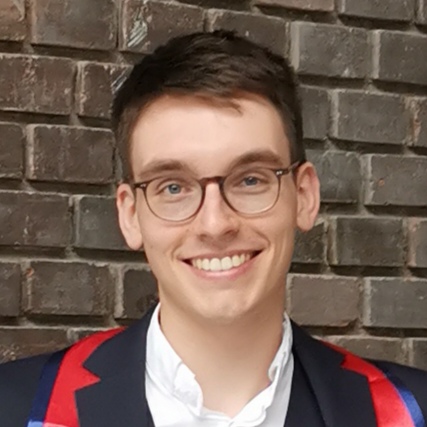
 Axel Laborieux
· 6 previous affiliations
- Huawei Technologies (China)Since 2024
- Research Scientist · Since 2024
- Friedrich Miescher Institute2021–2024
- Postdoctoral Researcher · 2021–2024
- Université Paris-Saclay2017–2021
- Research Doctorate, Neuromorphic Computing, Physics · 2018–2021
- Master 2 (M2), Condensed Matter Physics - Statistical Physics · 2017–2018
- Research Intern Statistical Physics · 2017
- 上海博效医疗科技有限公司2016
- Corporate Summer Internship · 2016
- Lycée Blaise Pascal2015–2016
- Undergraduate Teaching Fellow · 2015–2016
Research Overview
Axel Laborieux focuses on biologically plausible learning algorithms, neuromorphic computing, and the hardware-algorithm co-design of energy-efficient neural networks. His trajectory spans from developing in-memory computing architectures using resistive RAM to advancing equilibrium propagation and synaptic metaplasticity for continual learning. Currently, he investigates scalable, biologically inspired learning mechanisms for deep neural networks and non-contrastive self-supervised learning.
Research Trajectory
Laborieux’s early research centered on bridging the gap between algorithmic requirements and physical hardware constraints, particularly through in-memory computing. In 2020, he developed architectures for Ternary Neural Networks (TNNs) using resistive RAM (RRAM) in Low Power In-Memory Implementation of Ternary Neural Networks with Resistive RAM-Based Synapse. This work demonstrated that TNNs could achieve high accuracy and error resilience in low-power regimes. He expanded on this in Implementation of Ternary Weights With Resistive RAM Using a Single Sense Operation Per Synapse (2021), introducing a hardware architecture that reads ternary weights in a single operation. This line of inquiry contributed to the broader research area of Latency Based State Detection in Memory Systems. He later collaborated on further hardware implementations, participating in the 2023 study Experimental Demonstration of Memristor Delay-Based Logic In-Memory Ternary Neural Network, which successfully fabricated a hybrid CMOS/memristor chip to perform neural network multiplications directly within memory arrays.
Parallel to his hardware research, Laborieux investigated algorithmic solutions for continual learning, motivated by the energy constraints of traditional computing architectures as outlined in his 2021 overview, Bio-inspired continual learning and credit assignment for neuromorphic computing.. Addressing the research direction of Weight Consolidation for Mitigating Catastrophic Forgetting, he introduced a method to protect Binarized Neural Networks from catastrophic forgetting in Synaptic metaplasticity in binarized neural networks (2021). By treating hidden real-valued weights as metaplastic states with exponentially decaying plasticity, the networks could learn sequential tasks without explicit task boundaries.
A major theme in Laborieux’s trajectory is the advancement of Equilibrium Propagation (EP) as a biologically inspired, energy-efficient alternative to backpropagation. In 2021, he addressed the scaling limitations of EP in Scaling Equilibrium Propagation to Deep ConvNets by Drastically Reducing its Gradient Estimator Bias, showing that canceling the gradient estimate bias allows EP to train deep convolutional networks. He significantly advanced this framework in Holomorphic Equilibrium Propagation Computes Exact Gradients Through Finite Size Oscillations (2022), extending EP to holomorphic networks to compute exact gradients for finite-amplitude teaching signals, overcoming a key limitation for noisy physical systems.
During his postdoctoral research and subsequent transition to a role as a Research Scientist at Huawei Switzerland, Laborieux broadened his focus to include self-supervised learning and the theoretical foundations of synaptic plasticity. He contributed to the area of Preventing Representation Collapse in Joint Embedding Architectures with Implicit variance regularization in non-contrastive SSL (2023), providing mathematical proofs that asymmetric predictor networks perform implicit variance regularization and introducing a novel loss function to accelerate early training.
Returning to the challenges of physical neural systems, he addressed the assumption of symmetric weights in EP with Improving equilibrium propagation without weight symmetry through Jacobian homeostasis (2024). This work introduced an objective function that restores gradient accuracy in asymmetric networks, enabling EP to scale to complex datasets like ImageNet. He also synthesized the theoretical landscape of continual learning in Theories of synaptic memory consolidation and intelligent plasticity for continual learning (2024), which was subsequently published as a journal version, Theories of synaptic memory consolidation and intelligent plasticity for continual learning (2025). Most recently, he collaborated on Teaching signal synchronization in deep neural networks with prospective neurons (2025), proposing adaptive currents to solve the temporal mismatch problem in biological learning.
Current Directions
The most recent papers in the evidence indicate a dual focus on scaling biologically plausible learning algorithms and formalizing the theory of synaptic plasticity. A primary direction involves adapting Equilibrium Propagation and continuous-time neural networks to realistic physical and biological constraints, such as asymmetric network connections and delayed teaching signals. This includes developing mechanisms like Jacobian homeostasis and prospective neurons to maintain gradient accuracy and temporal synchronization in deep, hierarchical networks. Additionally, ongoing theoretical work investigates how complex synaptic dynamics and memory consolidation strategies can be leveraged to solve catastrophic forgetting in artificial systems, bridging the gap between neurobiological models and practical machine learning applications.
Profile updated
Loading new papers…
Other researchers whose papers cluster into the same research directions — a proxy for overlapping technical interests and shared intellectual neighborhoods.
See something wrong? Report a mistake