

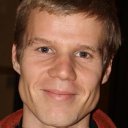
 Friedemann Zenke
· 4 previous affiliations
- Friedrich Miescher InstituteSince 2019
- Principal Researcher · Since 2019
- University of BaselSince 2022
- Assistant Professor · Since 2022
- University of Oxford2017–2019
- Postdoc · 2017–2019
- Stanford University2015–2017
- Postdoc · 2015–2017
Research Overview
Friedemann Zenke focuses on computational neuroscience, machine learning, and the dynamics of spiking neural networks. His research bridges biological learning mechanisms with artificial intelligence, exploring how synaptic plasticity and homeostatic feedback enable stable, continual learning. Recently, his work investigates theoretical frameworks for self-supervised learning and biologically plausible credit assignment in deep neural networks.
Research Trajectory
Early research investigated the stability of Hebbian learning in neural networks. In Synaptic Plasticity in Neural Networks Needs Homeostasis with a Fast Rate Detector (2013), he demonstrated through mathematical modeling and simulations that to prevent runaway activity, homeostatic mechanisms must react on the scale of seconds or minutes, challenging the classical view of homeostasis as a purely slow process. This foundational work contributes to the area of Fast Homeostatic Feedback for Stable Neural Plasticity. Building on these insights, Diverse synaptic plasticity mechanisms orchestrated to form and retrieve memories in spiking neural networks (2015) showed how coordinating diverse biological rules—including heterosynaptic and consolidation mechanisms—enables spiking networks to stably form and retrieve associative memories over long timescales, advancing the broader direction of Multi-Timescale Plasticity for Stable and Rapid Learning.
Transitioning these biological principles into artificial intelligence, he addressed the pervasive issue of catastrophic forgetting in deep learning. He introduced a method to protect consolidated knowledge during sequential task training in Continual Learning Through Synaptic Intelligence (2017). A significant methodological focus then emerged around optimizing non-differentiable spiking neurons. The publication of Surrogate Gradient Learning in Spiking Neural Networks: Bringing the Power of Gradient-based optimization to spiking neural networks (2019) helped popularize the research area of Surrogate Gradient Learning for Spiking Neural Networks by demonstrating how these heuristics effectively train Spiking Neural Networks (SNNs). Further exploring the intersection of optimization and biology, A meta-learning approach to (re)discover plasticity rules that carve a desired function into a neural network (2020) developed a framework that rediscovers biological learning rules by optimizing for network function, successfully identifying classic rules and novel inhibitory dynamics. Continuing the investigation of biological credit assignment, Burst-dependent synaptic plasticity can coordinate learning in hierarchical circuits (2021) detailed how burst-dependent mechanisms coordinate learning across hierarchical neural architectures.
Expanding into representation learning, his group mathematically analyzed self-supervised learning (SSL) mechanisms. In Implicit variance regularization in non-contrastive SSL (2023), they proved that non-contrastive methods perform implicit variance regularization and introduced a novel loss function to equalize learning rates across eigenmodes, eliminating the need for target networks. Returning to biological memory, Geometry and dynamics of representations in a precisely balanced memory network related to olfactory cortex (2024) investigated the geometry of neural representations. This study showed that precisely balanced excitatory and inhibitory assemblies create continuous manifolds that stabilize activity and enable flexible learning, aligning with the research direction of Recurrent Connectivity for Temporal Memory in Spiking Networks. He also formalized his earlier methodological work in Elucidating the theoretical underpinnings of surrogate gradient learning in spiking neural networks (2024), linking surrogate gradients to stochastic automatic differentiation to provide a rigorous mathematical foundation for SNN training algorithms.
Synthesizing years of research, he presented Theories of synaptic memory consolidation and intelligent plasticity for continual learning (2024), a comprehensive survey on how the brain's synaptic machinery inspires solutions for catastrophic forgetting, contributing to the broader area of Complex Synaptic Dynamics for Continual Learning. In sensory processing, Temporal prediction captures retinal spiking responses across animal species (2024) demonstrated that optimizing biologically detailed spiking models for temporal prediction accurately captures complex retinal behaviors across multiple species.
Recent work has focused on advanced biological plausibility and theoretical unification. Addressing the temporal mismatch problem in biological learning, he and his collaborators introduced "prospective neurons" in Teaching signal synchronization in deep neural networks with prospective neurons (2025). These neurons use adaptive currents to predict future inputs, enabling efficient online learning in deep networks. He further proposed in Breaking Balance: Encoding local error signals in perturbations of excitation-inhibition balance (2025) that neural circuits solve the credit assignment problem by using local deviations from excitation-inhibition balance as error signals. Most recently, his work in representation learning culminated in Understanding Self-Supervised Learning via Latent Distribution Matching (2026), which frames SSL as Latent Distribution Matching to unify contrastive, non-contrastive, and predictive methods under a single mathematical umbrella.
Current Directions
The most recent papers in the evidence address two primary themes: biologically plausible credit assignment and the theoretical foundations of representation learning. In the domain of biological learning, recent work investigates how neural circuits might implement deep-learning-like algorithms without violating biological constraints. This includes exploring how local perturbations in excitation-inhibition balance can serve as error signals, and how "prospective neurons" might synchronize activity to solve temporal mismatch problems in hierarchical networks. Concurrently, in artificial intelligence, recent efforts focus on unifying diverse self-supervised learning paradigms—such as contrastive and non-contrastive methods—under cohesive mathematical frameworks like latent distribution matching, providing rigorous proofs for representation identifiability.
Profile updated
Loading new papers…
Other researchers whose papers cluster into the same research directions — a proxy for overlapping technical interests and shared intellectual neighborhoods.
See something wrong? Report a mistake