

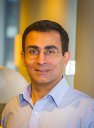
 Atul Sajjanhar
· 5 previous affiliations
- Deakin UniversitySince 2003
- Lecturer/Senior Lecturer · Since 2007
- Lecturer · 2003–2006
- Visiting Research Scholar · 2017
- Doctor of Philosophy (Ph.D.), Pattern Recognition · 2011
- Master of Education - MEd, Educational/Instructional Technology
- Associate Lecturer · 2002
- Institute for Infocomm Research1997–2000
- Senior Engineer · 1997–2000
Research Overview
Atul Sajjanhar focuses on applied machine learning, cybersecurity, and human-computer interaction, with particular emphasis on insider threat detection and educational technologies. His trajectory spans early work in content-based image retrieval and bioinformatics to recent advancements in federated learning privacy and generative data augmentation. Currently, he investigates privacy-preserving distributed learning and the use of augmented reality for learning analytics.
Research Trajectory
Sajjanhar’s early research focused on computer vision, specifically shape indexing and content-based image retrieval (CBIR). In the late 1990s, he introduced A Grid-based Shape Indexing and Retrieval Method (1997) and collaborated on Region-based Shape Representation and Similarity Measure Suitable for Content-based Image Retrieval (1999). The latter presented a shape representation technique invariant to translation, scale, and rotation, demonstrating improved retrieval performance over established Fourier descriptor methods. He continued to advance shape analysis methodologies over the next decade, later proposing a Spectral shape descriptor using spherical harmonics (2010), which transformed 2D objects into 3D space using distance transforms and scale space theory to extract robust descriptors.
In the mid-2010s, Sajjanhar’s work expanded into bioinformatics, where he helped develop accessible computational tools for genomic analysis. He contributed to miRPlant: an integrated tool for identification of plant miRNA from RNA sequencing data (2014), a graphical interface that optimized genomic scanning to improve accuracy over existing command-line pipelines. The following year, he participated in the development of J-Circos: an interactive Circos plotter (2015), further supporting data visualization in the biological sciences.
By the late 2010s, his focus broadened to include educational technologies and human-computer interaction. He explored virtual environments in Second life as a learning environment for computer programming (2019) and developed a Pedagogical framework for environmental science (2020), which utilized local microclimate assessments to ground complex environmental issues in authentic, localized tasks. This interest in usability and interaction extended to cultural heritage, where his team investigated Identification of Usability Issues of Interactive Technologies in Cultural Heritage through Heuristic Evaluations and Usability Surveys (2021), combining expert evaluations with user surveys to improve audio guides and museum websites.
In the early 2020s, Sajjanhar began a major research thrust into cybersecurity, specifically addressing the challenge of detecting rare insider threats using generative adversarial networks (GANs). He worked on Anomaly Detection for Scenario-based Insider Activities using CGAN Augmented Data (2021) to enrich under-represented minority class samples in skewed datasets. This work became a cornerstone of his contributions to the research area of Robust Detection of Rare Cyberattacks in Imbalanced Traffic. He advanced this direction by introducing a Hybrid Deep Learning Model using SPCAGAN Augmentation for Insider Threat Analysis (2022), which combined linear manifold learning for high-quality synthetic data generation with a Hybrid Bayesian Neural Network to achieve robust detection of malicious internal activity.
Parallel to his cybersecurity research, Sajjanhar continued to investigate applied analytics and emerging technologies. He guided A survey on smart farming data, applications and techniques (2022) and led research into Augmented Reality Enhanced Analytics to Measure and Mitigate Disengagement in Teaching Young Children (2022), identifying novel AR-based metrics to provide teachers with actionable insights into student engagement.
Most recently, Sajjanhar has focused on the intersection of privacy, distributed machine learning, and human-centric analytics. In the domain of federated learning (FL), he designed FedAT: Federated Adversarial Training for Distributed Insider Threat Detection (2024), a framework that combines FL with local GAN-based data augmentation to identify threats across geographic locations without sharing sensitive logs. Concurrently, he directed a study on FL vulnerabilities, FedInverse: Evaluating Privacy Leakage in Federated Learning (2024), demonstrating how malicious participants can use model inversion attacks to reconstruct private training data from shared global models. He also participated in developing A Unified Solution to Diverse Heterogeneities in One-Shot Federated Learning (2025), which introduced the FedHydra framework to handle severe data and architectural heterogeneity in a single communication round.
His recent applied machine learning work spans both healthcare and cognitive science. He contributed to Benchmarking Deep Learning Models for Laryngeal Cancer Staging Using the LaryngealCT Dataset (2025), evaluating lightweight 3D architectures on a novel large-scale dataset. In human-computer interaction, he co-authored a systematic review on Augmented Reality Enhanced Analytics for Education (2025) and supervised Window-Based Feature Engineering for Cognitive Workload Detection (2025), utilizing continuous eye-tracking streams and tabular deep learning models like TabNet to accurately classify cognitive load.
Current Directions
Sajjanhar’s most recent work investigates the privacy-utility trade-offs in distributed machine learning and the application of deep learning to human-centric data. A primary focus is federated learning, where he is addressing both the defensive capabilities of distributed networks (such as detecting rare cyberattacks across isolated nodes) and their underlying vulnerabilities to model inversion and privacy leakage. He is also actively exploring solutions for one-shot federated learning that can accommodate highly heterogeneous client architectures and datasets.
Additionally, his current research emphasizes applied analytics using sensor and imaging data. This includes benchmarking specialized deep learning architectures for medical image analysis and developing unobtrusive, real-time metrics for cognitive workload and educational engagement using eye-tracking and augmented reality systems.
Profile updated
| Paper | Venue | Year |
|---|---|---|
| FedInverse: Evaluating Privacy Leakage in Federated LearningGitHubJun-B0518/ | ICLR | 2024 |
Loading new papers…
Other researchers whose papers cluster into the same research directions — a proxy for overlapping technical interests and shared intellectual neighborhoods.
See something wrong? Report a mistake