

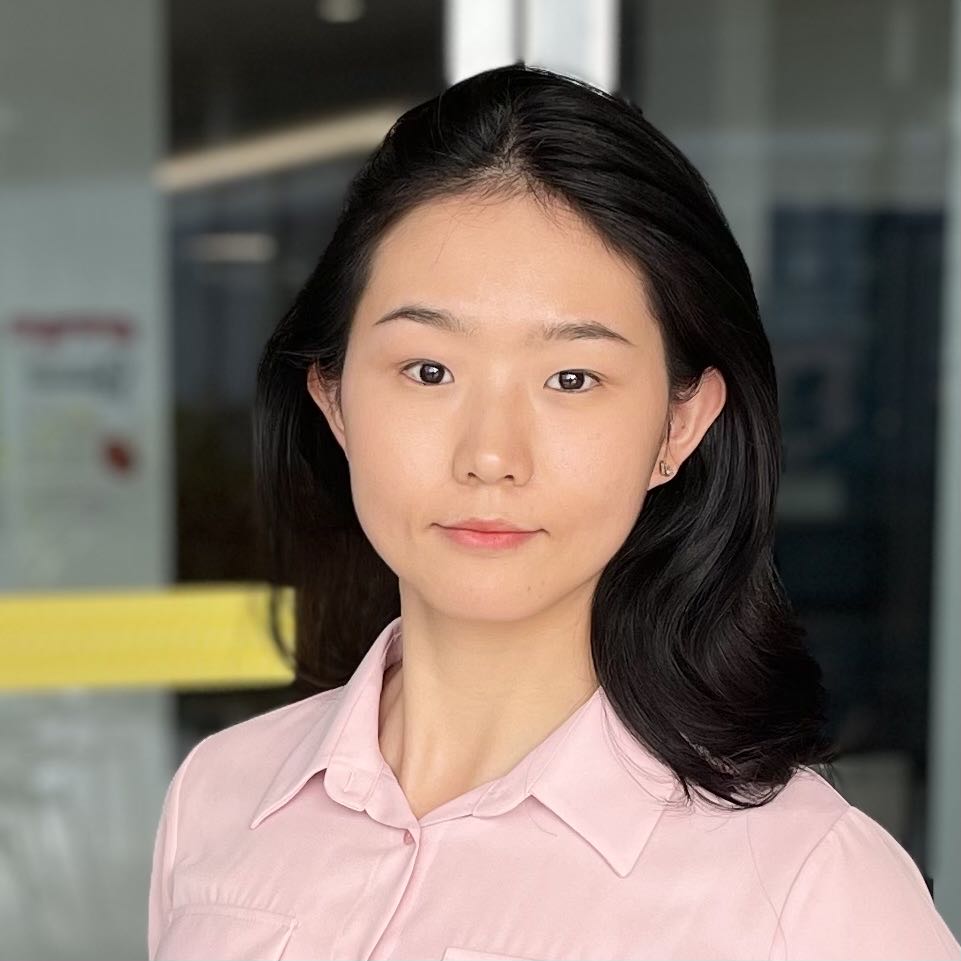
 Yiliao Song
· 3 previous affiliations
- RMIT UniversitySince 2022
- Postdoc · Since 2022
- Adelaide UniversitySince 2024
- Lecturer · Since 2024
- Current
- University of Technology Sydney2016–2022
- Postdoc · 2020–2022
- PhD student · 2016–2020
Research Overview
Yiliao Song focuses on streaming data mining, concept drift adaptation, and trustworthy artificial intelligence. Her early research developed fuzzy clustering and segment-based methods to detect and adapt to distributional shifts in real-time data streams. More recently, her work has expanded into federated learning, the detection of machine-generated text, and the design of modular multi-agent workflows.
Research Trajectory
Song’s early research concentrated on the challenges of concept drift in high-speed data streams, particularly in regression contexts where traditional machine learning models struggle to self-adapt. She developed A fuzzy kernel c-means clustering model for handling concept drift in regression, which combined fuzzy clustering with lazy learning to manage model complexity during drift adaptation. Recognizing that drift often occurs in localized regions of a feature space rather than globally, she introduced the Local Drift Degree (LDD) metric in Regional Concept Drift Detection and Density Synchronized Drift Adaptation. This approach synchronized data densities to retain historical information from non-drifted regions, preventing the overestimation of drift and improving predictive accuracy.
Because real-world data streams are frequently contaminated with noise, which complicates drift detection, she subsequently designed A Noise-tolerant Fuzzy c-Means based Drift Adaptation Method for Data Stream Regression. This line of inquiry culminated in a comprehensive framework for Fuzzy Clustering-Based Adaptive Regression for Drifting Data Streams, which improved the ability to classify incoming examples into existing or emerging data patterns. Expanding beyond single-stream environments, she also addressed the simultaneous and delayed occurrence of drift across multiple relevant streams in A Fuzzy Drift Correlation Matrix for Multiple Data Stream Regression. The theoretical and practical foundations of this period were synthesized in her overview work, Concept Drift Adaptation for Real-time Prediction.
Alongside her core focus on streaming data, Song participated in interdisciplinary research applying deep learning to optical multiplexing. In Multiplexed structured illumination super-resolution imaging with lifetime-engineered upconversion nanoparticles, she contributed to decoding unique temporal fingerprints to distinguish multiple signals within a single diffraction-limited spot. This work advanced the broader area of Overcoming Spectral Overlap Constraints in Biological Multiplexing. Returning to stream mining, she sought to overcome the adaptation delay inherent in batch-based drift detection by proposing a sequentially updated "drift-gradient" statistic in A Segment-Based Drift Adaptation Method for Data Streams, allowing predictors to update immediately as distributional discrepancies increase.
In recent years, Song’s trajectory has broadened to encompass trustworthy AI, federated learning, and the evaluation of large language models (LLMs). Investigating the human-centric aspects of AI, she explored how explanation specificity interacts with user involvement in DESIGNING FAIR AI SYSTEMS: HOW EXPLANATION SPECIFICITY INFLUENCES USERS' PERCEIVED FAIRNESS AND TRUSTING INTENTIONS. Her focus on trust and reliability naturally extended to the challenge of identifying AI-generated content. She contributed to the research direction of The Generalization Gap in AI Text Detection with Detecting Machine-Generated Texts by Multi-Population Aware Optimization for Maximum Mean Discrepancy, which introduced a stable training objective to detect text from previously unseen LLMs. She further advanced this domain by developing a deep kernel relative test for machine-generated text detection in Deep Kernel Relative Test for Machine-generated Text Detection.
Simultaneously, she has addressed systemic heterogeneities in distributed machine learning. In A Unified Solution to Diverse Heterogeneities in One-Shot Federated Learning, she introduced FedHydra, a data-free framework that enables a server to train a global model in a single communication round despite significant data and architectural differences among clients. This work contributes to the broader area of Mitigating Label Skew in Federated Learning. Most recently, her research has explored the orchestration of autonomous agents. In Flow: Modularized Agentic Workflow Automation, she collaborated on an LLM-based multi-agent framework that models complex tasks as dynamic, modular graphs, advancing research directions such as Directed Acyclic Graph Planning for Autonomous Agents and Dynamic Process Generation for Multi-Agent Systems.
Current Directions
The most recent papers in the evidence indicate a strong focus on the reliability, distribution, and orchestration of modern artificial intelligence systems. One primary direction involves the robust detection of machine-generated text. By leveraging advanced statistical techniques—such as multi-population aware optimization for Maximum Mean Discrepancy and deep kernel relative tests—this work seeks to close the generalization gap, enabling accurate detection of content produced by unseen large language models.
A second major focus is heterogeneous federated learning. Recent work addresses the dual challenges of data imbalance and architectural differences across distributed clients. By developing data-free, one-shot federated learning frameworks, this research aims to achieve high-performing global models in a single communication round, significantly reducing overhead while accommodating diverse client constraints.
Finally, recent collaborative efforts investigate the orchestration of autonomous multi-agent systems. This involves moving beyond rigid, sequential task lists to model complex workflows as dynamic, directed acyclic graphs. This modular approach allows agents to execute subtasks in parallel and adaptively reconfigure workflows in real time to improve error tolerance and overall task success rates.
Profile updated
Loading new papers…
Other researchers whose papers cluster into the same research directions — a proxy for overlapping technical interests and shared intellectual neighborhoods.
See something wrong? Report a mistake