

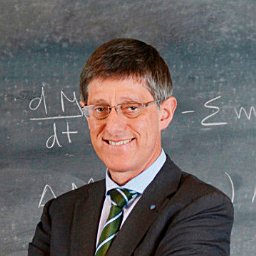
 Arlindo L. Oliveira
· 8 previous affiliations
- Senior Researcher · Since 2000
- Researcher · 1995–2025
- President · 2004–2009
- Board Member · 2000–2003
- Instituto Superior TécnicoSince 2003
- Distinguished Professor · Since 2020
- Full Professor · 2003–2026
- Professor · 2005–2020
- President · 2012–2019
- MS student · 1986–1989
- Undergrad student · 1982–1986
- Caixa Geral de Depositos (Portugal)Since 2020
- Board Member · Since 2020
- President · Since 2021
- Board Member · 2004–2020
- Distinguished Invited Professor · 2023–2025
- INSEAD2021
- Post-Graduation, Risk Management in Banking · 2021
- University of California, Berkeley1989–1994
- PhD, Electrical Engineering and Computer Science · 1989–1994
- PhD student · 1989–1994
Research Overview
Arlindo L. Oliveira focuses on machine learning, algorithms, and computational biology, spanning theoretical foundations to applied artificial intelligence. His trajectory bridges early work in digital circuit optimization and automata inference with extensive contributions to bioinformatics and medical imaging. Recently, his research investigates large language model auditing, digital pathology, and recurrent neural architectures.
Research Trajectory
His early research addressed the optimization of digital circuits and logical representations. He developed algorithms for generating Boolean networks from examples in Learning Complex Boolean Functions: Algorithms and Applications, demonstrating strong generalization in problems suited to compact network descriptions. He subsequently formulated an exact algorithm for minimizing binary decision diagrams using implicit enumeration in Exact Minimization of Binary Decision Diagrams Using Implicit Techniques. Continuing this focus on computational hardness and inference, he analyzed implicit enumeration and dependency-directed backtracking for deterministic finite automata in Efficient Algorithms for the Inference of Minimum Size DFAs.
In the mid-2000s, his work expanded into computational biology. He collaborated on the development of a comprehensive repository of transcription regulatory associations for Saccharomyces cerevisiae in The YEASTRACT database: a tool for the analysis of transcription regulatory associations in Saccharomyces cerevisiae. This interest in biological data processing aligned with broader work in the research direction of Efficient Sequence Pattern Discovery through Suffix Indexing. In this area, his lab introduced highly space-efficient data structures for stringology in Fully compressed suffix trees, reducing the memory overhead required for processing sequences like DNA.
More recently, his focus has shifted toward applied deep learning across diverse domains. During the global pandemic, his group investigated the area of Spatio-Temporal Graph Networks for Infectious Disease Forecasting, introducing a convolutional sequence-to-sequence architecture to model the geographical spread of COVID-19 in Modeling the Geospatial Evolution of COVID-19 using Spatio-temporal Convolutional Sequence-to-sequence Neural Networks. Concurrently, he has contributed to medical image analysis. His lab reviewed the predictive capabilities of computed tomography for ischemic stroke outcomes in Potential and limitations of computed tomography images as predictors of the outcome of ischemic stroke events: a review. He also participated in a multicentric validation of deep learning models for coronary X-ray angiography segmentation in Coronary X-ray angiography segmentation using Artificial Intelligence: a multicentric validation study of a deep learning model, work that intersects with the broader field of Non-Invasive Functional Assessment of Vascular Stenosis.
His recent applied machine learning research spans edge computing, digital pathology, and natural language processing. For resource-constrained environments, his group developed lightweight environmental sound classification models using knowledge distillation in Training environmental sound classification models for real-world deployment in edge devices. In digital pathology, he has addressed the challenge of analyzing massive whole slide images. His lab utilized multiple instance learning to identify cancerous regions in Finding Regions of Interest in Whole Slide Images Using Multiple Instance Learning, and later introduced a hybrid deep learning system combining YOLOv9 and Vision Transformers to automate tissue fragment counting in CountPath: Automating Fragment Counting in Digital Pathology.
A major recent theme involves the evaluation and application of large language models (LLMs). He has been active in the research direction of Auditing Training Data in Opaque Large Language Models. In this area, he collaborated on methods to detect copyrighted content in training corpora, including a multiple-choice evaluation framework in DE-COP: Detecting Copyrighted Content in Language Models Training Data and an agentic pipeline for data extraction in RECAP: Reproducing Copyrighted Data from LLMs Training with an Agentic Pipeline. His lab has also explored structural applications of LLMs, developing a dynamic document segmentation method for retrieval-augmented generation in LumberChunker: Long-Form Narrative Document Segmentation. On the deployment side, his group automated the evaluation of public funding applications using GPT-4o in Leveraging LLMs to Streamline the Review of Public Funding Applications, and he participated in creating a semantic-level detection framework for AI-generated peer reviews in Sem-Detect: Semantic Level Detection of AI Generated Peer-Reviews.
Finally, returning to foundational neural architectures, he has recently investigated feedback mechanisms inspired by predictive coding. He introduced a recurrent U-Net architecture to improve noise robustness and data efficiency in Deep Recurrence for Dynamical Segmentation Models. Building on this, he co-developed stateful neural networks that model decision-making processes through differential equations in Deep Feedback Models.
Current Directions
The most recent papers in the evidence address the intersection of large language model auditing, applied computer vision in medical domains, and biologically inspired neural architectures. Work in language modeling focuses on transparency and structural processing, including techniques for detecting memorized copyrighted data in opaque models and improving retrieval-augmented generation through semantic document segmentation. Concurrently, research in digital pathology explores hybrid deep learning systems for automating tissue analysis in whole slide images. At a foundational level, recent investigations explore deep feedback models, integrating recurrent mechanisms and differential equations into neural networks to enhance robustness and data efficiency in computer vision tasks.
Profile updated
Loading new papers…
Other researchers whose papers cluster into the same research directions — a proxy for overlapping technical interests and shared intellectual neighborhoods.
See something wrong? Report a mistake