

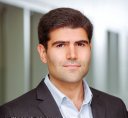
 Saeed Hassanpour
· 4 previous affiliations
- Dartmouth CollegeSince 2015
- Full Professor · Since 2015
- Stanford University2007–2015
- Postdoc · 2014–2015
- PhD student · 2007–2012
- Microsoft (United States)2012–2014
- Researcher · 2012–2014
- University of Waterloo2006–2007
- MS student · 2006–2007
Research Overview
Saeed Hassanpour focuses on computational pathology, medical image analysis, and multi-modal artificial intelligence for precision health. His trajectory spans early work in knowledge elicitation to the development of deep learning frameworks that synthesize digital histology and clinical data for oncology. Currently, his research addresses self-supervised representation learning, multimodal clinical decision support, and the ethical deployment of large language models in healthcare.
Research Trajectory
The early phase of Hassanpour’s research explored knowledge representation and human-computer interaction. In 2011, he and his collaborators developed An intelligent interface for rule elicitation, contributing to the broader area of Making Formal Logic Accessible to Domain Experts. This foundational work in structuring complex information laid the groundwork for his later focus on extracting actionable insights from dense clinical data.
By the mid-2010s, his focus shifted toward digital pathology and the application of deep learning to whole-slide images. A critical challenge in this domain is the "black box" nature of neural networks, which can hinder clinical adoption. To address this, his group published Looking Under the Hood: Deep Neural Network Visualization to Interpret Whole-Slide Image Analysis Outcomes for Colorectal Polyps in 2017. This work generated visual maps of major regions and features on histology slides, establishing a strong foundation in the research direction of Visual Interpretability for Medical Image Analysis.
Building on these interpretability efforts, the research expanded to tackle complex diagnostic tasks and data scarcity. In 2019, his laboratory introduced Pathologist-level classification of histologic patterns on resected lung adenocarcinoma slides with deep neural networks, leveraging convolutional neural networks and novel aggregation strategies to match the diagnostic agreement of experienced pathologists. This work advanced the area of Attention Based Multiple Instance Learning. Recognizing that medical machine learning is often constrained by imbalanced datasets, the team concurrently developed Generative Image Translation for Data Augmentation in Colorectal Histopathology Images. By utilizing generative adversarial networks to synthesize high-fidelity training data, this approach mitigated class imbalances. During this period, his work also engaged with the area of Overcoming Non-Biological Domain Shift in Digital Pathology and explored techniques in the direction of Beyond Winner Takes All with Weighted Box Fusion to ensure models generalized reliably across diverse clinical environments.
In the early 2020s, Hassanpour’s trajectory incorporated transformer architectures and self-supervised learning to handle the massive scale of gigapixel whole-slide images. In 2023, his group presented Masked Pre-Training of Transformers for Histology Image Analysis (MaskHIT). By training Vision Transformers to reconstruct masked tissue patches, the model learned complex spatial structures without requiring exhaustive manual annotations, improving downstream cancer survival prediction and subtype classification. This methodology was subsequently applied to non-oncological domains; in 2024, the team published Deep Learning for Classification of Inflammatory Bowel Disease Activity in Whole Slide Images of Colonic Histopathology, which successfully categorized disease severity into multiple clinically relevant grades rather than relying on simple binary classification.
A major theme in his recent work is the synthesis of diverse data streams, aligning with the direction of Integrating Patient Context into Medical Image Analysis AI. In 2024, his laboratory introduced OncoDHNet in the paper Prediction of Breast Cancer Recurrence Risk Using a Multi-Model Approach Integrating Whole Slide Imaging and Clinicopathologic Features. By combining digital pathology with standard clinical data, the framework emulates expensive genomic tests, offering a low-cost alternative for personalizing cancer treatment. This multimodal approach was further advanced in 2025 with Predicting Targeted Therapy Resistance in Non-Small Cell Lung Cancer Using Multimodal Machine Learning, which integrated histopathology, genomic sequencing, and demographic variables to predict resistance to tyrosine kinase inhibitors.
Parallel to image analysis, Hassanpour has maintained a strong focus on natural language processing and the ethical deployment of AI. In 2024, his group addressed the multifaceted nature of interpretability in language models with IvRA: A Framework to Enhance Attention-Based Explanations for Language Models with Interpretability-Driven Training. To evaluate the real-world utility of these models in healthcare, they introduced A Benchmark for Long-Form Medical Question Answering, moving beyond multiple-choice evaluations to assess complex clinical reasoning. This technical work is contextualized by broader governance frameworks, as detailed in Ethical Challenges and Evolving Strategies in the Integration of Artificial Intelligence into Clinical Practice, which proposed actionable strategies like "Algorithmovigilance" to ensure equitable patient care. His NLP research continued into 2025 with Enhancing LLM-Based Persuasion Simulations with Cultural and Speaker-Specific Information, exploring the injection of cultural nuance into generative agents.
Most recently, in 2025, Hassanpour’s laboratory has pushed the boundaries of efficient representation learning and cross-modality inference in pathology. To improve self-supervised learning on limited data, they developed HistoPerm: A permutation-based view generation approach for improving histopathologic feature representation learning and introduced explicit clustering constraints in Improving Representation Learning for Histopathologic Images with Cluster Constraints (CluSiam). To bridge the gap between routine imaging and molecular diagnostics, the team published Cross-Modality Learning for Predicting IHC Biomarkers from H&E-Stained Whole-Slide Images, a contrastive learning framework that predicts immunohistochemistry statuses directly from inexpensive H&E slides. Finally, addressing the computational bottleneck of deploying these models, they introduced Resolution-based distillation for efficient histology image classification, enabling high-performance pathology AI to run on standard hardware.
Current Directions
The most recent papers in the evidence indicate a strong ongoing focus on multimodal foundation models and self-supervised learning for precision oncology. Current work investigates how to extract molecular and genomic insights directly from routine, inexpensive clinical data—such as predicting immunohistochemistry biomarkers or targeted therapy resistance directly from H&E-stained whole-slide images combined with patient context.
Additionally, recent research addresses the computational and practical barriers to deploying AI in clinical settings. This includes developing resolution-based knowledge distillation techniques to make gigapixel image analysis more efficient, as well as advancing self-supervised clustering and view-generation methods that reduce the reliance on exhaustive manual annotations. In parallel, ongoing work in natural language processing focuses on improving the interpretability, cultural nuance, and long-form reasoning capabilities of large language models for medical question answering and clinical decision support.
Profile updated
Loading new papers…
Other researchers whose papers cluster into the same research directions — a proxy for overlapping technical interests and shared intellectual neighborhoods.
See something wrong? Report a mistake