

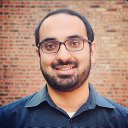
 Aly A Khan
· 3 previous affiliations
- Courtesy Faculty · Since 2022
- University of ChicagoSince 2022
- Assistant Professor · Since 2022
- Researcher · Since 2025
Research Overview
Aly A Khan focuses on computational immunology, single-cell genomics, and the application of machine learning to precision oncology. His trajectory spans from early work in protein structure analysis to the development of multimodal sequencing assays and dynamic trajectory inference for immune cells. Recently, his research investigates the integration of large language models and deep learning architectures to predict complex genetic traits and simulate cellular responses.
Research Trajectory
Khan’s early research involved structural biology and immune regulation. He participated in collaborative work on protein fold discrimination, contributing to areas such as ranking native protein structures and modeling protein flexibility for structure-based drug design, as seen in Geometric Analysis of Cross-Linkability for Protein Fold Discrimination. He subsequently investigated the genomic regulatory elements that direct T-cell differentiation, exploring how transcription factors like IRF4 and BATF cooperatively bind to promote gene activation in A Genomic Regulatory Element That Directs Assembly and Function of Immune-Specific AP-1–IRF Complexes.
Transitioning into single-cell genomics and immune repertoire profiling, his group developed computational tools to extract high-resolution biological insights from sequencing data. He directed the development of BASIC, a software tool for assembling full-length B-cell receptors from single-cell RNA sequencing (scRNA-seq) data, which advanced the broader area of gapless genome assembly for complex eukaryotes (BASIC: BCR assembly from single cells). Building on this focus, he later introduced methods for inferring dynamic trajectories in B cells undergoing immunoglobulin class switch recombination (Pseudocell Tracer - A method for inferring dynamic trajectories using scRNAseq and its application to B cells undergoing immunoglobulin class switch recombination). He also addressed the challenges of multimodal single-cell analysis, exploring the integration of scRNA and surface protein expression data to improve cell clustering accuracy in Improved integration of single-cell transcriptome and surface protein expression by LinQ-View, contributing to research directions like multimodal foundation models for single-cell biology.
Parallel to his single-cell research, Khan has been deeply involved in precision oncology and clinical sequencing. He contributed to studies demonstrating how comprehensive molecular blueprints can inform cancer treatment, such as Integrated genomic profiling expands clinical options for patients with cancer. He participated in the clinical validation of high-throughput next-generation sequencing assays, including targeted oncology panels (Clinical validation of the tempus xT next-generation targeted oncology sequencing assay). This work intersected with several key research directions, including Overcoming Sample Volume Constraints in Molecular Diagnostics, Matched Normal Sequencing for Precise Somatic Variant Detection, and Detecting Functional Gene Fusions with RNA Sequencing. He further contributed to the validation of liquid biopsy assays for circulating tumor DNA (Validation of a liquid biopsy assay with molecular and clinical profiling of circulating tumor DNA), advancing methods for the ultrasensitive detection of low-abundance biomarkers. Extending this clinical focus, his lab developed multimodal models to predict immunotherapy response in non-small cell lung cancer by combining tumor-intrinsic mutational data with extrinsic immune cell signatures (Integration of tumor extrinsic and intrinsic features associates with immunotherapy response in non-small cell lung cancer), a significant contribution to the research direction of Transcriptomic Deconvolution of Tissue Microenvironments.
In recent years, Khan’s work has increasingly focused on advanced machine learning architectures, spatial transcriptomics, and the application of large language models (LLMs) to biology. He introduced the FACILE framework to improve fine-grained image classification in histopathology by leveraging coarse-grained set-level labels (Enhancing Instance-Level Image Classification with Set-Level Labels), contributing to hierarchical training for coarse-to-fine representation. In the spatial domain, his group modeled gene expression transitions across tissue biopsies to understand cellular interactions in inflammatory bowel disease (ATAT: Automated Tissue Alignment and Traversal). Returning to immune repertoires, he developed methods to infer the evolutionary history of clonally related B cells from scRNA-seq data by incorporating isotype information (TRIBAL: Tree Inference of B Cell Clonal Lineages).
Most recently, his research has explored the intersection of generative AI and genomics. His group demonstrated that LLMs can identify causal genes at GWAS loci with high accuracy (Large language models identify causal genes in complex trait GWAS), advancing the automated curation of scientific literature into structured databases. They also developed non-linear deep learning models for polygenic risk scores to capture complex genetic architectures (PRSformer: Disease Prediction from Million-Scale Individual Genotypes) and frameworks that use LLMs to predict CRISPR screen outcomes in silico (Virtual CRISPR: Can LLMs Predict CRISPR Screen Results?). Further expanding into generative modeling, he explored diffusion-guided hypernetworks for molecular representations in HyperDiffusionFields (HyDiF): Diffusion-Guided Hypernetworks for Learning Implicit Molecular Neural Fields. Critically evaluating the trajectory of the field, he recently argued that the development of predictive computational models requires a focus on diverse biological contexts rather than merely scaling model capacity (Position: Virtual Cells Need Context, Not Just Scale). Alongside this conceptual work, his lab introduced a masked language model framework for T-cell receptor and peptide-MHC interactions, enabling zero-shot binding prediction and iterative TCR design (DecoderTCR: Compositional Pretraining and Entropy-Guided Decoding for TCR-pMHC Interactions).
Current Directions
The most recent papers in the evidence indicate a strong focus on integrating large language models and generative AI with genomic and immunological data. Recent work investigates the use of LLMs as reasoning engines for complex biological tasks, such as predicting CRISPR screen outcomes and identifying causal genes in genome-wide association studies. Additionally, his group is developing advanced deep learning architectures—including diffusion-guided hypernetworks and masked language models—to predict disease risk from million-scale genotypes and model complex molecular interactions like TCR-pMHC binding. A central theme in this current research is the push toward building robust, context-aware "Virtual Cells" that can accurately simulate cellular responses to genetic and environmental perturbations by prioritizing diverse biological contexts over simple parameter scaling.
Profile updated
Loading new papers…
Other researchers whose papers cluster into the same research directions — a proxy for overlapping technical interests and shared intellectual neighborhoods.
See something wrong? Report a mistake