

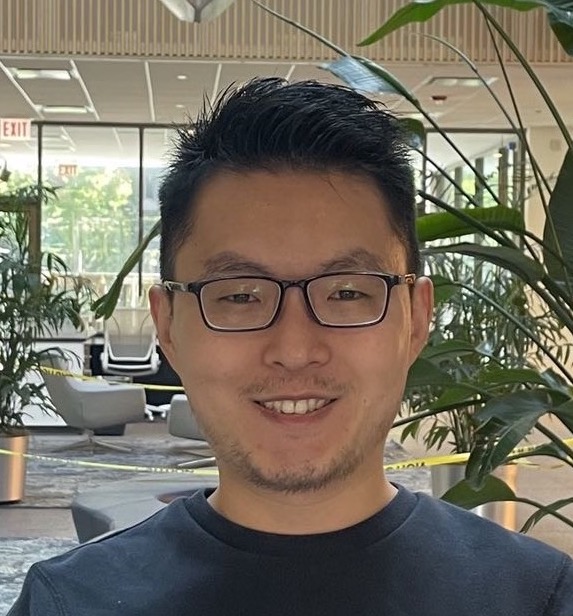
 Renyu Zhang
· 5 previous affiliations
- KLASince 2024
- Researcher · Since 2024
- University of Chicago2018–2024
- PhD student · 2018–2024
- MS student · 2015–2017
- MS student · 2012–2015
- Shandong University2008–2012
- Undergrad student · 2008–2012
Research Overview
Renyu Zhang focuses on the intersection of machine learning and healthcare, with a specific emphasis on developing efficient deep learning frameworks for high-dimensional image analysis and medical diagnostics. His work addresses the challenges of data scarcity and label noise through innovations in active learning, self-supervised representation learning, and the integration of geometric priors into neural architectures. Currently, he is a research engineer at KLA, where he applies these methodologies to the development of deep learning-based wafer defect detection systems.
Research Trajectory
Zhang’s early research, conducted between 2016 and 2017, was primarily situated within computational biology and bioinformatics. During this period, he participated in the development of deep learning models for protein structure prediction, specifically focusing on the problem of protein contact map estimation. This work involved integrating joint multi-family evolutionary coupling analysis with supervised machine learning to predict residue-residue contacts, which are critical for de novo protein folding. By utilizing deep residual networks to model complex sequence-structure relationships and long-range inter-contact correlations, these collaborative efforts sought to improve prediction accuracy for proteins lacking extensive sequence homologs.
In 2018, Zhang’s work briefly extended into remote sensing and ecological modeling. He contributed to research using conditional adversarial networks to map kernel-based home range models from time-series satellite imagery. This application demonstrated an early interest in using generative and supervised frameworks to overcome limitations in observational data, a theme that would persist in his later focus on label efficiency.
Beginning in 2020, Zhang transitioned into a more concentrated focus on medical imaging, particularly histopathology. As a lead researcher, he began investigating the automated generation of natural language descriptions for pathology slides. This phase of his work explored the interpretability of captioning models and the use of specialized attention mechanisms to handle the multi-scale nature of medical images. He specifically examined how hyperbolic embeddings could better represent the hierarchical structures inherent in tissue morphology compared to traditional Euclidean spaces.
From 2021 to 2024, Zhang’s research shifted toward fundamental challenges in machine learning efficiency and label acquisition. He developed novel frameworks for batch-mode active learning, aiming to reduce the human effort required for model training by identifying the most informative data points. His most recent academic contributions involve "coarse-to-fine" learning, where he has proposed methods to enhance instance-level classification by leveraging set-level or group-level labels, effectively bridging the gap between weak and strong supervision in complex imaging tasks.
Current Directions
Zhang’s current research interests are divided between theoretical machine learning and industrial applications of computer vision. In the theoretical domain, he continues to explore Bayesian active learning and the optimization of acquisition functions for large-scale data batches. This involves refining decision-theoretic approaches to ensure that active learning remains scalable and robust to imperfect uncertainty estimations.
In his professional capacity at KLA, Zhang applies his expertise in deep learning and image classification to the domain of semiconductor manufacturing. This work involves the detection and classification of wafer defects, a task that mirrors the challenges of histopathology in its requirement for high precision and the processing of large-scale, complex visual data. His interest in set-level labels and contrastive learning remains relevant here, as industrial settings often provide abundant unlabeled or weakly labeled data that must be leveraged to improve automated inspection systems.
Representative Work
In the area of computational biology, Zhang contributed to the development of Accurate De Novo Prediction of Protein Contact Map by Ultra-Deep Learning Model. This research addressed the limitations of direct evolutionary coupling analysis (DCA) by employing an ultra-deep neural network architecture. By modeling high-order correlations and complex sequence-structure relationships, the method significantly improved contact prediction for proteins with few sequence homologs, facilitating more accurate tertiary structure prediction.
Zhang’s work in medical image interpretation is exemplified by Evaluating and interpreting caption prediction for histopathology images. This research explored the feasibility of using natural language processing to annotate histopathology slides automatically. The study focused on the interpretability of these models, assessing how well automated captions reflect the underlying pathological features and providing a framework for large-scale medical image annotation.
Further refining his approach to medical imaging, Zhang authored Evaluation of Hyperbolic Attention in Histopathology Images. This paper introduced a framework that combines multi-scale image analysis with hyperbolic embeddings. By utilizing the geometric properties of hyperbolic space, the model was better equipped to capture the hierarchical and branching structures common in biological tissues. The evaluation demonstrated that hyperbolic attention mechanisms could outperform standard Euclidean models in classification tasks by more effectively isolating relevant structures across different scales.
In the field of active learning, Zhang developed Scalable Batch-Mode Deep Bayesian Active Learning via Equivalence Class Annealing. This work introduced the Batch-BALanCe algorithm, which addresses the scalability issues of traditional Bayesian active learning. By grouping model hypotheses into equivalence classes and using an annealing process to refine these groups, the algorithm facilitates the selection of diverse and informative data batches. This approach reduces reliance on precise uncertainty estimates and improves data efficiency in deep learning workflows.
Most recently, Zhang presented Enhancing Instance-Level Image Classification with Set-Level Labels, introducing the FACILE (Fine-grAined representation learning from Coarse-graIned LabEls) framework. This research addresses scenarios where individual instance labels are difficult to obtain, but group-level or "set-level" labels are available. The framework leverages these coarse labels to improve the accuracy of fine-grained instance classification. In medical imaging benchmarks, this method demonstrated significant performance gains over existing baselines, suggesting a robust pathway for training high-performance models in label-constrained environments.
Profile updated
Loading new papers…
Other researchers whose papers cluster into the same research directions — a proxy for overlapping technical interests and shared intellectual neighborhoods.
See something wrong? Report a mistake