


Abstract This study investigates the genetic and environmental factors—specifically temperature and photoperiod—that govern the growth habits of wheat. By analyzing nine varieties under varying conditions of vernalization, day length, and temperature, the researchers identified four distinct behavioral types based on their requirements for transitioning from prostrate to erect growth. The results demonstrate that while some varieties are inherently erect, others require specific combinations of cold (vernalization), long days, or high temperatures to trigger upright growth and subsequent heading.
Introduction
In wheat cultivation, the transition from a ground-hugging (prostrate) state to an upright (erect) state is a critical developmental milestone that dictates heading dates and grain production. Historically, the relative roles of winter chill and spring day length in triggering this transition were poorly understood. This 1962 study by Nishio et al. aimed to untangle these variables to provide a clearer genetic roadmap for breeding varieties suited to specific regional climates.
Methodology
The researchers employed a 2x4 factorial design using nine wheat varieties, including Japanese (e.g., Shinchunaga, Norin 8) and international (e.g., Wichita, Ceres) cultivars.
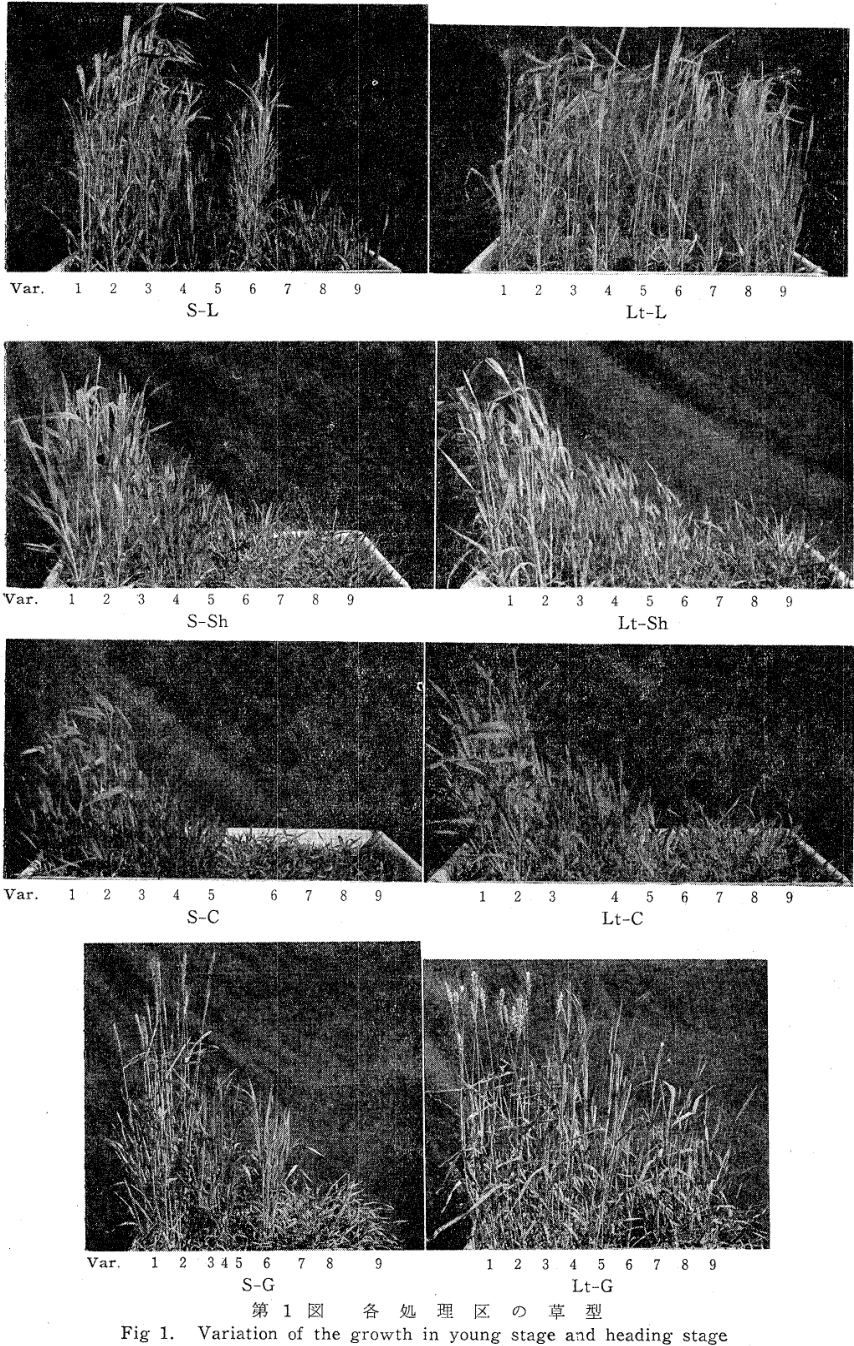
- Vernalization Treatment: Seeds were either untreated (Standard, 'S') or subjected to low temperatures (0–2°C) for 60 days during germination (Low-temperature treated, 'Lt').
- Environmental Conditions: After germination, plants were grown in four distinct plots:
- Control (C): Natural outdoor conditions.
- Long Day (L): 24-hour photoperiod.
- Short Day (Sh): 10-hour photoperiod.
- Greenhouse (G): High-temperature environment with natural day length.
Growth habits were tracked on a scale from Erect to Prostrate, alongside plant height and heading dates.
 *[Studies on the growth habit of wheat varieties.
- Relation between temperature effect and photoperiodism and its effect on the growth habit of wheat, page 3](/pdf/art_ee9ebb8319384de1b61ca7589d290123#page=3)*
Results: Environmental Triggers and Growth Habits
The study revealed that the "prostrate" growth habit is not a single trait but a complex response to environmental cues. The varieties were classified into four behavioral types:
- Type A (Eager Erect): Varieties like Shinchunaga and Norin 20 do not require cold. They grow upright immediately, with heading accelerated by light or heat.
- Type B (Light-Seekers): Ceres remains prostrate until exposed to long days, regardless of cold treatment.
- Type C (Heat-Seekers): Wichita transitions to erect growth upon experiencing high temperatures, showing less dependence on day length.
- Type D (Winter Types): Varieties like Pawnee and Norin 8 are the most demanding, requiring both vernalization and long days to transition.
The Role of Vernalization
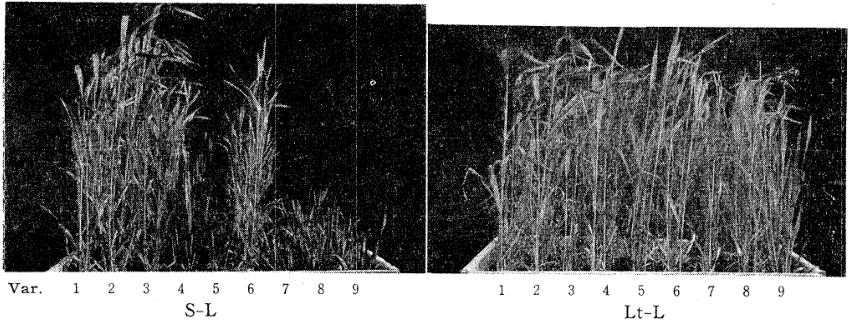
Vernalization acted as a "reset button" for Type D varieties. The 60-day cold treatment eliminated the prostrate habit, causing these varieties to behave like naturally erect types. This is most visible when comparing untreated (S) and treated (Lt) plants under long-day conditions.
 *[Studies on the growth habit of wheat varieties.
- Relation between temperature effect and photoperiodism and its effect on the growth habit of wheat, page 3](/pdf/art_ee9ebb8319384de1b61ca7589d290123#page=3)*
Discussion and Conclusion
A key finding was the irreversibility of the growth transition. Once a plant moved from a prostrate to an erect state due to favorable conditions, it would not revert, even if conditions became unfavorable again. While the study relied on phenotypic observations rather than modern DNA sequencing, it established a foundational understanding of how temperature and light interact to control wheat development. These insights remain relevant for understanding how different varieties will respond to shifting climatic conditions and for selecting parents in breeding programs targeting specific environmental niches.
Summary updated