

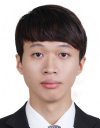
 Zongze Wu
· 3 previous affiliations
- Adobe Systems (United States)Since 2023
- Researcher · Since 2023
- Current
- Hebrew University of Jerusalem2016–2022
- PhD student · 2018–2022
- MS student · 2016–2018
- Tongji University2011–2016
- Undergrad student · 2011–2016
3 other authors named Zongze Wu: Zongze Wu (Shenzhen University · 173 papers), Zongze Wu (Guangdong University of Technology · 1 paper), Zongze Wu (1 paper)
Research Overview
Zongze Wu focuses on generative computer vision, specifically the disentanglement and control of latent spaces in image synthesis models. His trajectory spans foundational work on manipulating StyleGAN architectures using natural language to more recent advancements in accelerating diffusion models for interactive image editing. Currently, he investigates spatial representation alignment and adaptive prompting techniques to enhance the efficiency and creativity of text-to-image generation.
Research Trajectory
Zongze Wu’s early research focused on object retrieval and the manipulation of generative latent spaces. In 2021, he developed a self-supervised framework for foreground retrieval, Fine-grained Foreground Retrieval via Teacher-Student Learning. This approach eliminated the need for expensive, manually labeled datasets by teaching the model to infer the features of a missing object solely from the surrounding environment. This work contributed to the area of Photometric Consistency in Generative Object Insertion and the broader field of Learning Object Localization from Image Level Labels.
Following this, his focus shifted heavily toward understanding and controlling the latent spaces of state-of-the-art image synthesis models. He presented StyleSpace Analysis: Disentangled Controls for StyleGAN Image Generation, which demonstrated that the channel-wise style parameters in StyleGAN2 offer highly localized and disentangled control over distinct visual attributes, surpassing the disentanglement achieved in other intermediate latent spaces. Building on this architectural understanding, he introduced StyleCLIP: Text-Driven Manipulation of StyleGAN Imagery. By bridging StyleGAN's generative capabilities with the multimodal representations of OpenAI's CLIP, this work enabled users to manipulate high-fidelity images using arbitrary natural language prompts—such as altering hairstyles or species—without requiring manual labeling or pre-trained attribute classifiers. This significantly advanced the research direction of Disentangled Control in StyleGAN StyleSpace.
In 2022, Wu continued to expand the applications of StyleGAN architectures. With collaborators, he explored the editing capabilities of newer model iterations in Third Time's the Charm? Image and Video Editing with StyleGAN3. He also conducted an in-depth study of transfer learning in generative models with StyleAlign: Analysis and Applications of Aligned StyleGAN Models. This work empirically analyzed the properties of aligned generative models, demonstrating how fine-tuning a parent model to a new domain creates a child model that retains valuable structural relationships. This alignment facilitates advanced image-to-image translation by preserving the semantic structure of the original latent space.
By 2024, Wu's research trajectory evolved to address the computational bottlenecks and interactive capabilities of diffusion models. He introduced Lazy Diffusion Transformer for Interactive Image Editing, a novel architecture that decoupled global context encoding from local image generation. This approach ensured that the computationally expensive diffusion process operated primarily on the specific pixels being edited, while still maintaining a global understanding of the unedited regions, thereby accelerating interactive image inpainting by up to 10x. In the same year, he presented TurboEdit: Instant Text-Based Image Editing, which combined an encoder-based iterative inversion technique with detailed text prompts. This method achieved real-time performance and precise, disentangled edits using few-step diffusion models, contributing to the broader area of Amortized Inversion for Real Time Generative Image Editing.
In 2025, Wu continued to refine the efficiency of generative models with TurboFill: Adapting Few-step Text-to-image Model for Fast Image Inpainting. By training a specialized adapter directly on a few-step distilled model using a novel three-step adversarial training scheme, this work delivered state-of-the-art inpainting results in just four diffusion steps. The approach achieved a 10x reduction in training time compared to traditional distillation methods while maintaining superior visual coherence and detail.
Most recently, in 2026, Wu's work has focused on the fundamental principles of representation alignment and creative generation. He participated in the development of VLM-Guided Adaptive Negative Prompting for Creative Generation, a training-free approach that forces text-to-image models out of their standard distribution to generate novel visual concepts by adaptively steering them away from their typical outputs. Additionally, he contributed to What matters for Representation Alignment: Global Information or Spatial Structure?. This research challenged the conventional wisdom that global semantic accuracy (such as that of top-tier ImageNet classifiers) is the best predictor of a teacher model's effectiveness for training diffusion models. Instead, it demonstrated that spatial structure—how image patches relate to their neighbors—is far more critical. By introducing a streamlined method called iREPA to emphasize these spatial relationships, the authors significantly accelerated the training of state-of-the-art generative models.
Current Directions
The most recent work in the evidence, spanning 2025 and 2026, investigates the fundamental mechanisms that govern the efficiency and creativity of diffusion models. A primary focus is on accelerating generative processes without sacrificing visual coherence, achieved through the adaptation of few-step distilled models and specialized adversarial training schemes. Beyond computational efficiency, current research also re-evaluates the principles of representation alignment in generative training. By demonstrating that local spatial structure is a more critical predictor of generation quality than global semantic accuracy, this work offers new paradigms for training state-of-the-art models. Additionally, recent efforts explore training-free interventions, such as adaptive negative prompting guided by vision-language models, to steer text-to-image systems toward generating truly novel and creative visual concepts.
Profile updated
Loading new papers…
Other researchers whose papers cluster into the same research directions — a proxy for overlapping technical interests and shared intellectual neighborhoods.
See something wrong? Report a mistake