

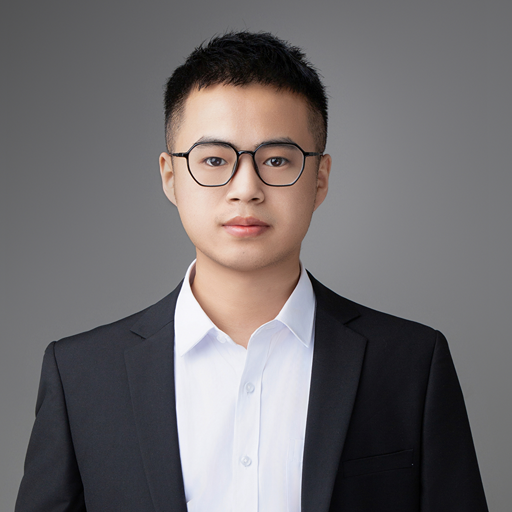
 Zongbo Han
· 3 previous affiliations
- Assistant Professor · Since 2025
- Tianjin University2019–2025
- PhD student · 2021–2025
- MS student · 2019–2021
- Dalian University of Technology2015–2019
- Undergrad student · 2015–2019
Research Overview
Zongbo Han focuses on multimodal machine learning, with a specific emphasis on developing trustworthy and robust models for complex data environments. His research addresses the challenges of integrating disparate information streams—such as vision, language, and medical data—while ensuring that model outputs remain reliable under conditions of missing data, distribution shifts, and inherent model biases. Currently, his work investigates the reliability of large vision-language models (LVLMs), focusing on Mitigating Visual Attention Decay in Vision-Language Models and addressing the structural causes of multimodal hallucinations.
Research Trajectory
The evolution of Han’s research reflects a transition from foundational multi-view learning to the high-level reasoning and reliability challenges posed by modern foundation models. Beginning in 2019, his work focused on the "partial multi-view" problem, where models must learn from data sources that are frequently incomplete. This early period established a methodology for learning latent representations that are both complete (capable of reconstructing missing views) and versatile (effective for downstream tasks).
By 2021, Han’s focus shifted toward the Opening the Black Box of Multimodal Fusion. Recognizing that simple feature concatenation often obscures the contribution of individual modalities, he began developing "trusted" fusion frameworks. These methods utilize uncertainty estimation to dynamically weight the importance of different data streams, ensuring that noisy or corrupted views do not disproportionately influence the model's final decision. This period also saw an expansion into addressing subpopulation shifts and long-tailed class distributions, where he applied uncertainty-aware techniques to improve model fairness and robustness.
Since 2024, Han has concentrated on the reliability of Large Vision-Language Models (LVLMs). This work identifies Linguistic Prior Dominance in Multimodal Large Language Models as a primary driver of hallucinations, where models rely more on their internal language priors than on the provided visual evidence. His recent contributions include training-free methods for reducing these hallucinations and frameworks for Dynamic Class Distribution Estimation for Robust Model Adaptation, allowing models to adapt to new environments during inference without the need for expensive retraining.
Representative Work
In CPM-Nets: Cross Partial Multi-View Networks, Han addressed the practical reality that multi-view datasets are rarely complete. Traditional multi-view learning often assumes all views are available for every sample, but in real-world applications—such as medical diagnosis involving multiple imaging modalities—certain views are frequently missing. Han proposed a framework that learns a unified latent representation by enforcing a "completeness" constraint, which ensures the latent space contains enough information to reconstruct any available view. This work provided a theoretical foundation for the versatility of these representations, demonstrating that they could maintain high performance even when a significant percentage of data was missing.
Han further refined the integration of disparate data sources in Uncertainty-Aware Multi-View Representation Learning. This research moved beyond static fusion strategies, which treat all views as equally reliable. By introducing uncertainty estimation into the representation learning process, the model could identify when a specific view (e.g., a blurry image or muffled audio) was unreliable. This allowed for a more nuanced fusion process where the model prioritizes high-certainty information, leading to more robust performance in noisy environments.
The challenge of distribution shift was addressed in UMIX: Improving Importance Weighting for Subpopulation Shift via Uncertainty-Aware Mixup. Subpopulation shift occurs when the frequency of certain groups changes between training and testing, a common issue that often causes over-parameterized neural networks to fail. Han proposed UMIX, a framework that combines importance reweighting with an uncertainty-aware mixup strategy. By generating synthetic samples that bridge the gap between different subpopulations and weighting them based on the model's current uncertainty, the method significantly improved the generalization of models across varying data distributions.
In Trusted Multi-View Classification With Dynamic Evidential Fusion, Han introduced a paradigm shift in how multi-view integration is handled. Rather than just aiming for accuracy, this work focused on the reliability of the final decision. Using evidential deep learning, the proposed Trusted Multi-View Classification (TMC) model provides a measure of "evidence" for each view. These are then integrated using a dynamic fusion rule based on the Dirichlet distribution. This approach allows the model to not only provide a prediction but also a quantifiable level of confidence, which is critical for failure-sensitive applications like autonomous driving or medical screening.
Shifting to the domain of foundation models, Skip \n: A simple method to reduce hallucination in Large Vision-Language Models investigated why LVLMs often describe objects that do not exist in an image. Han identified a "semantic shift bias" associated with paragraph breaks ('\n\n'). His analysis revealed that these breaks often trigger the model to transition from visually-grounded description to purely linguistic generation, leading to hallucinations. He proposed a simple, training-free intervention that modifies the model's attention or generation path at these critical junctions, effectively reducing hallucination rates without requiring additional data or fine-tuning.
Most recently, Han developed DOTA: Distributional Test-time Adaptation of Vision-Language Models. Test-time adaptation is essential for deploying models like CLIP in new environments where the data distribution may differ from the training set. While previous methods relied on caching individual test samples—which can lead to "catastrophic forgetting" as the cache fills—DOTA continuously estimates the statistical distribution of the incoming data stream. This distributional approach allows for more stable and efficient adaptation, achieving significant speedups over gradient-based methods while maintaining high accuracy in dynamic environments.
Current Directions
Han’s current research continues to push the boundaries of multimodal evaluation and reasoning. He has led the development of MULTIBENCH++: A Unified and Comprehensive Multimodal Fusion Benchmarking Across Specialized Domains, a large-scale effort to standardize the evaluation of multimodal models across 37 datasets. This project aims to move the field away from fragmented, domain-specific evaluations toward a more rigorous and reproducible benchmarking standard.
Additionally, Han is exploring the fundamental limits of Large Language Models (LLMs) through the lens of computational reasoning. In recent collaborative work, he has investigated using Turing machine operations as a proxy for evaluating the core, domain-agnostic capabilities of LLMs. This research seeks to understand whether the complex reasoning exhibited by these models can be reduced to basic computational primitives, providing a more principled framework for assessing their intelligence. His ongoing work also maintains a strong focus on medical AI, applying his expertise in trustworthy multimodal learning to improve the reliability of automated medical image analysis and diagnostic systems.
Profile updated
Loading new papers…
Other researchers whose papers cluster into the same research directions — a proxy for overlapping technical interests and shared intellectual neighborhoods.
See something wrong? Report a mistake