

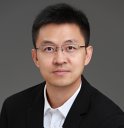
 Changqing Zhang
· 2 previous affiliations
- Tianjin UniversitySince 2012
- Full Professor · Since 2023
- Associate Professor · 2019–2023
- Assistant Professor · 2016–2019
- PhD student · 2012–2016
- Sichuan University2005–2008
- MS student · 2005–2008
Research Overview
Changqing Zhang focuses on multimodal artificial intelligence, multi-view learning, and uncertainty estimation in deep neural networks. His early work established foundational methods for subspace clustering and incomplete multi-view data fusion. More recently, his research has advanced evidential deep learning for trustworthy classification and test-time adaptation techniques for large vision-language and reasoning models.
Research Trajectory
Zhang’s early research concentrated on extracting robust representations from complex, multi-view data. He introduced Low-Rank Tensor Constrained Multiview Subspace Clustering, a method that treats subspace representation matrices as a tensor to capture high-order correlations across different views while reducing redundancy. Building on this, he proposed Latent Multi-view Subspace Clustering, which reconstructs data points based on learned latent representations rather than original features, allowing the model to depict the underlying data structure more comprehensively. Collaborating on Consistent and Specific Multi-View Subspace Clustering, he helped formulate self-representation properties that balance shared consistency with view-specific details. This work contributed significantly to the broader area of Balancing Consistency and Complementarity in Multi-View Learning.
As his focus expanded to real-world scenarios where data is often imperfect, Zhang began addressing the challenge of missing modalities. He developed CPM-Nets: Cross Partial Multi-View Networks, a framework designed to learn versatile latent representations capable of reconstructing available views even when a large percentage of data is missing. This advanced the research direction of Learning from Incomplete Multi-View Data. He continued to push the boundaries of this problem with Semantic Invariant Multi-View Clustering With Fully Incomplete Information, addressing severe missingness in clustering tasks. Concurrently, he explored foundational network architectures and clustering techniques, introducing Autoencoder in Autoencoder Networks and Smooth Multiple Kernel k-Means via Underlying Graph Filtering.
Around 2021, Zhang’s trajectory shifted toward model trustworthiness, specifically focusing on uncertainty estimation and evidential deep learning. He participated in the development of Trusted Multi-View Classification, a novel paradigm that dynamically integrates different views at an evidence level to assess view quality and provide reliable uncertainty estimations. This work falls under the direction of Evidential Deep Learning for Predictive Uncertainty Quantification and the related area of Entropy Regularization for Calibrated Neural Networks. He later extended this framework in Trusted Multi-View Classification With Dynamic Evidential Fusion. To further handle noisy multimodal data, he explored Multimodal Dynamics: Dynamical Fusion for Trustworthy Multimodal Classification, which dynamically assesses the informativeness of individual features and entire modalities on a per-sample basis. He also collaborated on Calibrating Multimodal Learning, introducing a regularization technique to resolve the paradox where models become more confident when modalities are corrupted, thereby contributing to the area of Uncertainty Aware Multimodal Fusion.
In recent years, Zhang has applied his expertise in uncertainty and adaptation to out-of-distribution (OOD) detection, medical imaging, and large-scale foundation models. He introduced ID-like Prompt Learning for Few-Shot Out-of-Distribution Detection to identify challenging outliers that closely resemble in-distribution data, and developed Gradient-Aware Revitalization of Non-Effective Samples in Medical Image Segmentation.
As a principal investigator, his recent work has heavily emphasized test-time adaptation (TTA) and the reliability of large language models (LLMs). His group developed COME: Test-time Adaption by Conservatively Minimizing Entropy, which uses subjective logic to explicitly model uncertainty and prevent model collapse on unknown data. They also introduced DOTA: Distributional Test-time Adaptation of Vision-Language Models, a framework that continuously estimates data stream statistics to adapt models like CLIP without catastrophic forgetting. Moving into the domain of generative AI, Zhang proposed Semantic Energy: Detecting LLM Hallucination Beyond Entropy, utilizing raw model logits to capture a model's inherent confidence and better detect hallucinations. Most recently, his lab developed TEMPO: Scaling Test-time Training for Large Reasoning Models, a dual-agent framework that allows reasoning models to evolve during testing by alternating between problem-solving and recalibration against external truth.
Current Directions
Recent work investigates the reliability, adaptability, and uncertainty estimation of large-scale foundation models. The most recent papers in the evidence address test-time adaptation for vision-language models and large reasoning models, developing frameworks that allow these systems to evolve and recalibrate in dynamic environments without suffering from catastrophic forgetting or diversity collapse. Additionally, ongoing research explores novel uncertainty estimation techniques, such as using raw model logits to detect hallucinations in large language models, moving beyond traditional entropy-based measures to better capture inherent model confidence when models are confidently wrong.
Profile updated
Loading new papers…
Other researchers whose papers cluster into the same research directions — a proxy for overlapping technical interests and shared intellectual neighborhoods.
See something wrong? Report a mistake