

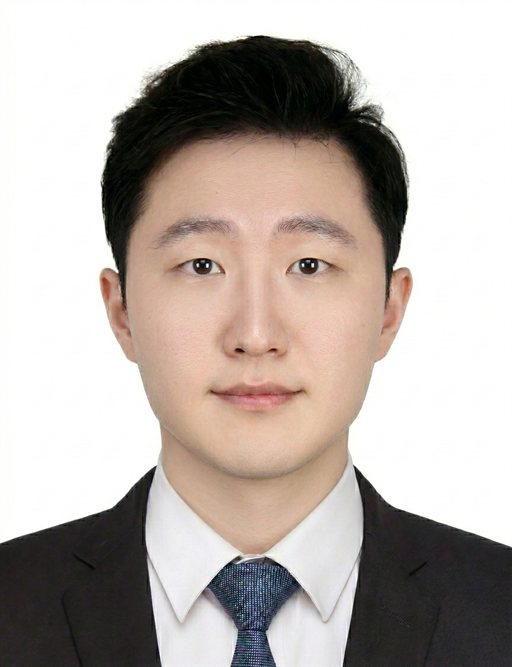
 Zitai Wang
· 3 previous affiliations
- Chinese Academy of SciencesSince 2024
- Postdoc · Since 2024
- PhD student · 2019–2024
- Beijing Jiaotong University2015–2019
- Undergrad student · 2015–2019
Research Overview
Zitai Wang focuses on machine learning and data mining, with specific emphasis on complex metric optimization, long-tailed learning, and open-set recognition. His early work addressed collaborative filtering and recommender systems, evolving into theoretical and practical frameworks for optimizing ranking metrics and handling imbalanced datasets. Recently, his research has expanded to include efficient learning strategies for foundation models, encompassing large language model distillation and generative model security.
Research Trajectory
Wang's early research concentrated on recommender systems and collaborative filtering, particularly addressing the limitations of static learning paradigms and noisy data. In 2019, he introduced an adversarial framework for collaborative ranking in Adversarial Preference Learning with Pairwise Comparisons, leveraging a deep generator to approximate user preferences dynamically rather than relying on fixed rating score functions. He subsequently addressed the challenges of One-class Collaborative Filtering (OCCF) in Implicit Feedbacks are Not Always Favorable: Iterative Relabeled One-Class Collaborative Filtering against Noisy Interactions. This work highlighted that observed interactions, such as clicks, inherently contain noise and do not strictly equate to positive feedback, proposing an iterative relabeling strategy to mitigate performance degradation.
Expanding beyond centralized model training, Wang proposed a generalized cooperative framework in Confederated Learning: Going Beyond Centralization. This paradigm formalized how different roles and permissions can be distributed across entities to meet privacy and cost requirements. Concurrently, he investigated the evaluation of models operating in open-world environments. In OpenAUC: Towards AUC-Oriented Open-Set Recognition, he analyzed the inconsistencies of existing metrics when test samples belong to unknown classes, advancing methods for unsupervised accuracy estimation for deployed models and exploring synthetic unknowns via latent space interpolation.
A major theme in Wang's trajectory is the theoretical analysis and optimization of evaluation metrics, particularly for large-scale and imbalanced datasets. He has made significant contributions to the area of Differentiable Optimization of Ranking and Threshold Metrics. In Optimizing Partial Area Under the Top-k Curve: Theory and Practice, he addressed the semantic ambiguity among classes in large-scale classification by optimizing top-k error objectives. He further unified disparate multi-label ranking metrics in Top-K Pairwise Ranking: Bridging the Gap Among Ranking-Based Measures for Multi-label Classification. This work established an Empirical Risk Minimization framework with sharp generalization bounds, enabling models to perform consistently across multiple ranking-based measures through differentiable ranking and sorting via continuous relaxations.
Parallel to metric optimization, Wang has extensively researched imbalanced and long-tailed learning, contributing to the research direction of Dynamic Weighting for Long Tailed Recognition and Detection. In A Unified Generalization Analysis of Re-Weighting and Logit-Adjustment for Imbalanced Learning, he provided a fine-grained theoretical analysis of how modified loss functions—such as re-weighting and logit-adjustment—affect generalization on minority classes. He continued to explore these challenges with collaborators in Harnessing Hierarchical Label Distribution Variations in Test Agnostic Long-tail Recognition. More recently, he advanced the broader area of Navigating the Head-Tail Performance Trade-Off with A Unified Perspective for Loss-Oriented Imbalanced Learning via Localization, introducing a localization approach to improve the consistency and generalization of loss-oriented methods when learning rare events in imbalanced datasets.
In the domain of graph neural networks, Wang has investigated the vulnerabilities of autoencoders. With collaborators, he participated in developing ADA-GAD: Anomaly-Denoised Autoencoders for Graph Anomaly Detection. This research addressed "anomaly overfitting" and the "homophily trap," where powerful models inadvertently reconstruct anomalies perfectly or allow anomalous nodes to corrupt the representations of their neighbors. This work contributes to the broader research direction of High-Frequency Spectral Analysis for Graph Anomaly Detection by constraining autoencoder generalization.
Most recently, Wang's research has expanded into the efficient training and security of foundation models. In the context of large language models, he collaborated on The Bridge-Garden Dilemma in LLM Distillation: Why Mixing Hard and Soft Labels Works. This work introduced the Bridge-Garden Decomposition theory to explain the efficacy of hybrid supervision for knowledge distillation, demonstrating that mixing hard and soft labels preserves creative diversity while preventing catastrophic errors in critical reasoning steps. Additionally, he has explored active defense mechanisms for deep learning intellectual property. In GoodDiffusion: Proactive Copyright Protection for Diffusion Bridge Models via Learnable Sample-specific Signatures, he and his co-authors repurposed backdoor mechanisms to create a proactive copyright protection system, ensuring that generative models only produce high-quality outputs when a specific, learnable signature is present in the input.
Current Directions
The most recent papers in the evidence address the efficient learning and security of foundation models, alongside continued advancements in imbalanced learning. Current work investigates knowledge distillation techniques for large language models, specifically exploring how hybrid supervision—mixing hard and soft labels—can optimize computational efficiency while maintaining model diversity and accuracy. Additionally, recent research addresses the intellectual property challenges of generative AI, developing proactive copyright protection systems for diffusion models using sample-specific signatures and input-aware backdoor triggers. Alongside these foundation model applications, ongoing theoretical work continues to refine loss-oriented methods for imbalanced datasets, focusing on localization techniques to ensure consistent generalization across both majority and minority classes.
Profile updated
Loading new papers…
Other researchers whose papers cluster into the same research directions — a proxy for overlapping technical interests and shared intellectual neighborhoods.
See something wrong? Report a mistake