

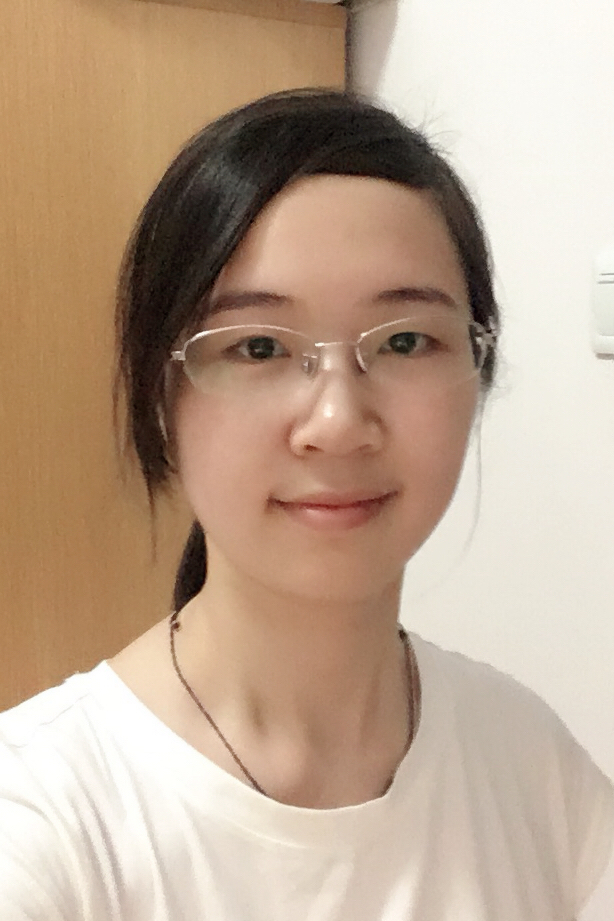
 Yangbangyan Jiang
· 3 previous affiliations
- Hunan UniversitySince 2026
- Associate Professor · Since 2026
- Postdoc · 2023–2026
- Chinese Academy of Sciences2017–2023
- PhD student · 2017–2023
Research Overview
Yangbangyan Jiang focuses on machine learning, deep clustering, and weakly supervised learning under imperfect data conditions. His early trajectory addressed robust subspace clustering and multi-modal data integration, gradually shifting toward positive-unlabeled learning and semi-supervised classification. His most recent work investigates noise-robust deep metric learning, graph anomaly detection, and optimization strategies for imbalanced classification.
Research Trajectory
Jiang’s early research concentrated on improving the robustness and representation capacity of deep clustering algorithms. In 2018, he introduced When to Learn What: Deep Cognitive Subspace Clustering, which addressed the sensitivity of deep neural networks to noise and outliers in subspace clustering. Drawing inspiration from human cognitive processes, he designed a learning paradigm that progresses from easy to hard samples, allowing the model to absorb simple concepts before tackling more complicated ones. He expanded on this focus the following year with Duet Robust Deep Subspace Clustering, explicitly modeling corrupted patterns from both the data itself and the underlying subspace structure to prevent gross corruptions from misleading the estimation process. Concurrently, he explored clustering in multi-modal contexts with DM2C: Deep Mixed-Modal Clustering. This work tackled the challenging scenario of mixed-modal data—where instances are represented in only one modality without cross-modal pairing supervision—by employing an adversarial learning framework to find a universal semantic space.
Moving into video analysis and geometric modeling, Jiang developed What to Select: Pursuing Consistent Motion Segmentation from Multiple Geometric Models in 2021. Recognizing that combining multiple geometric models is highly effective for separating motions in complex real-world scenes, he proposed a method to automatically select valuable patterns across models, filtering out unreliable or semantically unrelated information that simple consensus approaches often fail to catch.
Between 2022 and 2023, Jiang’s focus shifted significantly toward learning from limited or incomplete supervision, particularly Positive-Unlabeled (PU) learning and semi-supervised learning. With collaborators, he developed Dist-PU: Positive-Unlabeled Learning from a Label Distribution Perspective, which shifted the traditional focus of PU learning from sample-wise cost-minimization to global label distribution alignment. By enforcing that the model's average predictions match the known class prior, the approach effectively eliminated the negative-prediction bias common in existing algorithms. He formalized and extended this framework in Positive-Unlabeled Learning With Label Distribution Alignment, providing a robust solution for binary classification when negative labels are entirely absent. In the broader semi-supervised domain, he introduced MaxMatch: Semi-Supervised Learning With Worst-Case Consistency, which provided theoretical insights into consistency regularization by proposing a worst-case consistency technique to better incorporate unlabeled data.
More recently, Jiang has addressed the vulnerabilities of deep learning models to noisy labels, structural anomalies, and imbalanced distributions. In 2024, he contributed to ADA-GAD: Anomaly-Denoised Autoencoders for Graph Anomaly Detection. This work identified that powerful Graph Neural Networks often suffer from "anomaly overfitting" and a "homophily trap," where bad nodes corrupt the representations of their neighbors. The proposed autoencoder architecture mitigates these issues, advancing the research direction of High-Frequency Spectral Analysis for Graph Anomaly Detection.
In 2025, he co-developed Enhancing Sample Utilization in Noise-Robust Deep Metric Learning With Subgroup-Based Positive-Pair Selection. Rather than discarding incorrect labels, this framework recycles noisy samples by discovering reliable positive pairs through a subgrouping strategy and transformer-based prototype generation. This work contributes to several distinct research areas, including Reclaiming Latent Information from Noisy Training Data, Attentive Prototype Construction for Few Shot Learning, and the broader field of Robust Deep Metric Learning under Label Noise. That same year, he addressed imbalanced classification with Closing the Approximation Gap of Partial AUC Optimization: A Tale of Two Formulations, introducing an efficient optimization method for Partial Area Under the ROC Curve (PAUC), a critical metric when only a specific region of the ROC curve is relevant.
Continuing his work on model robustness and security, Jiang participated in the development of Localize and Neutralize: Gradient-Guided Token Suppression Against Visual Prompt Injection Attack (2026). This research identified that visual prompt injection attacks rely on a sparse subset of image tokens and introduced a gradient-guided masking technique to neutralize these critical tokens, securing vision-language models without degrading their original performance.
Current Directions
Jiang’s most recent work centers on the reliability and security of machine learning models operating in highly constrained or adversarial environments. A major theme is the extraction of useful signals from compromised data, whether dealing with noisy labels in deep metric learning or structural anomalies in graph neural networks. He is actively investigating optimization strategies for extreme class imbalance, focusing on targeted metrics like Partial AUC that better reflect real-world performance requirements than standard accuracy. Additionally, his recent participation in vision-language model security indicates a growing interest in defending multimodal architectures against adversarial interventions, such as visual prompt injections, by isolating and neutralizing malicious inputs at the token level.
Profile updated
Loading new papers…
Other researchers whose papers cluster into the same research directions — a proxy for overlapping technical interests and shared intellectual neighborhoods.
See something wrong? Report a mistake