

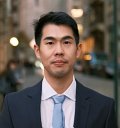
 Zichang He
· 6 previous affiliations
- JPMorgan Chase & Co (United States)Since 2022
- Vice President, Applied Research Lead · Since 2025
- Senior Research Associate · 2023–2025
- Research Associate in Quantum Computing · 2022
- J.P. MorganCurrent
- Current
- Researcher · 2023–2025
- Graduate Research Assistant · 2018–2023
- KBR (United States)2021
- Research Intern · 2021
- Research Intern · 2021
- Bachelor of Engineering - BE, Detection, Guidance and Control Technology, School of Elctronics and Information · 2014–2018
Research Overview
Zichang He focuses on the design automation of quantum computing, quantum algorithms, and uncertainty quantification. His early work addressed high-dimensional uncertainty modeling and yield-aware optimization for classical and photonic integrated circuits. Currently, he investigates noise-resilient quantum algorithms, error detection co-compilation, and parameter optimization heuristics to bridge the gap between near-term quantum hardware and practical applications.
Research Trajectory
His early research addressed the challenges of uncertainty quantification and yield optimization in classical electronic design automation (EDA). To manage the discrete parameters inherent to system-level architecture, he developed mixed generalized polynomial chaos (M-gPC) in Efficient Uncertainty Modeling for System Design via Mixed Integer Programming. This focus on robust modeling expanded into the broader area of Breaking the Curse of Dimensionality with Tensor Trains. Within this domain, he co-authored High-Dimensional Uncertainty Quantification via Rank- and Sample-Adaptive Tensor Regression to predict how manufacturing variations impact chip performance, and subsequently applied similar low-rank tensor models to medical imaging in Active Sampling for Accelerated MRI with Low-Rank Tensors. Concurrently, he investigated alternative yield-aware optimization strategies for photonic integrated circuits, proposing a polynomial bounding method to maximize performance under strict yield constraints in PoBO: A Polynomial Bounding Method for Chance-Constrained Yield-Aware Optimization of Photonic ICs.
The escalating complexities of semiconductor scaling motivated a transition toward alternative computational paradigms, a shift detailed in his dissertation, Uncertainty-Aware and Efficient Design Automation from Classical Circuit to Quantum Computing. Entering the quantum domain, his work began to address the instability of quantum noise in near-term devices. Contributing to the research direction of Algorithmic Noise Resilience in Near Term Quantum Computing, he explored methods to optimize variational quantum algorithms (VQAs) against unknown, real-time noise shifts in Distributionally Robust Variational Quantum Algorithms with Shifted Noise. He also applied his background in tensor methods to analyze quantum optimization spaces, as seen in Variational Quantum Algorithm Landscape Reconstruction by Low-Rank Tensor Completion.
A major theme of his subsequent work involves the Quantum Approximate Optimization Algorithm (QAOA) and its practical implementation on noisy and early fault-tolerant hardware. In Alignment between Initial State and Mixer Improves QAOA Performance for Constrained Portfolio Optimization, he and his collaborators demonstrated that aligning the initial state with the mixing Hamiltonian significantly enhances performance, advancing work in the area of Restricting Quantum Search to Feasible Subspaces. Recognizing that parameter setting is a critical bottleneck, he investigated heuristics for the early fault-tolerant era in Parameter Setting Heuristics Make the Quantum Approximate Optimization Algorithm Suitable for the Early Fault-Tolerant Era. To address the strict limits on quantum circuit executions, he helped develop an approach utilizing simple linear optimization models in End-to-End Protocol for High-Quality QAOA Parameters with Few Shots. Furthering efforts in the broader area of The Quantum Simulation to Hardware Performance Gap, he introduced a sparsity-inducing coordinate descent framework in Optimizing Parameters of Quantum Circuits with Sparsity-Inducing Coordinate Descent, which simplifies parameterized quantum circuits by deactivating unnecessary gates during training.
Most recently, as a researcher at JPMorganChase, his collaborative work has focused on integrating quantum error detection with optimization algorithms. In Performance of Quantum Approximate Optimization with Quantum Error Detection, he participated in implementing the "Iceberg" error detection code on trapped-ion processors to protect QAOA. This integration was deepened in Iceberg Beyond the Tip: Co-Compilation of a Quantum Error Detection Code and a Quantum Algorithm, which demonstrated beyond-break-even performance by tightly co-compiling the error detection code with the algorithm. Alongside these hardware-focused implementations, he has also explored alternative algorithmic structures. In Non-Variational Quantum Random Access Optimization with Alternating Operator Ansatz, he contributed to the research direction of Warm-Starting Quantum Algorithms with Classical Heuristics by proposing a non-variational approach that utilizes instance-independent parameters to bypass the training overhead and barren plateaus typical of standard variational methods.
Current Directions
Recent work investigates the practical deployment of quantum optimization algorithms on both near-term noisy intermediate-scale quantum (NISQ) devices and early fault-tolerant hardware. The most recent papers in the evidence address the co-compilation of quantum error detection codes—specifically the Iceberg code—with algorithms like QAOA to achieve reliable execution on trapped-ion processors. Additionally, ongoing research focuses on shot-frugal parameter optimization protocols and non-variational ansatz designs that reduce the qubit requirements and training overhead associated with combinatorial optimization tasks.
Profile updated
Loading new papers…
Other researchers whose papers cluster into the same research directions — a proxy for overlapping technical interests and shared intellectual neighborhoods.
See something wrong? Report a mistake